


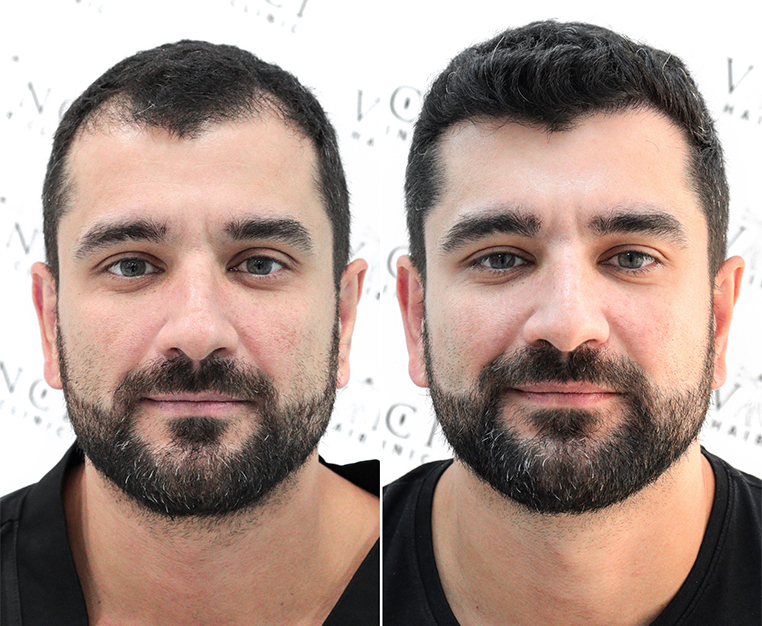
Hair transplant before and after photos show the gradual transformation from thinning or balding areas to a fuller, natural-looking hairline, typically captured over 12–18 months. Genuine results reveal restored density at the hairline and crown, with most patients seeing meaningful change by 6 months and final results by 12–18 months as transplanted follicles complete their growth cycle.
What do realistic hair transplant before and after results look like?
Authentic results are gradual, not instant. Immediately after surgery the transplanted area looks red and dotted with tiny scabs around each graft. Within two to three weeks most of the transplanted hairs shed — a normal, expected stage called shock loss that often worries patients who have not been warned about it.
Real before and after comparisons should show:
- A receded or thinning hairline in the “before” image, with visible scalp.
- An even, age-appropriate hairline in the “after” image — not an unnaturally low or straight “wall” of hair.
- Soft, irregular hairline edges, because natural hairlines are never perfectly straight.
- Density that suits the patient’s face, donor supply and age, rather than implausible thickness.
If photos look flawless within a few weeks, treat them with caution — the hair has not yet had time to grow. The most credible galleries are dated and taken in consistent lighting from the same angles.
How long does it take to see hair transplant before and after changes?
The timeline matters more than any single photo. Follicles transplanted during a procedure such as FUE enter a resting phase before regrowing, so patience is essential. The table below shows a typical progression, though individual healing varies.
| Timeframe | What you typically see |
|---|---|
| Days 1–14 | Redness, scabbing, swelling; grafts settling in |
| Weeks 2–4 | Shedding of transplanted hairs (shock loss) — normal |
| Months 2–4 | Donor area healed; little visible growth yet |
| Months 4–6 | New hairs begin emerging, often fine and wispy |
| Months 6–9 | Noticeable density; hair thickens and matures |
| Months 12–18 | Final result; full texture and styling possible |
Most patients see encouraging change by month six, but it is genuinely unwise to judge a transplant before twelve months. For a fuller account of healing, see Vinci’s guide to hair transplant recovery week by week.
What factors influence before and after outcomes?
No two results are identical, because several factors shape what is achievable. A consultation is needed to confirm what is realistic for any individual.
Donor hair supply
The amount and quality of hair at the back and sides of the scalp sets the ceiling for coverage. A limited donor area means grafts must be placed strategically rather than everywhere at once.
Degree of hair loss
Early-stage thinning is generally easier to restore convincingly than advanced baldness, which may need more grafts or staged procedures.
Surgical planning and skill
Hairline design, graft angle and density placement determine whether results look natural. Poor planning is the main reason some transplants look obvious — explained in Vinci’s article on why some results look unnatural and how we prevent it.
Age and ongoing hair loss
A man in his twenties whose loss is still progressing may need a more conservative plan than someone whose pattern has stabilised. If surrounding native hair continues to thin after surgery, an over-ambitious hairline can end up looking isolated, so good clinics plan for the future, not just the present.
Aftercare and the growth phase
Following post-operative instructions — gentle washing, avoiding trauma to the grafts, and patience during shedding — protects the result. The number of grafts placed also shapes the outcome; understanding this is covered in Vinci’s guide on how many grafts you need.
What should you realistically expect from your own before and after?
It is sensible to set expectations before, not after, surgery. A hair transplant redistributes your existing donor hair; it does not create new hair, so the goal is natural, age-appropriate coverage rather than the density of your teenage years.
- Do expect a gradual transformation over 12–18 months.
- Do expect a temporary shedding phase before regrowth.
- Don’t expect instant fullness in the weeks after surgery.
- Don’t expect to match another patient’s photos exactly — donor supply and hair type differ.
For many patients the most valued change is not measured in grafts but in confidence. A natural-looking result that suits the face tends to be far more satisfying than maximum density that looks artificial. A personalised assessment is the only reliable way to predict what your own before and after could look like.
How can you tell genuine before and after photos from misleading ones?
Do scrutinise galleries before choosing a clinic. Do look for consistency; don’t be swayed by a single dramatic image.
- Do check for matching lighting, angle and hairstyle between shots.
- Do ask how long after surgery the “after” photo was taken.
- Don’t trust wet-hair “before” and dry-hair “after” comparisons — wet hair exaggerates thinning.
- Don’t assume one patient’s outcome predicts your own; results are individual.
Reputable clinics are happy to show varied cases — different ages, hair types and degrees of loss — rather than only their best result.
Frequently Asked Questions
When are hair transplant results fully visible?
Final before and after results are typically visible at 12 to 18 months. By this point transplanted follicles have completed their growth cycle and the hair can be styled normally. Earlier photos show progress, not the finished outcome.
Is shedding after a transplant normal?
Yes. Most transplanted hairs shed within two to four weeks in a stage called shock loss. The follicles remain healthy beneath the skin and begin regrowing within a few months, so shedding is an expected part of the process.
Do hair transplant results last?
Transplanted follicles are usually taken from areas resistant to hair loss, so they tend to be permanent. However, existing non-transplanted hair may continue to thin with age, which is why ongoing care is often advised.
Why do some before and after photos look unnatural?
Unnatural results usually stem from poor hairline design, wrong graft angles or excessive density. Careful surgical planning and an age-appropriate hairline are what make results look believable.
Can I see results sooner than 12 months?
Many patients notice meaningful density between six and nine months, but the hair continues to thicken and mature beyond that. Judging the result too early can be misleading.
If you are weighing up whether a hair transplant is right for you, the clearest next step is a personalised assessment of your hairline, donor supply and goals. Book a free, no-obligation consultation with Vinci Hair Clinic to see realistic before and after expectations tailored to your own hair.


 UK Store