


Most patients complete the critical phase of hair transplant recovery within ten to fourteen days, by which point the transplanted area has healed sufficiently to return to normal daily activities. Full cosmetic recovery, meaning the point at which new hair is visibly growing and the scalp looks entirely natural, takes between nine and twelve months. Understanding what happens at each stage removes the anxiety that comes from not knowing what is normal.
Why the Recovery Timeline Matters More Than Most Patients Realise
Hair transplant surgery is one of the most considered decisions a person makes. Unlike many cosmetic procedures, the results are not immediately visible. The weeks and months following a procedure involve a biological process that cannot be rushed, and patients who understand this are far better equipped to protect their investment and manage realistic expectations.
Hair loss affects an estimated 85 percent of men and 40 percent of women at some point in their lives. For many, a hair transplant represents not just a physical change but a restoration of confidence that has eroded gradually over years. That emotional stake makes the recovery period feel particularly loaded. A reddened scalp, temporary shedding, or slow early growth can all cause alarm in someone who does not know that these are predictable, normal steps in the process.
The recovery timeline also matters because the actions a patient takes during it directly influence the final result. Protecting grafts from friction and sun in the first two weeks, avoiding strenuous exercise at the right stage, and following post-operative care instructions precisely are not optional extras. They are integral to the outcome. Knowing what to expect, week by week, transforms a passive waiting period into an active part of the treatment.
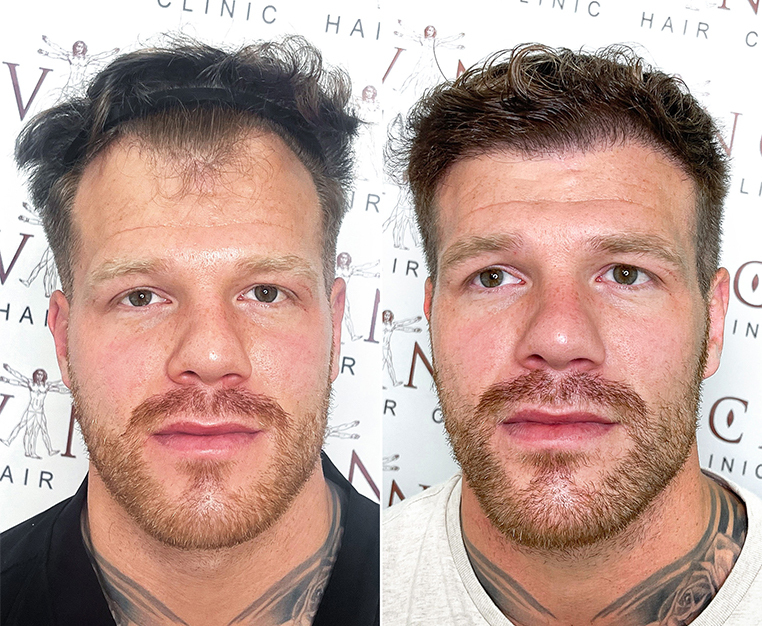
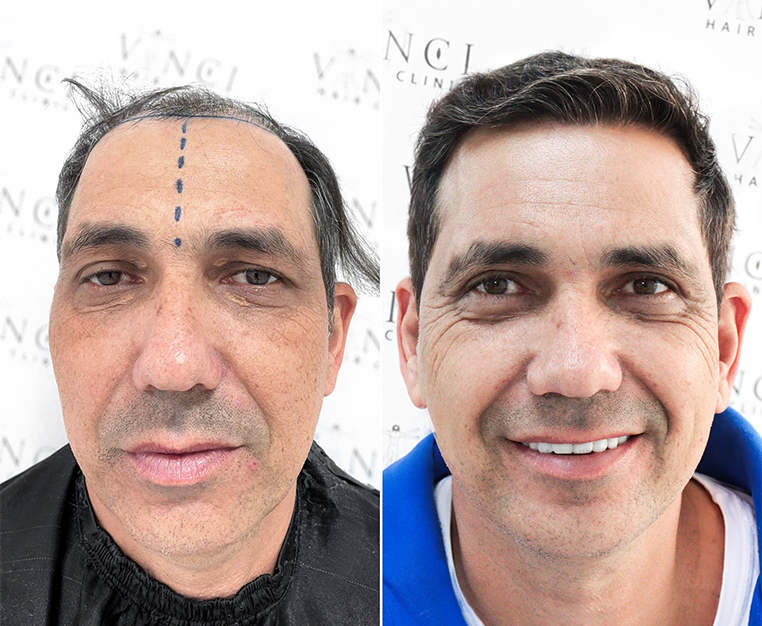
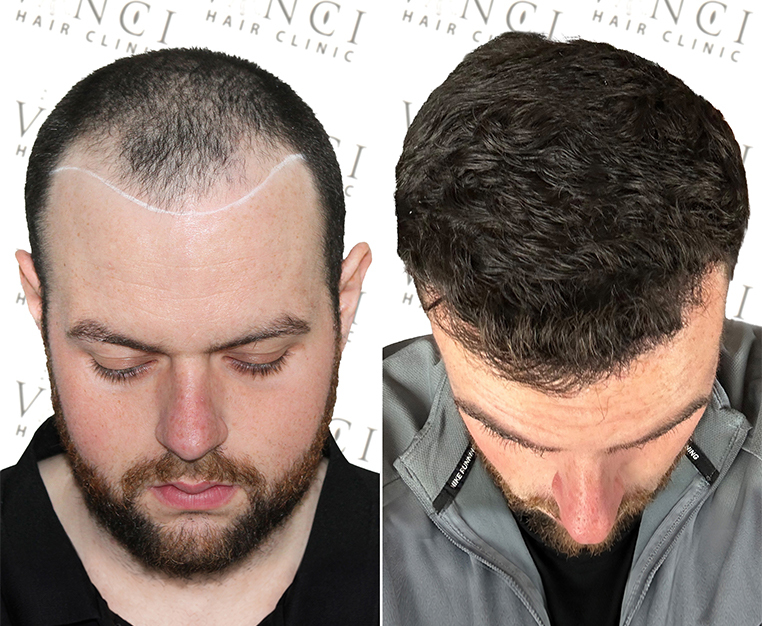
[FUE Hair Transplant overview]
How Vinci Hair Clinic Approaches the Recovery Journey
At Vinci Hair Clinic, the recovery protocol is not a brief handout sent home with the patient after surgery. It is a structured, medically supervised programme that begins in the consultation room and continues for months after the procedure. Founded in 2006 and now operating across more than 30 clinics worldwide, Vinci has guided over 100,000 patients through this process. That depth of experience is reflected in the granular detail of its aftercare guidance.
Vinci Hair Clinic pioneered both Long Hair FUE and No-Shave FUE, techniques that required rethinking conventional post-operative protocols because the preservation of existing hair during and after surgery creates different recovery dynamics. The clinical team, which includes specialist trichologists, dermatologists, and hair transplant surgeons, draws on these innovations to create recovery plans tailored to each patient’s specific procedure and scalp condition.
The Post-Op Kit provided to every patient is designed specifically around the science of graft survival and scalp healing. It complements the surgical work rather than being an afterthought. Alongside this, Vinci’s use of PRP under its Vinci PRP Protocol and Alomesa Mesotherapy can accelerate the healing phase and support follicle establishment in the weeks following surgery. Patients who attend follow-up appointments at Vinci’s clinics, headquartered on Harley Street in London, receive clinical assessment at each stage rather than relying solely on self-monitoring.
The Vinci Medical Academy ensures that clinical staff across all global locations work to consistent standards, so a patient treated in any Vinci clinic receives the same calibre of post-operative support. For Micro Scalp Pigmentation procedures, Vinci’s status as global founder of the technique is reinforced by a 5-Year Warranty, a commitment that reflects genuine confidence in both the initial work and the recovery outcomes.
Week by Week: What the Science and Clinical Evidence Show
The recovery from an FUE hair transplant follows a predictable biological sequence. In the first 72 hours, the transplanted grafts are in their most vulnerable state. The scalp is typically swollen, with small scabs forming around each graft site. Any disruption to the grafts during this window, whether from friction, pressure, or contamination, carries the highest risk of graft loss. Vinci patients receive specific sleeping position guidance and detailed instructions on how to gently cleanse the scalp without disturbing new follicles.
By the end of the first week, swelling resolves and scabbing begins to loosen. Most patients can return to desk-based work within seven to ten days. The second week sees the scabs shed naturally, and it is at this point that many patients notice the transplanted hairs beginning to fall out. This is called shock loss, and it is a normal part of the follicular cycle. The hair shaft sheds while the follicle, now established in its new location, enters a resting phase before producing new growth.
Between weeks three and twelve, the scalp is largely healed externally, though internal vascularisation of the grafts continues. Patients may look largely unchanged during this period, which Vinci clinicians describe frankly in pre-operative consultations so that patients are not caught off guard. From months three to six, fine new hairs begin to emerge. By month nine, the majority of transplanted follicles are in active growth. Full density and natural texture are typically visible between nine and twelve months post-procedure.
Vinci’s clinical data across more than two decades and over 100,000 procedures supports a graft survival rate that reflects not only surgical precision but the quality of the post-operative care that follows. The combination of an experienced surgical team, structured recovery protocols, and supporting treatments such as the Vinci Laser Cap and Maxogaine, which can be introduced at appropriate stages, gives patients the best possible conditions for achieving the density they were promised during consultation.
[Vinci PRP Protocol and Alomesa Mesotherapy]
FAQs
Q: How long does hair transplant recovery take?
A: The initial healing phase takes ten to fourteen days, after which most patients can resume normal activities. The transplanted hairs shed between weeks two and four, then new growth begins from around month three. Full results, with the hair achieving natural density and texture, are visible between nine and twelve months after surgery. The process cannot be shortened, but it can be well managed with the right aftercare support.
Q: When can I go back to work after a hair transplant?
A: Most patients return to office-based or home working within seven to ten days. If your role involves physical labour, prolonged sun exposure, or contact sport, a longer absence of three to four weeks is advisable to protect the grafts. Your surgeon will give you a specific return-to-activity timeline based on your procedure type and the number of grafts transplanted.
Q: Is it normal for transplanted hair to fall out after surgery?
A: Yes, this is called shock loss and it is a completely expected part of the recovery process. The hair shafts shed while the follicles, now securely established, enter a natural resting phase. New growth from those follicles typically begins between three and four months post-procedure. Patients who are aware of this in advance find the shedding phase far less distressing than those who are not forewarned.
Q: What should I avoid during hair transplant recovery?
A: In the first two weeks, avoid touching or scratching the recipient area, direct sun exposure, swimming, alcohol, and strenuous exercise. From week three, most of these restrictions ease, though high-impact sport is typically held off until week four or beyond. Smoking restricts blood flow and can impair graft survival, so cessation for at least two weeks either side of surgery is strongly recommended. Your post-operative care kit and clinical team will provide a complete and personalised list.
Q: When will I see the final results of my hair transplant?
A: The majority of new growth is visible by month six, and most patients see significant density improvement by month nine. Final results, representing the full texture, density, and natural hairline that the procedure was designed to achieve, are typically seen at the twelve-month mark. Some patients continue to see improvements up to eighteen months post-surgery. Patience during this period is not passive waiting but an essential part of the treatment.
Take the First Step
Recovery from a hair transplant is a journey that rewards careful preparation and informed expectations. The clinical team at Vinci Hair Clinic is available to walk you through every phase, from your initial assessment through to your final result. With more than 20 years of experience, a specialist team of trichologists, dermatologists, and surgeons, and clinics across the world, Vinci provides the continuity of care that makes a genuine difference to outcomes. To arrange a consultation at your nearest clinic, including the Harley Street headquarters in London, reach out to Vinci Hair Clinic today.
 UK Store