


Hair Transplant Recovery Timeline: Week by Week
Reviewed by Dr Salvar Björnsson | Written by Our Editorial Team | Published 24 April 2026
A hair transplant is one of the most effective solutions for permanent hair loss, but the recovery process can feel uncertain if you don’t know what’s coming. The good news? Full recovery takes 12 to 18 months, but you’ll be back to your normal routine within 7 to 10 days. Here’s exactly what to expect at every stage.
Recovery at a Glance
Before we get into the detail, here’s a snapshot of the full hair transplant recovery timeline. This table covers both FUE and DHI procedures, though individual healing can vary slightly.
| Stage | What’s Happening | Pain Level | Activity Level |
|---|---|---|---|
| Days 1–3 | Swelling, redness, mild tenderness at donor and recipient sites | Mild (managed with painkillers) | Rest at home, no physical activity |
| Days 4–7 | Scabs form around grafts, swelling peaks then subsides | Minimal | Light walking OK, gentle first wash |
| Weeks 2–4 | Scabs fall off naturally, transplanted hairs begin to shed | None | Return to work, light exercise from week 2 |
| Months 1–3 | Shock loss (shedding), follicles enter resting phase | None | Normal activities, full exercise from week 6 |
| Months 3–6 | New hair growth begins, initially thin and wispy | None | Fully normal |
| Months 6–9 | Hair thickens, texture improves, noticeable coverage | None | Fully normal |
| Months 9–12 | Final density achieved, hair can be styled normally | None | Fully normal |
Now let’s break each stage down so you know exactly what to expect and when.
Days 1–3: Immediately After Your Transplant
The first 72 hours are the most delicate part of your recovery. Your scalp will look red and swollen, and there’ll be tiny pinprick scabs forming around each graft. This is completely normal.
Most patients describe the discomfort as mild — more tightness than pain. Your clinic will prescribe painkillers and anti-inflammatories, and many people find they only need them for the first day or two. According to the International Society of Hair Restoration Surgery (ISHRS), the vast majority of patients rate post-operative pain as 2 or 3 out of 10.
Swelling after a hair transplant is one of the biggest worries for patients. It typically starts on day 2 and can move down to the forehead and around the eyes by day 3. It looks dramatic but it’s temporary — cold compresses and sleeping upright help significantly.
During this window, avoid touching the transplanted area. Don’t wear any hats or headwear that presses against the grafts. Sleeping elevated at 45 degrees is essential to reduce swelling and protect the new grafts. Your Vinci aftercare team will talk you through everything before you leave the clinic.
Week 1: The First Seven Days
By days 4 and 5, the worst of the swelling is behind you. The tiny scabs around each graft will be visible, and your scalp may feel itchy. Resist the urge to scratch — this is one of the most important rules of the first week.
Your first hair wash usually happens around day 3 to 5, depending on your surgeon’s instructions. At Vinci Hair Clinic, we provide detailed washing guidance because this step matters. You’ll use a gentle patting motion with lukewarm water — no rubbing, no direct shower pressure on the grafts.
How you sleep during this first week plays a real role in your results. Continue sleeping elevated and consider using a travel neck pillow to keep your head from rolling onto the transplanted area.
By day 7, most patients feel well enough to return to office-based work. The redness is still noticeable up close, but many people find a loose-fitting cap (with clinic approval) or working from home for a few extra days helps with confidence. According to a 2023 study published in the Journal of Dermatologic Surgery, 87% of FUE patients reported returning to their normal routine within 10 days.
Weeks 2–4: Scabbing, Shedding, and Settling
This is where the recovery starts getting easier physically, but it can be tricky mentally. The scabs from the first week will begin falling away naturally during washing. Don’t pick at them — let the water and gentle lathering do the work.
Around weeks 2 to 4, you’ll notice the transplanted hairs starting to fall out. This is the beginning of what’s called shock loss. We need to be very clear about this:
Shock loss is a completely normal and expected part of the hair transplant recovery process. It happens to the vast majority of patients and it means the follicles are transitioning into their resting phase before producing new, permanent hair.
Shock loss is not a sign that the transplant has failed or that the grafts haven’t taken. The follicles are still alive beneath the surface. They’re simply cycling through a natural phase before new growth begins.
You can resume light exercise from around week 2 — walking, light cycling, and gentle gym sessions are all fine. Avoid anything that causes heavy sweating, and keep away from swimming pools and saunas for at least 4 weeks. You can also get your first proper haircut at the donor area around this time.
Months 1–3: The Shock Loss Phase
This is the stage that tests your patience. Most of the transplanted hair will have shed by now, and the recipient area can look similar to how it did before the procedure. It’s easy to feel disheartened, but this phase is temporary and necessary.
According to the British Association of Dermatologists, the shedding phase typically concludes by week 6 to 8, with the follicles entering a dormant period before the growth cycle restarts. Think of it as a reset — the follicles need to anchor themselves properly before pushing through new hair.
During months 1 to 3, the donor area at the back of your head heals fully. Any lingering redness or pinkness in the recipient zone gradually fades. You can return to all normal activities including full exercise, swimming, and contact sports by the 6-week mark.
This is also a good time to review your before and after photos. At Vinci, we take detailed images at your follow-up appointments so you can track progress objectively rather than relying on what you see in the mirror day to day.
Months 3–6: New Growth Begins
This is when things get exciting. Around month 3, you’ll start noticing fine, thin hairs emerging in the transplanted area. They won’t look like much at first — they’ll be wispy and lighter in colour than your existing hair. But they’re the real deal, and they’ll continue to thicken over the coming months.
By month 4 to 5, the new growth becomes more noticeable. You’ll see increasing coverage, though it won’t be at full density yet. The hair texture may differ slightly from your existing hair initially — some patients notice a curlier or finer texture that gradually normalises as the hair matures.
According to research published in the Aesthetic Plastic Surgery journal, approximately 60% of new hair growth is visible by the 6-month mark, with the remaining 40% developing over the following 6 months.
At your Vinci follow-up around this time, your surgeon will assess graft survival and growth patterns. If you had an FUE procedure, the donor area should now be virtually undetectable. Most patients report this as the moment they start feeling genuinely optimistic about their results.
Months 6–12: Final Results Take Shape
From month 6, you’ll see real, noticeable change. The transplanted hair thickens, darkens, and starts blending naturally with your existing hair. Most patients find this is the stage where other people start commenting — not that they can tell you’ve had a transplant, but that you’re looking well.
Between months 8 and 12, you reach full density. You can style your hair however you like, use regular hair products, and visit your barber without any restrictions. The results are permanent because the transplanted follicles are taken from the donor area at the back of the head, which is genetically resistant to the hormone that causes pattern hair loss.
Some patients see continued improvement all the way up to 18 months post-procedure, particularly those who’ve had larger sessions or who are using supportive treatments like minoxidil or finasteride alongside their transplant. Your surgeon at Vinci’s clinics will advise on whether adjunct therapies could benefit your individual case.
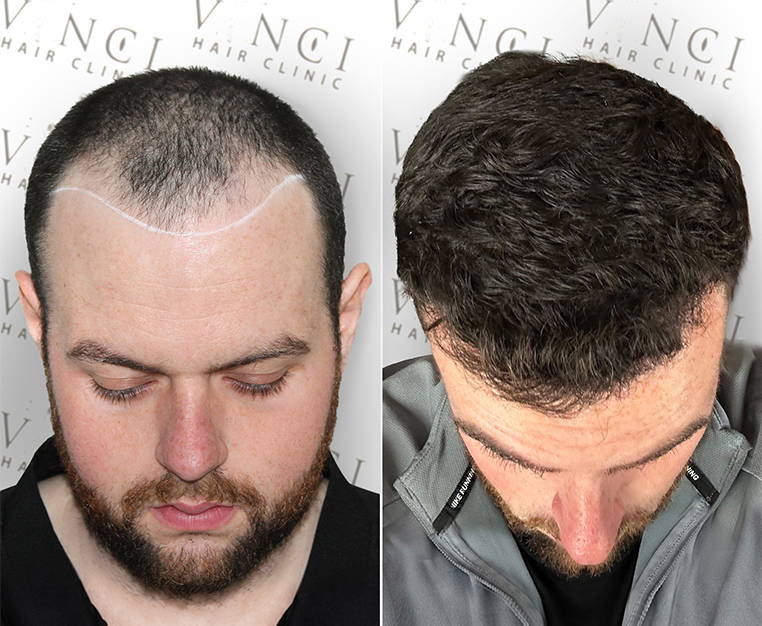
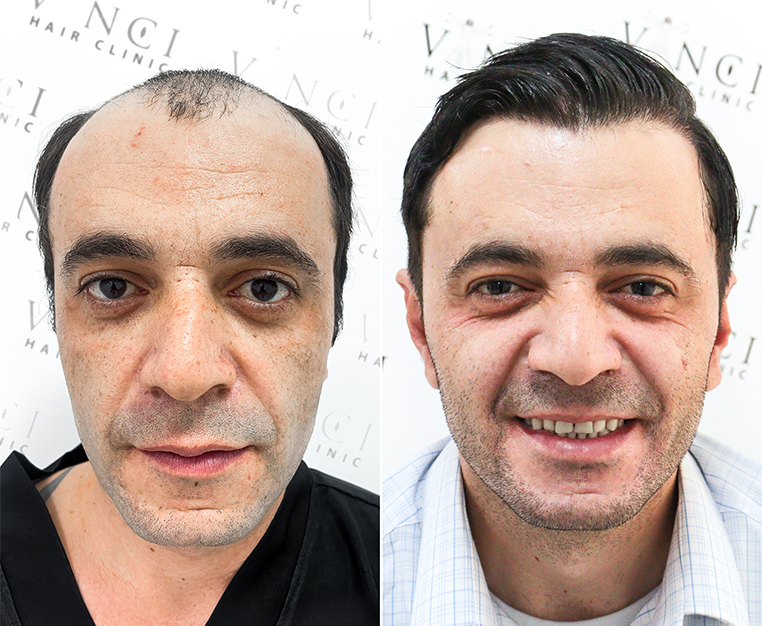
Take a look at Vinci’s before and after gallery to see real patient transformations at the 12-month mark.
Recovery Tips: Do’s and Don’ts
Following your aftercare instructions is the single biggest factor in a successful result. Here’s a practical reference table covering the key do’s and don’ts across the recovery timeline.
| Do’s | Don’ts |
|---|---|
| Sleep elevated at 45 degrees for the first 7–10 nights | Don’t touch, pick, or scratch the grafts for at least 10 days |
| Take prescribed medications on schedule (antibiotics, anti-inflammatories) | Don’t drink alcohol for at least 7 days post-procedure |
| Use the gentle washing technique provided by your clinic from day 3–5 | Don’t use direct shower pressure on the recipient area for 2 weeks |
| Drink plenty of water and eat a protein-rich diet to support healing | Don’t smoke — smoking restricts blood flow and slows healing significantly |
| Wear a loose-fitting hat (clinic-approved) if you need sun protection | Don’t wear tight hats, helmets, or headbands for 4 weeks |
| Resume light walking from day 2–3 to keep circulation moving | Don’t do heavy exercise, swimming, or saunas for 4–6 weeks |
| Apply saline spray as directed to keep grafts moist in the first 48 hours | Don’t apply ice directly to the transplanted area |
| Attend all scheduled follow-up appointments | Don’t panic during the shock loss phase — it’s temporary and normal |
If you’re ever unsure during your recovery, reach out to your Vinci aftercare team. No question is too small. We’d always rather hear from you early than have you worry silently.
Frequently Asked Questions
How long does it take to fully recover from a hair transplant?
Full recovery from a hair transplant takes 12 to 18 months, which is when you’ll see your final density and hair texture. However, you’ll be back to normal daily activities within 7 to 10 days. The transplanted hair goes through a natural shedding phase between weeks 2 and 6, with new permanent growth appearing from month 3 onwards. Most patients see 60% of growth by month 6 and full results between months 9 and 12.
Is it normal for transplanted hair to fall out after the procedure?
Yes, completely. This is called shock loss and it happens to the vast majority of hair transplant patients between weeks 2 and 6. The transplanted follicles shed their initial hair shafts before entering a resting phase. New, permanent hair then grows from month 3. Shock loss is not a sign that your transplant has failed — it’s a necessary part of the follicle’s growth cycle.
When can I go back to work after a hair transplant?
Most patients return to desk-based work within 3 to 5 days. If your job involves physical labour, heavy lifting, or outdoor work in direct sunlight, plan for 10 to 14 days off. Some redness and small scabs may still be visible in the first week, so many patients prefer a full 7 days before being back in the office. Remote workers often return after just 2 to 3 days.
When can I exercise after a hair transplant?
Light walking is fine from day 2 or 3. Gentle gym sessions and light jogging can resume after 2 weeks. High-intensity workouts, swimming, contact sports, and saunas should be avoided for at least 4 to 6 weeks. The main risks from early exercise are sweat irritation, increased blood pressure to the scalp, and physical trauma to the grafts.
How should I sleep after a hair transplant?
For the first 7 to 10 nights, sleep elevated at a 45-degree angle — either in a recliner or propped up with multiple pillows. This reduces swelling and stops the grafts from pressing against the pillow. A travel neck pillow can help keep your head stable overnight. After 10 days, most patients gradually return to sleeping flat. Read our full guide on sleeping after a hair transplant for detailed tips.

 UK Store