


Minoxidil for Hair Loss: Benefits and Side Effects
Reviewed by Dr Salvar Björnsson, Written by Our Editorial Team
Published: 17 April 2026
Minoxidil is an FDA-approved topical treatment that slows hair loss and promotes regrowth in both men and women. It’s one of the most accessible options available without a prescription, but it’s not without drawbacks. Here’s what you need to know before you start — the genuine benefits, the side effects, and when it might be time to look at other solutions.
What Is Minoxidil and How Does It Work?
Minoxidil was originally developed as an oral medication for high blood pressure in the 1970s. Doctors noticed an unexpected side effect: patients were growing thicker hair. That discovery led to the topical formulation we know today — Rogaine in the US, Regaine in the UK.
Minoxidil is a vasodilator, not a hormone blocker. It works by widening blood vessels around hair follicles, which increases blood flow and delivers more oxygen and nutrients to the follicle. This prolongs the anagen (growth) phase of the hair cycle, giving follicles more time to produce thicker, longer strands.
According to NICE (National Institute for Health and Care Excellence), minoxidil is the only topical treatment recommended for androgenetic alopecia in both sexes. It doesn’t reverse baldness entirely — it won’t bring back follicles that have already died — but it can revive miniaturised follicles that are still active beneath the scalp.
It comes in two main forms: a 5% foam (typically for men) and a 2% liquid solution (often recommended for women). Both are applied directly to the scalp, usually once or twice daily. Minoxidil is not a cure for hair loss — it’s a long-term maintenance treatment that only works for as long as you keep using it.
Who Should Use Minoxidil?
Minoxidil works best for people in the early to moderate stages of pattern hair loss. If you’ve noticed gradual thinning at the crown or a receding hairline over the past few years, you’re a solid candidate.
It’s particularly effective for:
- Men with vertex (crown) thinning — this is where the strongest clinical evidence sits
- Women with diffuse thinning — the 2% solution is licensed specifically for female pattern hair loss
- People under 40 — younger users with recent-onset thinning tend to respond better
- Those with smaller areas of hair loss — covering a patch is more realistic than regrowing an entire bald scalp
According to the NHS, minoxidil isn’t recommended for sudden or patchy hair loss (alopecia areata), hair loss caused by medication, or hair loss in people under 18. If your hair loss is driven by stress, there are other approaches worth trying first. Similarly, postpartum hair loss usually resolves on its own without treatment.
Proven Benefits of Minoxidil
The evidence behind minoxidil is strong. It’s been studied for over 30 years, and the results are consistent: it works for the majority of users, though how well it works varies from person to person.
According to a landmark study published in the Journal of the American Academy of Dermatology, 5% minoxidil produced 45% more hair regrowth than the 2% solution over 48 weeks in men with androgenetic alopecia. A separate 2014 Cochrane Review confirmed that topical minoxidil is significantly more effective than placebo for both hair count and patient-reported improvement.
| Benefits | Side Effects |
|---|---|
| Clinically proven to slow hair loss | Scalp irritation or dryness |
| Promotes visible regrowth in 60-70% of users | Initial shedding phase (first 2-8 weeks) |
| Available over the counter — no prescription needed | Unwanted facial hair (especially in women) |
| Works for both men and women | Headaches in some users |
| Can be combined with finasteride for stronger results | Rare: dizziness, rapid heartbeat, chest tightness |
| Decades of safety data behind it | Results stop when you stop using it |
The biggest practical benefit? Access. You don’t need a doctor’s appointment to buy it, and it’s relatively affordable at around £15-30 per month depending on the brand and strength.
Side Effects: Common and Rare
Let’s be honest about side effects — most people tolerate minoxidil well, but it’s not side-effect-free. Knowing what to expect helps you tell the difference between a normal adjustment and something that needs medical attention.
Common side effects
- Scalp irritation and dryness — the most frequently reported issue. The propylene glycol in the liquid solution is usually the culprit. Switching to the foam version often resolves it.
- Initial shedding (dread shed) — this alarms people, but it’s actually a good sign. Minoxidil pushes older, weaker hairs out of the follicle to make room for stronger growth. It typically lasts 2 to 8 weeks.
- Unwanted facial hair — more common in women using the liquid solution. It usually appears on the forehead or cheeks and resolves after discontinuation.
- Headaches — mild and usually temporary. Staying hydrated helps.
Rare but serious side effects
Because minoxidil is a vasodilator, it can occasionally cause systemic effects if too much is absorbed. These are rare with topical use but include:
- Rapid or irregular heartbeat
- Dizziness or lightheadedness
- Chest tightness
- Swelling of the hands or feet
According to the NHS, you should stop using minoxidil and contact your GP immediately if you experience any cardiovascular symptoms. People with pre-existing heart conditions should consult a doctor before starting treatment.
How to Apply Minoxidil Correctly
Getting the application right matters more than most people realise. Poor technique means less of the active ingredient reaches your follicles, and more ends up on your pillowcase.
For the 5% foam:
- Part your hair to expose the thinning area
- Dispense half a capful of foam onto your fingers (run your hands under cold water first — warmth melts the foam too fast)
- Apply directly to the scalp, not the hair
- Massage gently for 30 seconds
- Wash your hands thoroughly
- Leave it to dry for at least 2 hours before sleeping or wearing a hat
For the 2% liquid:
- Fill the dropper to the 1ml line
- Apply drops across the affected area
- Spread evenly with your fingertips
- Allow 4 hours to dry completely before bed
Apply once or twice daily depending on the strength — the 5% foam is typically once daily, while the 2% liquid is twice daily. Consistency is everything. Missing days undermines results, and the treatment only works while you’re using it.
Minoxidil vs Finasteride: Which Is Better?
This is one of the most common questions we hear at Vinci Hair Clinic. The short answer: they do different things, and for many people, using both is the best approach.
| Factor | Minoxidil | Finasteride |
|---|---|---|
| How it works | Increases blood flow to follicles (vasodilator) | Blocks DHT production (5-alpha reductase inhibitor) |
| Application | Topical — applied to scalp | Oral — 1mg daily tablet |
| Prescription needed? | No (over the counter) | Yes (prescription only) |
| Suitable for women? | Yes (2% solution) | No — contraindicated in women of childbearing age |
| Best for | Crown thinning, diffuse loss | Frontal recession, overall DHT-driven loss |
| Time to results | 3-6 months | 6-12 months |
| Key side effects | Scalp irritation, initial shedding | Reduced libido, erectile dysfunction (1-2% of users) |
| Cost (UK monthly) | £15-30 | £10-25 |
According to a 2015 study in Dermatologic Therapy, combination therapy (minoxidil + finasteride) produced significantly greater hair density improvements than either treatment alone. If you’re a man with moderate hair loss and no contraindications, your dermatologist may well suggest both.
When to Consider Other Options
Minoxidil has its limits. If you’ve been using it consistently for 12 months without meaningful improvement, or if your hair loss has progressed to the point where there’s little coverage left, it might be time to explore other routes.
Here are some signs that minoxidil alone isn’t enough:
- You’ve reached Norwood stage 4 or higher (significant frontal and crown loss)
- Your hairline has receded well beyond the temples
- You’re tired of daily application with only marginal results
- You want a permanent solution rather than ongoing maintenance
For these situations, a FUE hair transplant offers a long-lasting alternative. The procedure moves healthy follicles from the back of the scalp to thinning areas, and once they take root, they’re permanent. Many of our clients use minoxidil alongside a transplant to protect their existing hair — it’s not an either/or decision.
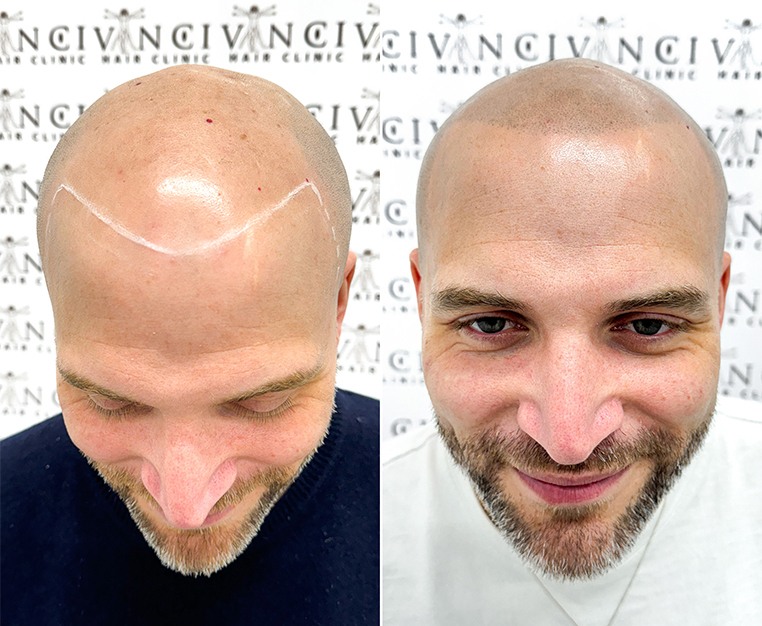
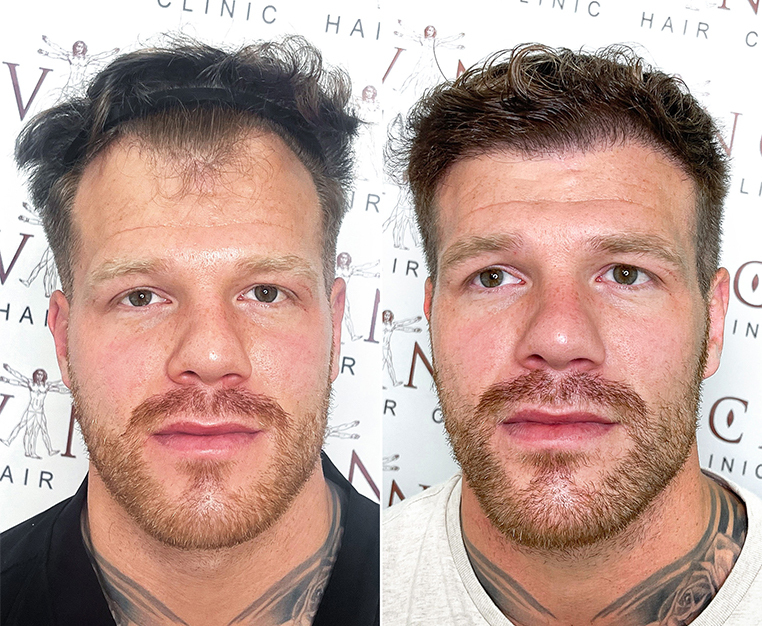
You can see real patient outcomes on our before and after gallery to get a realistic picture of what’s achievable.
If you’re unsure where you stand, a free consultation at Vinci Hair Clinic can help you understand your options. Whether that’s continuing with minoxidil, adding finasteride, or discussing a transplant — the right answer depends on your stage of loss, your goals, and what you’re willing to commit to long term.
Frequently Asked Questions
How long does minoxidil take to show results?
Most people notice visible improvement after 3 to 6 months of consistent daily use. Some users see early changes — reduced shedding, finer regrowth — within the first 8 weeks, but full results typically take closer to a year.
Does minoxidil work for women?
Yes. The 2% topical solution is licensed for use in women with androgenetic alopecia. Women should avoid the 5% foam unless directed by a doctor, as higher concentrations carry a greater risk of unwanted facial hair growth. If you’re noticing thinning as a woman, it’s worth discussing your options with a specialist.
What happens if you stop using minoxidil?
Hair regrown through minoxidil will gradually thin and fall out within 3 to 6 months of stopping treatment. The follicles revert to their previous miniaturised state because minoxidil treats symptoms rather than the underlying cause of hair loss.
Can you use minoxidil with finasteride?
Yes, and many dermatologists recommend combining them. Minoxidil stimulates follicle growth while finasteride blocks the DHT hormone that causes miniaturisation. According to a 2015 study in the Journal of the American Academy of Dermatology, combination therapy produced significantly better outcomes than either drug alone.
Is minoxidil safe for long-term use?
Clinical data supports the long-term safety of topical minoxidil when used as directed. The NHS lists it as a well-tolerated treatment with a decades-long track record. Systemic side effects are rare with topical application, though users should report any chest pain, dizziness, or rapid heartbeat to their GP immediately.
 UK Store