When scalp donor supply is limited, body hair offers a proven additional source of grafts - extending what a hair transplant can achieve for patients with advanced or complex hair loss.
Used primarily as a supplementary donor source for scalp restoration when scalp supply is depleted.
Beard hair is the most commonly used and most effective body donor source.
Works equally for small areas with patchy beard growth as well as where the whole beard area needs to be reconstructed to a fully bearded masculine result.
When scalp donor supply is limited, body hair offers a proven additional source of grafts - extending what a hair transplant can achieve for patients with advanced or complex hair loss.
Used primarily as a supplementary donor source for scalp restoration when scalp supply is depleted.
Beard hair is the most commonly used and most effective body donor source.
Particularly valuable for advanced hair loss cases and hair transplant repair patients.
Why should I choose Vinci for my Body Hair Transplant?
Benchmark for FUE standards
The largest hair transplant clinic in the world, with specialist expertise in complex donor cases.
Minimally invasive procedure
Needle-free anaesthesia, no sutures. Resume your day-to-day life within 24 hours of treatment.
State-of-the-art surgical centers
Peace of mind in a clinically safe and comfortable environment across all our locations.
Most innovative medical instruments
Sapphire blades for maximum density, micro-punches under 1mm for better recovery and minima.
In-person or virtual consultations
Face-to-face or online assessments available for your convenience, in all markets
Affordable prices
Finance options available. Restoring your hair is more achievable than you might think
Why should I choose Vinci for my Body Hair Transplant?
Benchmark for FUE standards
The largest hair transplant clinic in the world, with specialist expertise in complex donor cases.
Minimally invasive procedure
Needle-free anaesthesia, no sutures. Resume your day-to-day life within 24 hours of treatment.
State-of-the-art surgical centers
Peace of mind in a clinically safe and comfortable environment across all our locations.
Most innovative medical instruments
Sapphire blades for maximum density, micro-punches under 1mm for better recovery and minima.
In-person or virtual consultations
Face-to-face or online assessments available for your convenience, in all markets.
Affordable prices
Finance options available. Restoring your hair is more achievable than you might think.
Vinci Hair Clinic
Consultations
The consultation is your opportunity to discuss your situation with a Vinci specialist and understand whether body hair transplantation is the right solution for you. You will receive an honest assessment of your donor resources and a tailored treatment plan.
We are here to guide you and help you make an informed decision - never under any pressure
Our experience managing complex donor cases — including depleted scalp donors and advanced hair loss —
gives us the surgical insight to blend body hair grafts naturally with existing scalp hair. Strategic placement is
everything.
Body and beard donor hair is carefully placed in mid-scalp and crown zones, blended with scalp grafts for a natural, seamless result.
The consultation is your opportunity to discuss your situation with a Vinci specialist and understand whether body hair transplantation is the right solution for you. You will receive an honest assessment of your donor resources and a tailored treatment plan.
We are here to guide you and help you make an informed decision - never under any pressure
Our experience managing complex donor cases — including depleted scalp donors and advanced hair loss —
gives us the surgical insight to blend body hair grafts naturally with existing scalp hair. Strategic placement is
everything.
Body and beard donor hair is carefully placed in mid-scalp and crown zones, blended with scalp grafts for a natural, seamless result.
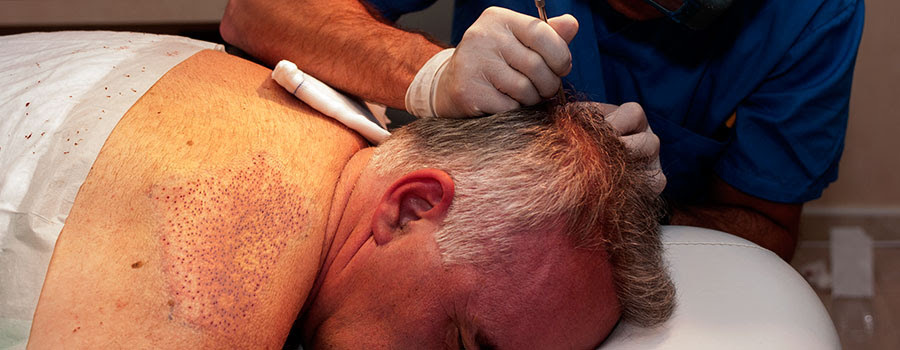
A body hair transplant uses the FUE (Follicular Unit Extraction) technique to harvest hair follicles from areas of the body other than the scalp — most commonly the beard, and secondarily the chest or shoulders — and transplant them into the scalp to increase hair density and coverage.
It is not a first-line treatment. For most patients, scalp donor hair remains the preferred source. Body hair becomes the right solution when scalp donor supply is insufficient — most often in advanced hair loss or repeat transplant cases.
Of all body donor sites, beard hair is the most frequently used and clinically most effective. Its calibre and density more closely resembles scalp hair than chest or abdominal hair. Each follicle is extracted individually, checked under magnification, and placed strategically into the scalp.
Body Hair Transplant Timeline
Initial Consultation:
Specialist assesses scalp donor status, degree of hair loss, and body hair characteristics. Suitable donor sites identified and treatment plan agreed.
Day of Surgery:
Wear comfortable clothing. Eat a light meal beforehand. FUE extraction from beard or body donor site under local anaesthesia alongside scalp harvesting.
Immediate Post Operation:
Mild swelling and redness are normal. Avoid contact with the transplant area. Beard donor marks quickly concealed by stubble regrowth.
Week 2-3:
Shedding phase — transplanted hairs fall out. This is entirely normal before regrowth commences.
Month 3-4:
Initial regrowth. Fine hairs begin to emerge from transplanted follicles.
Month 6-9:
Significant growth visible. Hair thickens and blended result with scalp grafts begins to take shape.
Month 9-12:
Full results typically achieved. Timeline varies between patients depending on growth cycles and proportion of body hair used.
It’s important to keep in mind the timeline can vary significantly person to person.
Uses FUE to extract follicles from beard, chest, or shoulders and transplant to the scalp. Supplements scalp donor hair to achieve greater coverage for advanced or complex cases.
Beard follicles are coarser, produce more hairs per unit, and more closely match scalp hair calibre than chest or back hair. They also yield a meaningful graft count.
Patients with advanced hair loss (Norwood VI–VII) where scalp donor alone is insufficient, and patients with depleted donor areas from prior procedures. Also valuable in repair cases.
Yes, though body hair has a shorter growth phase and may not grow as long as scalp hair. Body/beard grafts are placed in mid-scalp and crown for density; scalp grafts used for the hairline.
Depends on total graft count, proportion of body vs scalp hair, and case complexity. Finance options available. Tailored quote provided at consultation.
Evaluation of scalp donor status, body hair characteristics, and degree of hair loss. Discussion of expectations and a tailored, realistic treatment recommendation.
Uses FUE to extract follicles from beard, chest, or shoulders and transplant to the scalp. Supplements scalp donor hair to achieve greater coverage for advanced or complex cases.
Beard follicles are coarser, produce more hairs per unit, and more closely match scalp hair calibre than chest or back hair. They also yield a meaningful graft count.
Patients with advanced hair loss (Norwood VI–VII) where scalp donor alone is insufficient, and patients with depleted donor areas from prior procedures. Also valuable in repair cases.
Yes, though body hair has a shorter growth phase and may not grow as long as scalp hair. Body/beard grafts are placed in mid-scalp and crown for density; scalp grafts used for the hairline.
Depends on total graft count, proportion of body vs scalp hair, and case complexity. Finance options available. Tailored quote provided at consultation.
Evaluation of scalp donor status, body hair characteristics, and degree of hair loss. Discussion of expectations and a tailored, realistic treatment recommendation.





 UK Store