


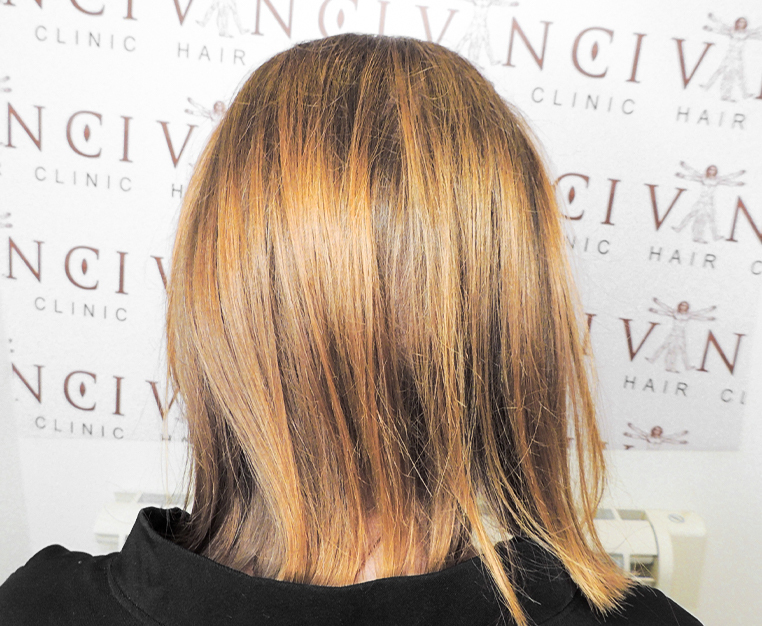
Long Hair FUE and standard FUE are both follicular unit extraction procedures, but they differ in one critical way: how much hair length is preserved on the donor grafts at the time of surgery. Standard FUE requires the donor area to be shaved close to the scalp, while Long Hair FUE allows patients to keep their existing hair at a longer length throughout the procedure. This distinction matters enormously for patients who are concerned about discretion, recovery visibility, or simply do not want to expose a shaved scalp during the healing process.
Why the Question of Shaving Matters More Than You Might Think
Hair transplant surgery has evolved considerably over the past two decades, and the conversation patients have with their surgeons has become more nuanced as a result. For many years, the question was simply whether to have a transplant. Today, patients arrive at consultations having already researched techniques, recovery timelines, and aesthetic outcomes. One of the most common questions now is whether they are required to shave their head before surgery.
This matters for several groups of people. Professionals who cannot take extended time away from work, women with longer hair who would find a shaved donor area impossible to conceal, and anyone who has not yet disclosed their hair loss concerns to colleagues or family members all face a practical barrier with traditional FUE. The anxiety around exposure during recovery is, for some patients, enough to delay treatment by months or even years.
Understanding the clinical difference between Long Hair FUE and standard FUE [FUE Hair Transplant overview] helps patients make a decision that fits both their surgical needs and their personal circumstances. Neither technique is universally superior. The right choice depends on the individual’s hair characteristics, the extent of their hair loss, and what they are trying to achieve.
The Technique That Made Discretion Possible
Vinci Hair Clinic has been at the forefront of surgical hair restoration since 2006, and Long Hair FUE is among the pioneering techniques the clinic has championed and refined over that time. Across more than 30 clinics worldwide and with over 100,000 patients treated, Vinci’s surgical team has accumulated a depth of experience with both techniques that allows for precise, personalised guidance rather than a one-size-fits-all recommendation.
In a standard FUE procedure, the donor area at the back and sides of the scalp is shaved to approximately one millimetre in length before extraction begins. This gives the surgeon clear visual access to each follicular unit and allows for consistent, controlled harvesting. The procedure is highly effective and remains the most widely performed hair transplant technique globally. For patients who are comfortable with temporary shaving and whose hair characteristics suit the approach, standard FUE delivers excellent, predictable results.
Long Hair FUE, by contrast, is a technically demanding variation in which the donor hair is left at a longer length, typically several centimetres, and only a small number of individual hairs are trimmed minimally prior to extraction. The surgeon works with considerably more hair in the field of view, requiring a higher level of skill and patience to identify and extract each graft without damage. The result is a donor area that, once the procedure is complete, can be styled to conceal any evidence of surgery almost immediately.
Vinci Hair Clinic’s surgeons are trained specifically in this technique [Long Hair FUE procedure page] and are equipped to advise which approach is clinically appropriate for each patient based on scalp laxity, follicle density, and the target recipient area.
What the Clinical Picture Actually Shows
The clinical case for Long Hair FUE rests on both surgical outcomes and patient experience. When performed by an experienced team, graft survival rates in Long Hair FUE are comparable to standard FUE. The additional technical complexity does not inherently compromise follicle integrity, provided the extraction is carried out with the appropriate instrumentation and a surgeon who has performed the procedure at volume.
One frequently cited concern is procedure duration. Long Hair FUE does take longer than standard FUE for an equivalent number of grafts, and this is a genuine consideration for patients who require a long session. Vinci’s clinical team discusses session duration and realistic expectations openly during consultation, including how the choice of technique may influence the number of grafts achievable in a single sitting.
Graft quality is another measurable factor. The longer hair attached to each extracted follicular unit provides the surgeon with a visual indicator of the follicle’s angle and direction, which can actually assist with precise placement in the recipient area. This is one of the reasons experienced surgeons find that Long Hair FUE, while slower, can offer a degree of directional accuracy that complements natural hair growth patterns.
For women seeking hair transplantation, Long Hair FUE is often the preferred option simply because the alternative of shaving a visible section of the scalp is not practical. Vinci has treated thousands of female patients across its clinics worldwide, and Long Hair FUE has played a significant role in making surgery accessible to a patient group that might otherwise have ruled out transplantation entirely. The clinic’s specialist team includes trichologists and dermatologists who assess female hair loss holistically before any surgical recommendation is made [Female hair loss consultation].
FAQ
Q: Do I have to shave my head for a hair transplant?
A: Not necessarily. Standard FUE does require shaving the donor area, but Long Hair FUE is specifically designed to avoid this. The technique allows the donor hair to remain at a natural length so that the treated area can be styled to conceal the procedure. Your suitability for Long Hair FUE depends on factors including your hair type and the number of grafts required, which a surgeon will assess at consultation.
Q: Is Long Hair FUE more expensive than standard FUE?
A: Long Hair FUE typically carries a higher cost than standard FUE because it is more technically demanding and requires a longer operating time per graft. The price difference reflects the surgical complexity involved. During your consultation, your surgeon will explain the cost breakdown and help you understand what is appropriate for your specific case.
Q: How soon after Long Hair FUE can I go back to work?
A: Many patients return to desk-based work within a few days, particularly because the longer donor hair can conceal evidence of the procedure quickly. The recipient area will still require careful management during the initial healing phase. Your surgeon will provide a detailed post-operative protocol, and Vinci’s Post-Op Kit supports recovery during this period.
Q: Is Long Hair FUE suitable for women?
A: Yes, and it is frequently the preferred technique for female patients who cannot feasibly shave a section of their scalp without the change becoming visible. Long Hair FUE allows the donor area to remain styled naturally throughout and after surgery. Vinci’s clinical team includes specialists in female hair loss who can determine whether this technique is appropriate for your pattern of hair loss.
Q: Are the results of Long Hair FUE permanent?
A: The transplanted follicles in both Long Hair FUE and standard FUE are taken from the permanent donor zone, meaning they are genetically resistant to the hormonal changes that cause most common hair loss. Provided the grafts are extracted and implanted correctly, the results are long lasting. As with all hair transplant procedures, an honest assessment of your donor supply and hair loss progression is essential before surgery.
The Right Starting Point Is a Conversation, Not a Decision
If you are weighing Long Hair FUE against standard FUE and are unsure which is appropriate for your situation, the most useful next step is a consultation with a specialist who has direct experience with both techniques. Vinci Hair Clinic offers consultations across more than 30 clinics worldwide, including its Harley Street headquarters in London, where you can speak candidly with a trichologist or hair transplant surgeon about your goals, your donor area, and what realistic outcomes look like for you. There is no obligation, and no decision needs to be made on the day. Reach out to the Vinci team and take the first step toward a properly informed choice.
 UK Store