


Male hair loss is caused primarily by androgenetic alopecia, a genetic and hormonal condition in which hair follicles become increasingly sensitive to dihydrotestosterone (DHT) over time, though aging, stress, certain medications and underlying scalp conditions can also play a part. It typically progresses through recognisable stages, most often mapped using the Norwood scale, beginning with thinning at the temples or crown and advancing toward more extensive loss if left untreated. Treatment options range from medical therapies and scalp treatments to surgical hair restoration such as FUE hair transplant and pigmentation techniques like MSP, with the right choice depending on the stage of loss, the underlying cause and the patient’s personal goals.
Why Understanding Hair Loss Matters
Hair loss affects a significant proportion of men at some point in their lives, with visible thinning often beginning in the late twenties or thirties and becoming more common with each decade that follows. For most men the cause is genetic rather than a sign of poor health, yet the emotional impact can be considerable. Hair is closely tied to how people perceive their own age, confidence and self image, and a change in hairline or density is rarely a purely cosmetic concern.
Understanding the difference between normal shedding and progressive hair loss is the first step toward making an informed decision. Some patterns of thinning stabilise on their own, while androgenetic alopecia tends to be progressive without intervention. Identifying the stage and pattern early opens up a wider range of treatment options, since some approaches work best before significant loss has occurred. A proper diagnosis, rather than guesswork or shop bought products, gives a patient a realistic picture of what to expect and which treatments are likely to help. [Hair Loss Causes and Diagnosis]
How Vinci Hair Clinic Approaches Male Hair Loss
Vinci Hair Clinic was founded in 2006 and has spent more than twenty years focused exclusively on hair restoration, treating patients across more than thirty clinics worldwide from a headquarters on Harley Street in London. That sustained focus has allowed the clinic to develop techniques that are now used well beyond its own walls. Vinci was the first to develop Micro Scalp Pigmentation, known as MSP, a technique that recreates the appearance of natural hair follicles for men experiencing thinning, baldness or scarring, and the clinic remains a pioneer in Long Hair FUE and No Shave FUE, which allow hair transplant surgery to be performed without shaving the donor or recipient area.
Every patient is assessed by a specialist team that includes trichologists, dermatologists and hair transplant surgeons, rather than a single practitioner working alone. This matters because male hair loss is rarely a single problem with a single solution. A patient with early stage thinning may be better suited to PRP through the Vinci PRP Protocol or Alomesa Mesotherapy, while someone with more advanced loss may be a stronger candidate for [FUE Hair Transplant] or a combination of surgical and nonsurgical care. Vinci’s surgeons are trained through the Vinci Medical Academy, the clinic’s own training body for hair restoration techniques, which helps maintain a consistent clinical standard across every location.
What the Clinical Record Shows
Vinci has treated more than one hundred thousand patients since opening its first clinic, a volume that has allowed its clinical team to refine its approach across a wide range of hair loss patterns, skin types and patient ages. This experience is reflected in the fact that every MSP procedure performed at Vinci comes with a five year warranty, a guarantee the clinic is able to offer because of the consistency of its results over many years of practice.
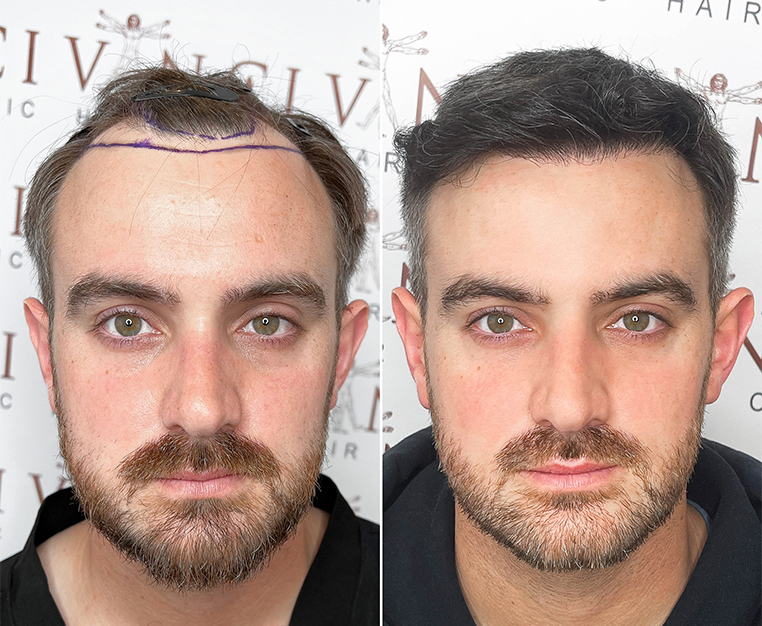
Outcomes vary by treatment and by patient, which is why diagnosis comes first. A man in the early stages of androgenetic alopecia may respond well to Maxogaine or the Vinci Laser Cap alongside Vitruvian Hair Supplements, slowing further loss and supporting the condition of existing hair. A man with more established baldness is more likely to need surgical restoration, where Long Hair FUE allows the transplanted hair to be left at length and assessed for natural growth pattern immediately after the procedure, rather than waiting months to see results as with traditional shaved FUE. Aftercare is supported through the Post Op Kit, designed specifically for the healing period following transplant surgery. Beyond individual treatment, the Vinci Foundation reflects the clinic’s broader commitment to hair loss research and patient support, an extension of the same standard of care applied in every consultation.
Questions Patients Often Ask About Male Hair Loss
Q: At what age does male hair loss usually start?
A: Genetic hair loss can begin in the late teens but most often becomes noticeable in the late twenties or thirties. The pace depends on family history and individual sensitivity to DHT. There is no fixed age, which is why an individual assessment matters more than comparison with others.
Q: Can hair loss be reversed once it starts?
A: Hair lost to androgenetic alopecia does not usually regrow on its own, but further loss can often be slowed. Medical treatments and PRP tend to work best on thinning hair rather than dormant follicles. Once a follicle stops producing hair, a transplant is usually needed to restore density.
Q: Is a hair transplant permanent?
A: FUE transplants use donor hair that is genetically resistant to balding, usually taken from the back and sides of the scalp. That resistance carries over once the hair is relocated, so transplanted hair typically grows for life. Hair that was not transplanted can continue to thin naturally over time.
Q: What is the difference between FUE and MSP?
A: FUE surgically relocates hair follicles to create natural growth in thinning areas. MSP deposits pigment into the scalp to recreate the look of short cropped hair or to disguise scarring and thinning, without moving any hair at all. The two are often combined for added density or coverage.
Q: How do I know which treatment is right for me?
A: The right option depends on your stage of hair loss, its cause and the result you want. A proper assessment of your scalp and history is more reliable than judging from photographs alone. At Vinci this assessment is carried out by trichologists, dermatologists and surgeons working together.
Talk to a Vinci Specialist
Hair loss looks different for every man, and the right next step depends on details that only a proper consultation can uncover. Whether you are noticing the first signs of thinning or are already considering surgical restoration, a conversation with Vinci’s specialist team will give you a clear picture of where you stand and what is realistically achievable. You can [Book a Consultation] with Vinci Hair Clinic to begin that conversation, with no obligation to proceed until you are ready.


 UK Store