


An FUE hair transplant (follicular unit extraction) is a minimally invasive procedure in which individual hair follicles are harvested one by one from a donor area — usually the back and sides of the scalp — and implanted into thinning or balding regions. It leaves no linear scar, only tiny dot marks, offers a comfortable recovery, and produces natural, permanent results once the transplanted hair grows in over 9–12 months.
What is an FUE hair transplant?
FUE is the most widely chosen hair transplant technique today. Rather than removing a strip of scalp, the surgeon extracts each follicular unit individually using a fine punch, typically less than 1mm in diameter. Each unit contains one to four hairs, mirroring how hair naturally grows.
Because the follicles are taken from the “permanent zone” — areas genetically resistant to the hormone responsible for male and female pattern hair loss — the transplanted hairs continue growing for life in their new location. The procedure relocates healthy hair; it does not create new hair, so careful planning of the limited donor supply is essential. Vinci’s surgical protocols are designed to maximise graft survival and natural density.
How does the FUE procedure work step by step?
An FUE session usually takes one full day, sometimes two for larger cases. The process follows a clear sequence:
- Consultation and planning — the hairline is designed, density mapped and graft numbers agreed.
- Preparation — the donor area is trimmed and local anaesthetic applied so the procedure is painless.
- Extraction — individual follicular units are harvested with a micro punch.
- Graft preparation — extracted grafts are sorted and kept in a protective solution.
- Site creation — the surgeon makes tiny incisions at precise angles to mimic natural growth direction.
- Implantation — each graft is placed by hand into the recipient sites.
The artistry lies in the angling, density and hairline design — the same procedure can look flawless or obvious depending on the surgeon’s skill, as we explain in our guide on why some transplants look unnatural.
How is FUE different from FUT?
The key difference is how follicles are harvested. FUE extracts units individually; FUT (the older “strip” method) removes a band of scalp that is then dissected into grafts. Each has trade-offs.
| Factor | FUE | FUT |
|---|---|---|
| Donor harvesting | Individual follicles | Strip of scalp |
| Scarring | Tiny dot marks | Single linear scar |
| Short hairstyles | Suits very short cuts | Scar may show if shaved |
| Recovery | Faster, no sutures | Slightly longer, sutures |
| Best for | Most patients, smaller-medium cases | Very large graft numbers |
FUE is not automatically “better” — it is simply less invasive and more flexible for most modern patients. FUT can still yield a high graft count in a single session. The right method depends on your goals and donor characteristics.
Who is a good candidate for FUE?
FUE suits a wide range of patients, but it is not right for everyone. Good candidates typically have:
- A stable, well-defined area of hair loss (or hair loss that can be planned around).
- A healthy donor area with sufficient density at the back and sides.
- Realistic expectations about coverage and density.
- General good health, with any medical conditions disclosed.
FUE is less suitable for people with very diffuse, unstable hair loss or a weak donor area, where results could disappoint. Younger patients whose hair loss is still progressing may be advised to wait or combine surgery with medication. A consultation is needed to confirm suitability, and the number of grafts required is assessed individually — our guide on graft planning explains how this works.
How much does an FUE hair transplant cost in the UK?
In the UK, an FUE hair transplant typically costs roughly £3,000 to £10,000 or more, depending mainly on the number of grafts required. Many clinics price per graft, with rates often falling between about £2 and £5 per graft; others quote a fixed package price.
| Extent of loss | Approx. grafts | Indicative UK cost |
|---|---|---|
| Receding hairline | 1,000–1,500 | ~£3,000–£5,000 |
| Crown thinning | 1,500–2,500 | ~£4,500–£7,000 |
| Larger area | 2,500–4,000+ | ~£7,000–£10,000+ |
These are approximate market ranges only; your exact quote depends on your assessment. Be cautious of unusually cheap overseas offers, where quality and aftercare can vary significantly. The value lies in surgeon expertise and graft survival, not the lowest headline price.
What does FUE recovery and results look like?
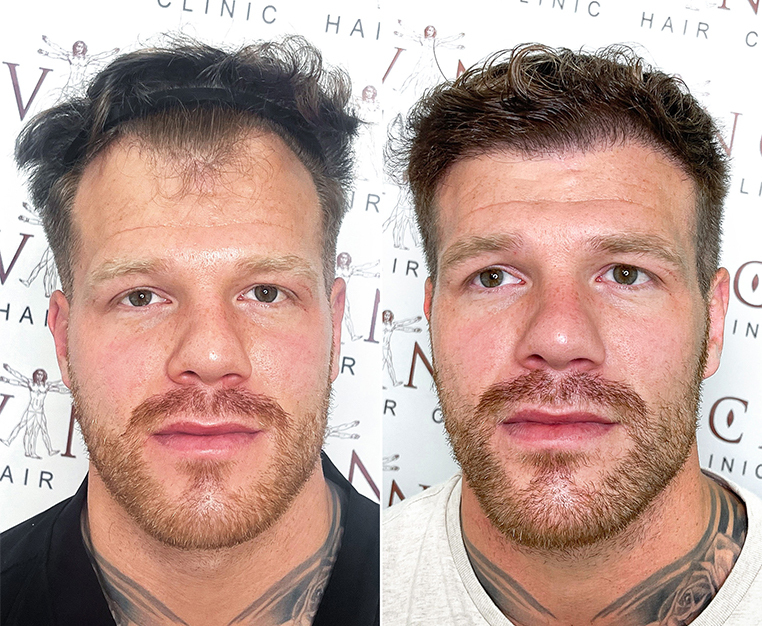
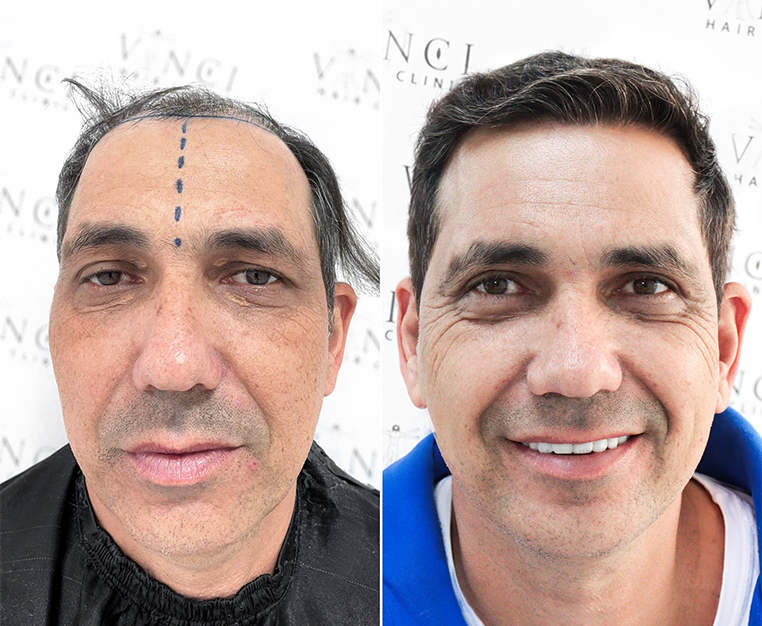
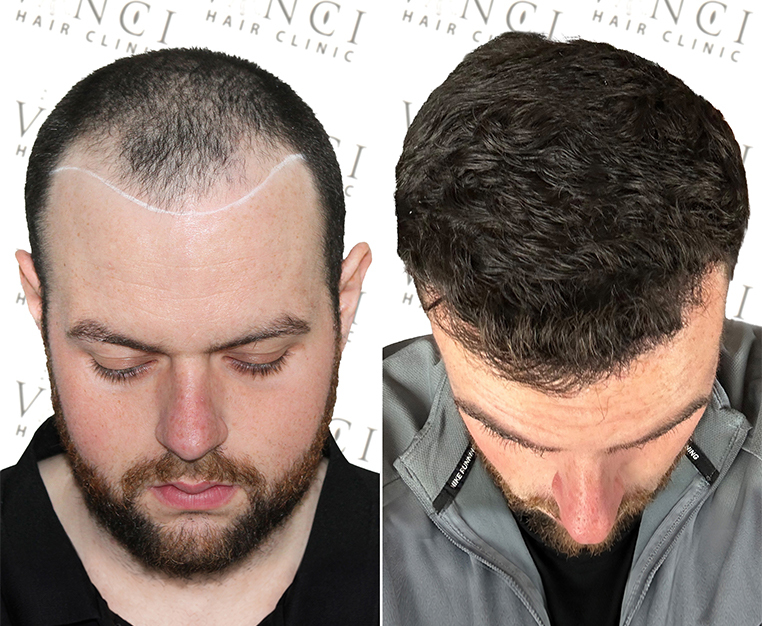
Recovery from FUE is relatively quick. Most patients return to non-strenuous work within a few days. Small scabs form around the grafts and flake away within one to two weeks, and any redness fades soon after. It is normal for the transplanted hairs to shed in the first few weeks — this “shock loss” is temporary.
New growth usually begins around three to four months. By six months you will see meaningful coverage, and the final result — with full density and texture — typically appears at 9–12 months, occasionally up to 18 months. Our week-by-week recovery guide walks through each stage. Once grown, the results are permanent, though existing non-transplanted hair may continue to thin, which is why ongoing care is sometimes recommended.
Frequently Asked Questions
Is an FUE hair transplant permanent?
Yes. The transplanted follicles are taken from areas resistant to pattern hair loss, so they continue to grow for life once established. However, your remaining natural hair can still thin over time, so some patients combine surgery with medical treatment to protect it.
Does an FUE hair transplant hurt?
The procedure itself is performed under local anaesthetic and is generally painless. Mild tenderness or tightness afterwards is common and easily managed with simple painkillers such as paracetamol. Most patients are pleasantly surprised by how comfortable it is.
How long does an FUE procedure take?
A typical FUE session lasts most of a day — usually around six to eight hours depending on the number of grafts. Larger cases may be split across two days. You remain awake and comfortable throughout, with breaks as needed.
When will I see results from an FUE transplant?
New growth usually starts at three to four months, with visible coverage by six months. The final result, including full density and natural texture, generally appears between 9 and 12 months, sometimes up to 18 months.
Will an FUE transplant leave scars?
FUE leaves only tiny dot-like marks across the donor area rather than a linear scar. These are very difficult to detect, even with short hairstyles, making FUE a popular choice for those who like to wear their hair cropped.
If you are considering surgery, the most useful first step is a personalised assessment of your hair loss pattern, donor area and expectations. Book a free, no-obligation consultation with Vinci Hair Clinic to find out whether an FUE hair transplant is right for you and to receive a tailored treatment plan.
 UK Store