


A hair transplant for a receding hairline restores a natural, age-appropriate frame to the face by relocating your own permanent follicles into the thinning corners and frontal zone. Most patients can expect visible regrowth from around 3–4 months, with full, natural-looking results typically settling at 12–18 months. A receding hairline transplant works best when planned conservatively and combined with medication to protect surrounding native hair.
A receding hairline — recession at the temples and frontal corners — is one of the earliest and most common signs of male pattern baldness. Because the hairline frames the whole face, restoring it has a striking effect on appearance and confidence. Here is what realistic results look like, how the procedure works, and the timeline you can expect.
How does a hair transplant for a receding hairline work?
The procedure moves healthy, DHT-resistant follicles from the back and sides of the scalp (the permanent donor zone) into the receding areas, where they continue to grow for life. The most common modern technique is FUE (follicular unit extraction), which harvests individual follicular units and leaves no linear scar.
- Consultation and design — your surgeon assesses your donor supply and designs a hairline suited to your face, age and likely future loss.
- Extraction — individual grafts are removed from the donor area under local anaesthetic.
- Implantation — grafts are placed at precise angles and density to recreate a natural hairline.
Single-hair grafts are used along the leading edge for a soft, natural transition, with denser multi-hair units behind. The artistry of hairline design is what separates a natural result from an obvious one — read why some transplant results look unnatural and how Vinci prevents it.
What results can you realistically expect?
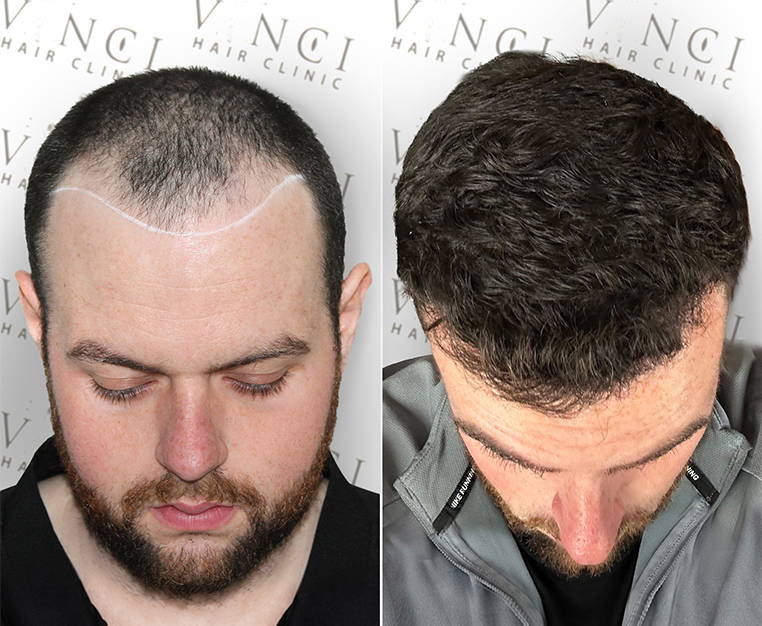
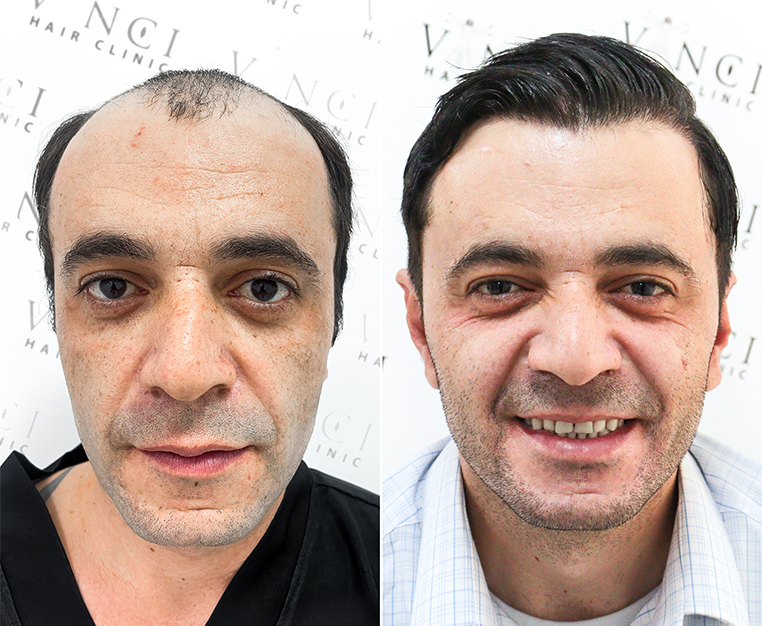
A well-planned receding hairline transplant produces a fuller, lower, more defined hairline that looks natural and grows permanently. Results are realistic rather than reversing the clock entirely — surgeons design an age-appropriate hairline, not the dense teenage line many patients first request.
- Natural density — restored hairlines look convincing in everyday life, though density is usually slightly lower than virgin teenage hair.
- Permanent growth — transplanted follicles resist DHT and keep growing for life.
- Conservative design — a slightly higher, age-appropriate line ensures the result still looks right in 20 years.
Outcomes vary with donor quality, the extent of recession and individual healing, so a consultation is needed to confirm what is achievable for you.
What is the recovery and results timeline?
Recovery is quicker than many expect, but the final result takes patience. Transplanted hairs shed in the first few weeks before regrowing — this is normal and expected.
| Timeframe | What to expect |
|---|---|
| Days 1–7 | Scabbing and mild redness; most return to work within a few days. |
| Weeks 2–4 | “Shock loss” — transplanted hairs shed; this is normal. |
| Months 3–4 | New growth begins to appear. |
| Months 6–9 | Noticeable thickening and emerging shape. |
| Months 12–18 | Full, mature, natural-looking results. |
For a detailed breakdown, see our guide to hair transplant recovery week by week.
How many grafts does a receding hairline need?
A receding hairline typically requires between 1,500 and 2,500 grafts, though the exact number depends on the degree of recession, the area to be covered and the density you want. Restoring temple corners alone needs fewer; rebuilding an entire frontal third needs more.
Graft planning balances achieving good density now with preserving donor reserves for the future, since pattern loss is progressive. Vinci’s surgeons assess this carefully — learn about how many grafts you need and our approach to planning.
How much does a receding hairline transplant cost in the UK?
In the UK, a receding hairline transplant typically costs between roughly £3,000 and £8,000, depending on the number of grafts, the clinic and the technique. Pricing is usually based on graft count or a fixed procedure fee. A hairline restoration is generally at the lower-to-mid end because it covers a smaller area than a full crown.
Be cautious of unusually cheap offers, where graft survival and natural design may suffer. The right figure for you depends on your assessment — concrete pricing is confirmed at consultation.
Should you combine surgery with other treatments?
Yes — combining a transplant with medication is strongly recommended. A transplant restores lost hair, but it does not stop your remaining native hair from thinning. Medication protects what you have so the overall result stays full.
- Finasteride — slows continued pattern loss in surrounding hair.
- Minoxidil — supports density of native hair.
- PRP therapy — may aid healing and support follicle health.
Without ongoing maintenance, native hair behind a restored hairline can thin over time, leaving an unnatural gap. A combined plan protects your long-term result. You can read more about Vinci’s exclusive surgical protocols and what sets our approach apart.
Who is a good candidate for a receding hairline transplant?
A good candidate has a stable or treatable rate of loss, a healthy donor area at the back of the scalp, and realistic expectations. Suitability is confirmed at consultation rather than assumed.
- Stable or controlled loss — ideally with medication slowing further recession, so the restored line is not undermined by ongoing thinning.
- Good donor supply — enough permanent follicles to cover the area without over-harvesting.
- Realistic goals — accepting an age-appropriate hairline rather than a teenage one.
- General good health — fit for a minor surgical procedure under local anaesthetic.
Very young patients with rapidly progressing loss are often advised to stabilise with medication first, so the surgeon can plan around a clearer long-term picture.
Frequently Asked Questions
Is a hair transplant for a receding hairline permanent?
Yes. The transplanted follicles are taken from the DHT-resistant donor area at the back of the scalp, so they continue to grow for life. However, your surrounding native hair can still thin with age, which is why medication is recommended to protect the overall result.
How long until I see results from a hairline transplant?
Transplanted hairs shed within the first few weeks, then new growth typically begins around 3–4 months. Noticeable thickening appears by 6–9 months, with full, natural-looking results usually settling at 12–18 months.
Will the new hairline look natural?
When designed and placed well, yes. Surgeons use single-hair grafts along the leading edge and an age-appropriate shape to create a soft, natural transition. Conservative, well-angled design is the key to a result that does not look obvious.
How many grafts will I need for a receding hairline?
Most receding hairlines require between 1,500 and 2,500 grafts, though this varies with the extent of recession and your goals. A consultation with scalp assessment is needed to confirm the exact figure for your case.
Does a receding hairline transplant hurt?
The procedure is performed under local anaesthetic, so it is generally comfortable with little to no pain during treatment. Mild tenderness, redness and scabbing for a few days afterwards are normal and settle quickly.
If your hairline is receding and you want to understand what results are realistically achievable, book a free, no-obligation consultation with Vinci Hair Clinic. Our surgeons will assess your donor area, design a hairline suited to your face, and explain your expected timeline and graft requirements.

 UK Store