


The hair transplant recovery timeline runs from initial healing in the first week to full results at around 12 months. Most patients see scabs clear within two weeks, experience temporary “shock loss” shedding by weeks two to six, notice early regrowth from months three to four, and enjoy the final, fully matured result between 9 and 12 months after surgery. Recovery is gradual but predictable, and most people return to normal routines within days.
What happens in the first week after a hair transplant?
The first week is the most delicate phase, when the newly placed grafts are settling into the scalp. In the first 24 to 72 hours, mild swelling, redness, and tenderness around the recipient and donor areas are normal. Tiny scabs form around each graft.
During this week you should:
- Sleep semi-upright to reduce swelling, as advised by your clinic
- Avoid touching, scratching, or knocking the grafts
- Follow the exact washing instructions you are given
- Skip exercise, alcohol, and smoking
Most patients feel well enough to return to non-physical work within two to five days. Following the aftercare instructions precisely during this window is the single most important thing you can do to protect your result.
When do the scabs fall off?
Scabs typically fall away naturally between days 7 and 14 as the grafts secure themselves. By the end of week two, the recipient area usually looks much calmer and any redness begins to fade. You should never pick at scabs, as this can dislodge a graft before it has anchored.
Gentle washing as directed helps the scabs loosen and clear on their own. By around two weeks, many patients feel comfortable being seen in public again, although close inspection may still show some pinkness.
What is shock loss and when does it happen?
Shock loss is the temporary shedding of the transplanted hairs, and it is a normal, expected part of recovery — not a sign that the procedure has failed. It usually occurs between weeks two and six. The follicles remain healthy beneath the skin; only the visible hair shaft sheds.
Some patients also experience temporary thinning of existing native hair around the transplant area, which likewise recovers. This shedding phase can be disheartening, but it is precisely what should happen before new growth begins. The follicles then enter a resting phase before regrowth starts.
Hair transplant recovery timeline week by week
This table summarises what most patients can expect at each stage. Individual recovery varies, so treat it as a typical guide rather than a guarantee.
| Time after surgery | What typically happens |
|---|---|
| Days 1–7 | Swelling, redness, scab formation; rest and careful aftercare |
| Weeks 2–3 | Scabs clear, redness fades, grafts secure |
| Weeks 2–6 | Shock loss — transplanted hairs shed (normal) |
| Months 3–4 | Early, fine regrowth begins to appear |
| Months 6–9 | Noticeable density and thickening of new hair |
| Months 9–12 | Final, fully matured result |
For a clinic-specific breakdown, see Vinci’s detailed guide to what to expect during recovery week by week.
When will I see new hair growth?
New hair growth typically begins around months three to four, though it starts fine and sparse before thickening. By months six to nine, most patients see meaningful density, and the result continues to mature up to the 12-month mark. For some, full maturation takes up to 18 months, particularly in the crown.
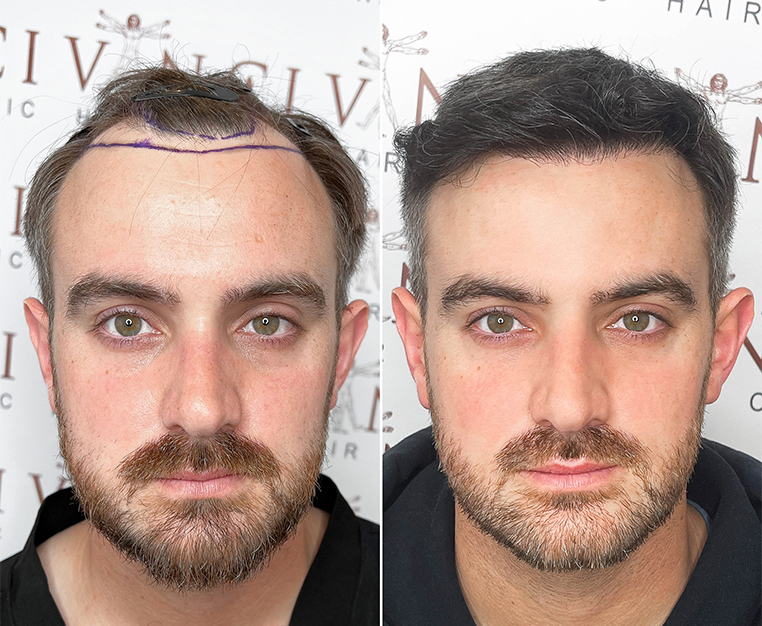
It is important to be patient through the early months. The temptation to judge the outcome too soon is common, but the transformation is gradual. Comparing standardised photos at each milestone is the best way to track genuine progress.
How can I support a smooth recovery?
You can actively protect your result by following your clinic’s guidance closely. Do follow the recommended washing routine, sleep as advised, stay hydrated, and attend every follow-up. Don’t smoke, drink alcohol, exercise intensely, or expose the scalp to strong sun in the early weeks.
Some clinics recommend supportive treatments such as PRP therapy to support hair regrowth or ongoing medication to protect existing hair. Whether these suit you depends on your individual case, and your surgeon will advise during follow-up. Exploring Vinci’s exclusive surgical protocols can also help you understand how careful technique supports faster, more reliable healing.
Frequently Asked Questions
How long does it take to fully recover from a hair transplant?
Surface healing takes around two weeks, but the full result takes 9 to 12 months as the transplanted hair grows and matures. You can usually return to normal daily activities within days, with strenuous exercise resumed after two to four weeks.
Is shock loss after a hair transplant normal?
Yes, shock loss is a normal and expected part of recovery, usually happening between weeks two and six. The transplanted follicles stay healthy beneath the skin and regrow; only the visible hair shaft sheds temporarily.
When can I return to work after a hair transplant?
Most patients return to non-physical work within two to five days. If your job is physically demanding, you may need to wait one to two weeks to avoid sweating and pressure on the grafts.
When can I exercise again after a hair transplant?
Light activity can usually resume after about a week, but intense exercise, swimming, and heavy lifting should generally wait two to four weeks. Always follow your surgeon’s specific advice.
How long until I see the final result?
The final, fully matured result typically appears between 9 and 12 months after surgery, with the crown sometimes taking up to 18 months. Visible regrowth usually starts around months three to four.
If you would like a clear, personalised picture of what your own recovery and timeline might look like, the best starting point is an expert assessment. Book a free, no-obligation consultation with Vinci Hair Clinic to discuss your goals and what to expect at every stage of recovery.


 UK Store