


Yes, PRP (Platelet-Rich Plasma) therapy does work for hair loss, and the clinical evidence supporting it has grown considerably over the past decade. It is most effective for patients in the earlier stages of androgenetic alopecia, where the follicles are thinning but still active, and it works by stimulating those follicles with concentrated growth factors drawn from the patient’s own blood. When delivered through a structured, medically supervised protocol, PRP can meaningfully slow shedding and support measurable regrowth.
Why This Matters, and Who It Affects
Hair loss is not a minor inconvenience. For the millions of men and women affected by androgenetic alopecia (pattern hair loss), alopecia areata, or stress-related shedding, the psychological weight of watching hair thin can be significant and sustained. Yet many patients remain unsure whether the treatments they encounter are genuinely clinical or simply cosmetic products dressed up in medical language.
That uncertainty is understandable. The hair restoration industry includes a wide spectrum of options, from prescription medications to surgical transplants, and PRP sits somewhere in the middle: a minimally invasive, biologically active treatment that requires skill, precision, and proper patient selection to deliver results.
PRP is relevant to a broad patient group. It suits those who are not yet candidates for a hair transplant, those who want to enhance the results of a transplant they have already had, or those whose hair loss is diffuse rather than concentrated in a single zone. It is also used as a maintenance treatment for patients who have achieved a good result from surgery and want to protect it long-term. [Hair loss treatment options] Understanding where PRP fits in that broader picture is the first step toward making an informed decision.
The Vinci PRP Protocol: A Structured Clinical Approach
Not all PRP treatments are equivalent. The outcome depends heavily on how the blood is processed, what concentration of platelets is achieved, how deeply the plasma is injected, and how consistently the treatment schedule is followed. This is where the approach taken by Vinci Hair Clinic makes a substantive difference.
Vinci Hair Clinic was founded in 2006 and has since grown to more than 30 clinics worldwide, treating over 100,000 patients across a full range of hair restoration needs. With its headquarters on Harley Street in London, Vinci operates at the intersection of clinical rigour and genuine patient care, and PRP is one of the treatments that its specialist team has refined over many years of practice.
The Vinci PRP Protocol is not a generic injection service. It begins with a consultation conducted by trichologists and dermatologists who assess scalp health, the pattern and degree of hair loss, and whether the patient is likely to respond well to PRP based on their individual profile. Blood is drawn and processed using centrifugation to isolate the platelet-rich fraction, which is then injected at precise depths into the scalp using a technique developed and standardised across the Vinci clinical network.
Crucially, the protocol is designed as a course rather than a one-off session. Most patients undergo an initial series of treatments spaced a few weeks apart, followed by maintenance sessions to sustain the biological signal in the follicles. This structured approach reflects the understanding that PRP is not a single event but an ongoing conversation between the treatment and the follicle. [Vinci PRP consultation booking]
Vinci’s clinical team also integrates PRP with complementary treatments where appropriate, including Alomesa Mesotherapy and Vinci’s own post-operative care products, to ensure that results are supported across multiple biological pathways.
What the Evidence Shows
The scientific literature on PRP for hair loss has matured considerably. Multiple peer-reviewed studies have demonstrated statistically significant increases in hair density, shaft diameter, and the ratio of actively growing (anagen) follicles following a structured course of PRP injections. A systematic review published in the journal Dermatologic Surgery found that the majority of controlled trials reported positive outcomes for androgenetic alopecia, particularly when higher platelet concentrations were used and treatment intervals were carefully managed.
The mechanism is well understood. Platelets release growth factors including Platelet-Derived Growth Factor (PDGF), Vascular Endothelial Growth Factor (VEGF), and Insulin-like Growth Factor (IGF-1). These compounds stimulate the proliferation of dermal papilla cells, which are the cells at the base of the hair follicle responsible for regulating the hair growth cycle. By delivering a concentrated dose of these signals directly into the scalp, PRP can, in effect, wake follicles that have become dormant and extend the active growth phase.
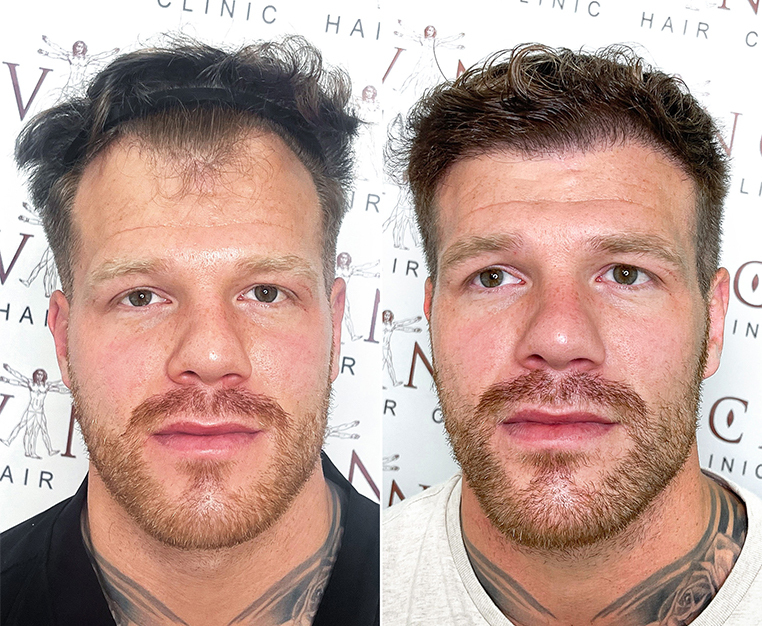
Patient outcomes at Vinci are consistent with what the clinical literature predicts. Patients who begin treatment at an early to moderate stage of hair loss, and who complete the full protocol, typically report reduced shedding within the first few weeks and visible improvement in density over a course of three to six months. Results vary by individual, which is why the initial assessment by Vinci’s trichology and dermatology team is so important: it aligns expectations with what is biologically achievable for that specific patient.
For patients who have undergone a hair transplant at Vinci, PRP is frequently used as part of the post-operative plan to support graft survival and accelerate the recovery of transplanted follicles. [FUE hair transplant aftercare] This dual application, both as a standalone treatment and as a surgical adjunct, reflects the versatility of PRP when it is administered with clinical discipline.
Frequently Asked Questions
Q: How many PRP sessions do I need to see results for hair loss?
A: Most structured protocols, including the Vinci PRP Protocol, involve an initial course of three to four sessions spaced three to four weeks apart, followed by maintenance treatments every three to six months. Visible results, such as reduced shedding and increased density, typically become apparent after the second or third session, with more significant improvement by the three-to-six-month mark. The number of sessions recommended will depend on the degree and pattern of your hair loss, which is assessed at your initial consultation.
Q: Is PRP hair treatment painful?
A: Most patients describe the treatment as mildly uncomfortable rather than painful. A topical anaesthetic is applied to the scalp before injections to minimise discomfort, and the procedure itself typically takes between 45 and 90 minutes from blood draw to completion. Any tenderness following the session usually resolves within 24 to 48 hours. The treatment requires no downtime, and most patients return to normal activities the same day.
Q: Can PRP regrow hair on a completely bald scalp?
A: PRP works by stimulating existing follicles, not by regenerating follicles that are no longer present. If an area of the scalp is completely smooth and the follicles have been permanently lost, PRP will not produce regrowth in that zone. It is most effective where thinning is active, follicles are miniaturised but still present, and the hair loss has not yet reached the final stage. This is one reason why early assessment and treatment are strongly advisable.
Q: Does PRP work for women with hair loss?
A: Yes. Female pattern hair loss and diffuse thinning in women respond well to PRP, often more consistently than male pattern baldness because women tend to present for treatment at an earlier stage. Vinci’s clinical team treats a significant number of female patients with PRP, frequently in combination with trichological assessment and complementary treatments such as Alomesa Mesotherapy or Vitruvian Hair Supplements to address any underlying nutritional or hormonal contributors.
Q: How does PRP compare to a hair transplant?
A: PRP and hair transplant surgery address different problems. A transplant permanently relocates donor follicles to areas of loss and is the appropriate choice where hair loss is established and the patient has sufficient donor supply. PRP supports and stimulates existing follicles; it does not add follicles to the scalp. Many patients use both: a transplant to restore density in areas of significant loss, and PRP as part of ongoing maintenance to protect native hair and support the transplanted grafts. A Vinci consultation will clarify which approach, or which combination, fits your specific situation.
Taking the Next Step
If you are experiencing hair loss and want an honest clinical assessment of whether PRP is appropriate for you, a consultation with the Vinci Hair Clinic team is the right starting point. With specialists in trichology, dermatology, and hair transplant surgery across more than 30 clinics worldwide, Vinci can assess your hair health, explain the full range of options available, and build a treatment plan that reflects your individual biology, not a generic template. Book a consultation at your nearest Vinci clinic to get the straight answers you deserve.
 UK Store