


Best Hair Loss Treatments in the UK
The best hair loss treatments available in the UK include clinically proven medications like minoxidil and finasteride, regenerative therapies such as PRP, surgical options like FUE transplants, and non-invasive alternatives including low-level laser therapy and scalp micropigmentation. The right choice depends on the cause and stage of your hair loss.
UK Hair Loss Treatment Comparison
| Treatment | Effectiveness | Typical UK Cost | Time to See Results | Best For |
|---|---|---|---|---|
| Minoxidil (topical) | Moderate – slows loss, some regrowth | £10–£30/month | 3–6 months | Early-stage thinning |
| Finasteride (oral) | High – blocks DHT, proven regrowth | £15–£50/month | 3–12 months | Male pattern baldness |
| PRP Therapy | Moderate to high – stimulates follicles | £200–£500/session | 3–6 months (after 3+ sessions) | Thinning hair, early loss |
| FUE Hair Transplant | Very high – permanent results | £3,000–£12,000 | 9–15 months for full growth | Advanced hair loss |
| Low-Level Laser Therapy | Moderate – supports hair density | £200–£800 (device) | 6–12 months | Mild thinning, adjunct therapy |
| Scalp Micropigmentation | Cosmetic – creates appearance of density | £1,500–£4,000 | Immediate (2–3 sessions) | Buzz-cut look, scar concealment |
Minoxidil: The Over-the-Counter Starting Point
Minoxidil is the only topical hair loss treatment licensed for sale over the counter in the UK. You don’t need a prescription — it’s available at most pharmacies under brand names like Regaine, as well as unbranded alternatives.
Originally developed as a blood pressure medication, minoxidil was found to promote hair growth as a side effect. It works by widening blood vessels in the scalp, which improves blood flow to hair follicles and extends the growth phase of the hair cycle.
According to NICE clinical guidelines, minoxidil is recommended as a first-line treatment for androgenetic alopecia in both men and women. The 5% solution tends to deliver stronger results than the 2% version, though the 2% formulation is more commonly recommended for women.
Here’s the catch: you’ve got to stick with it. Stop applying minoxidil and any hair you’ve regained will gradually fall out within a few months. It’s a commitment, not a cure. Most people notice less shedding within 8–12 weeks, with visible regrowth appearing around the 4–6 month mark.
Side effects are generally mild. Some users experience scalp irritation or dryness, and there’s an initial “shedding phase” in the first few weeks that can feel alarming but is actually a sign it’s working — old hairs making way for new growth.
If you’re noticing the early signs of thinning in your 20s, minoxidil is often the simplest place to start.
Finasteride: The Prescription That Targets the Root Cause
Finasteride is the most widely prescribed oral medication for male pattern hair loss in the UK, and is not a cosmetic supplement — it’s a genuine pharmaceutical that targets the hormonal mechanism driving hair loss.
It works by blocking the enzyme 5-alpha reductase, which converts testosterone into dihydrotestosterone (DHT). DHT is the hormone responsible for shrinking hair follicles in men with a genetic predisposition to baldness. By reducing DHT levels by roughly 70%, finasteride slows follicle miniaturisation and, in many cases, reverses it.
The clinical evidence is robust. According to a long-term study published in the European Journal of Dermatology, 90% of men taking 1mg finasteride daily maintained or increased their hair count over a 5-year period.
Finasteride vs Minoxidil: Quick Comparison
| Factor | Finasteride | Minoxidil |
|---|---|---|
| How it works | Blocks DHT production internally | Increases scalp blood flow topically |
| Prescription required | Yes (UK) | No — over the counter |
| Suitable for women | Not recommended (pregnancy risk) | Yes (2% solution) |
| Application | One tablet daily | Applied to scalp twice daily |
| Common side effects | Reduced libido (2–4% of users) | Scalp irritation, initial shedding |
| Typical monthly cost (UK) | £15–£50 | £10–£30 |
In the UK, you can get finasteride through your GP or via regulated online pharmacies. The standard dose is 1mg daily, and you’ll typically need to take it for at least 3–6 months before judging whether it’s working for you.
For women experiencing hair thinning, finasteride isn’t typically prescribed due to risks during pregnancy. If that applies to you, have a look at our guide on recognising thinning hairlines in women for alternative approaches.
PRP Therapy: Using Your Body’s Own Growth Factors
PRP (platelet-rich plasma) therapy has become one of the fastest-growing hair loss treatments in the UK over the past five years. The concept is straightforward: a small amount of your blood is drawn, processed in a centrifuge to concentrate the platelets, then injected directly into your scalp.
Those concentrated platelets release growth factors that stimulate dormant follicles and promote new hair growth. It’s your own biology doing the work, which means there’s no risk of allergic reaction or rejection.
According to a 2019 systematic review in Dermatologic Surgery, PRP treatment produced statistically significant improvements in hair density and thickness across multiple controlled trials. The researchers noted that while results vary, most patients see meaningful improvement after 3–4 sessions spaced 4–6 weeks apart.
PRP works well as a standalone treatment for early-stage thinning, but it’s increasingly used alongside other treatments. Many of our patients combine PRP with FUE hair transplant surgery to accelerate healing and maximise graft survival rates.
Each session takes about 30–45 minutes. There’s minimal downtime — most people go straight back to work. Some redness or tenderness at the injection sites is normal and fades within a day or two.
The main drawback is cost. At £200–£500 per session, with maintenance sessions recommended every 6–12 months, PRP requires ongoing financial commitment. But for people who want a drug-free option or who haven’t responded well to minoxidil alone, it fills an important gap.
Hair Transplant Surgery: The Permanent Solution
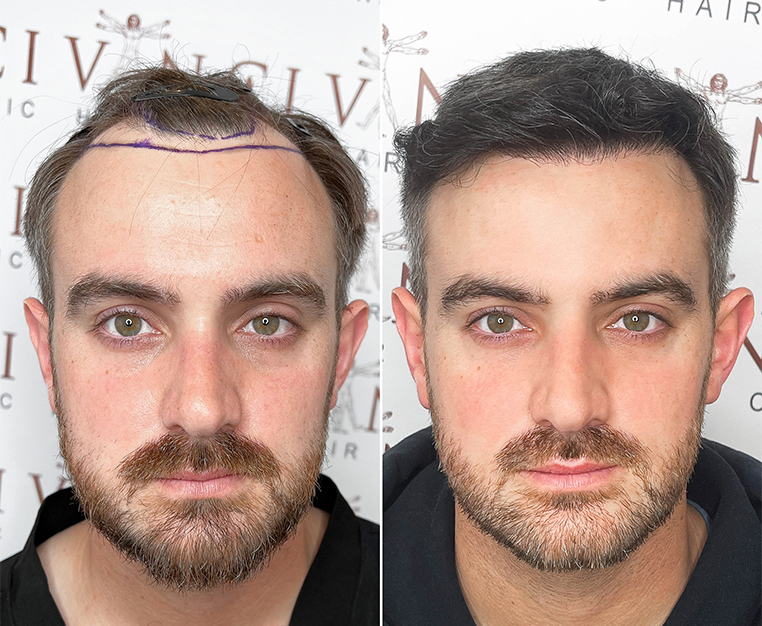
When medication and non-invasive treatments aren’t enough, hair transplant surgery offers a permanent solution. It’s the only treatment that physically moves healthy follicles from donor areas (typically the back and sides of the head) to thinning or bald areas.
The two main techniques used in the UK are:
- FUE (Follicular Unit Extraction) — Individual follicles are extracted one by one using a micro-punch tool. Leaves tiny dot scars that are virtually invisible. This is the more popular choice in 2026.
- FUT (Follicular Unit Transplantation) — A thin strip of scalp is removed from the donor area, and individual grafts are dissected from it. Leaves a linear scar but can yield a higher number of grafts in a single session.
According to the NHS, hair transplants are not available on the NHS and are classified as cosmetic surgery. Costs in the UK typically range from £3,000 to £12,000, depending on the number of grafts and the clinic.
Results aren’t instant. Transplanted hair falls out within the first 2–4 weeks (completely normal), then new growth starts around month 3–4. You’ll see the full result at 12–15 months. But once those follicles establish themselves, they’re there for good.
Want to see what’s actually possible? Our before-and-after gallery shows real patient results at different stages of their hair restoration journey.
Low-Level Laser Therapy: Light-Based Hair Stimulation
Low-level laser therapy (LLLT) uses red light wavelengths to stimulate cellular activity in hair follicles. It’s available as laser caps, helmets, combs, and in-clinic treatments across the UK.
The science behind LLLT centres on photobiomodulation — specific wavelengths of light (typically 650–670nm) are absorbed by cells in the follicle, which boosts ATP production and extends the anagen (growth) phase of the hair cycle.
LLLT is not a standalone cure for significant hair loss. It works best as a supporting treatment alongside medications or following a transplant procedure. Think of it as a way to give your existing treatments a boost rather than a replacement for them.
Clinical evidence is promising but more limited than for minoxidil or finasteride. A 2014 randomised controlled trial published in the American Journal of Clinical Dermatology found that LLLT devices produced a statistically significant increase in hair density compared to sham devices over 26 weeks.
Home devices range from £200 to £800, while in-clinic sessions typically cost £50–£100 each. Most protocols recommend 3 sessions per week for at least 6 months. The main advantage? Virtually zero side effects. The main disadvantage? Results tend to be more subtle than pharmaceutical treatments.
Scalp Micropigmentation: The Non-Surgical Confidence Boost
Scalp micropigmentation (SMP) takes a different approach entirely. Rather than regrowing hair, it uses medical-grade micro-needles to deposit pigment into the scalp, creating the appearance of closely-shaved hair follicles.
It’s essentially a specialised tattoo — but don’t let that put you off. When performed by a skilled practitioner, SMP looks remarkably natural. It’s particularly effective for:
- Creating the appearance of a fuller buzz-cut style
- Adding density to thinning areas
- Concealing scars from previous hair transplant procedures
- Defining a more even hairline
The process usually requires 2–3 sessions spaced a week or two apart. Results are immediate after each session, though the final look settles once the pigment has fully healed.
SMP costs between £1,500 and £4,000 in the UK, depending on the extent of coverage. It’s a one-time investment with occasional top-ups needed every 4–6 years as pigment naturally fades.
For people who’ve exhausted other options — or who simply want a low-maintenance solution — SMP delivers immediate, tangible results. At Vinci Hair Clinic, we offer SMP as both a standalone treatment and a complement to transplant surgery.
Lifestyle Changes That Support Hair Health
No lifestyle change will reverse genetic hair loss on its own. Let’s be clear about that. But certain habits can accelerate thinning, and addressing them supports whatever clinical treatment you’re using.
Nutrition matters. Iron deficiency is one of the most common nutritional causes of hair shedding, particularly in women. Ferritin levels below 40 ng/mL are associated with increased hair loss. Biotin, zinc, and vitamin D also play supporting roles in the hair growth cycle. A blood test through your GP can identify any deficiencies worth addressing.
Stress is a real trigger. Telogen effluvium — widespread temporary shedding caused by physical or emotional stress — affects thousands of people in the UK every year. The hair typically recovers once the stressor is resolved, but chronic stress can compound genetic hair loss. We’ve written a detailed guide on natural ways to combat stress-related hair loss if this resonates with you.
Watch for trigger events. Significant weight loss, hormonal shifts, and post-pregnancy changes can all cause temporary but distressing hair shedding. If you’ve recently lost a lot of weight, our article on hair loss after weight loss explains what’s happening and when to expect recovery. New mothers dealing with shedding will find our guide on postpartum hair loss helpful too.
Other practical steps: avoid excessive heat styling, don’t pull hair into tight styles regularly (traction alopecia is more common than people realise), and quit smoking if you haven’t already — smoking restricts blood flow to the scalp and accelerates follicle ageing.
Choosing the Right Hair Loss Treatment
With this many options available, how do you decide? It comes down to three factors: the cause of your hair loss, how far it’s progressed, and what you’re prepared to commit in terms of time and budget.
If you’re catching it early — slight thinning at the crown or temples — start with minoxidil and consider adding finasteride if you’re male. This combination is backed by the strongest clinical evidence and costs under £80 a month.
If medication alone isn’t cutting it, PRP therapy adds a regenerative boost. It pairs especially well with an existing medication routine and can make a noticeable difference over 3–6 months.
If you’ve got visible bald patches or significant recession, a hair transplant is likely your best route to meaningful restoration. Modern FUE techniques deliver natural-looking results with minimal downtime. Take a look at Vinci’s FUE transplant pricing to understand what’s involved.
If you want an immediate cosmetic result without surgery or ongoing medication, scalp micropigmentation works brilliantly — especially if you’re comfortable with a shorter hairstyle.
The single most important step? Getting a proper diagnosis. Hair loss has dozens of potential causes, and treating the wrong one wastes time and money. A consultation with a specialist — not just a Google search — is where effective treatment begins.
Frequently Asked Questions
What is the most effective hair loss treatment in the UK?
For most people with pattern hair loss, a combination of finasteride and minoxidil delivers the strongest results. Clinical evidence shows this dual approach can slow further loss and encourage regrowth in the majority of patients. For advanced hair loss, FUE hair transplant surgery remains the gold standard for permanent restoration.
Can I get hair loss treatment on the NHS?
The NHS generally doesn’t fund cosmetic hair loss treatments. However, your GP can prescribe finasteride or minoxidil, and you’ll pay the standard NHS prescription charge. If your hair loss is caused by an underlying medical condition such as alopecia areata, you may be referred to a dermatologist for further treatment options on the NHS.
How much does a hair transplant cost in the UK?
Hair transplant costs in the UK typically range from £3,000 to £12,000, depending on the number of grafts needed, the technique used, and the clinic. FUE procedures tend to cost more per graft but leave minimal scarring. Most reputable clinics, including Vinci Hair Clinic, offer free consultations and payment plans to help spread the cost.
Does PRP therapy really work for hair loss?
Yes, clinical studies support PRP therapy as an effective treatment for hair thinning. A 2019 systematic review in Dermatologic Surgery found that PRP increased hair count and thickness in patients with androgenetic alopecia. Results vary between individuals, and multiple sessions are usually needed. It works particularly well when combined with other treatments.
At what age should I start treating hair loss?
The earlier you address it, the better your chances of preserving existing hair. If you notice thinning in your 20s, consult a specialist sooner rather than later. Treatments like finasteride and minoxidil work best when started in the early stages, before significant follicle miniaturisation has occurred.


 UK Store