


Male hair loss pattern, known medically as androgenetic alopecia or male pattern baldness, is the most common cause of hair loss in men and is driven by genetics and the hormone dihydrotestosterone (DHT). It typically begins with a receding hairline and thinning crown, follows a predictable pattern, and affects roughly half of men by age 50.
What is male pattern baldness?
Male pattern baldness is a hereditary, hormone-driven form of hair loss that accounts for the large majority of cases in men. Unlike sudden or patchy shedding, it progresses slowly and predictably over years. Hair follicles that are genetically sensitive to DHT gradually shrink — a process called miniaturisation — producing finer, shorter hairs until they stop growing altogether.
The condition is permanent in the sense that affected follicles do not naturally recover, but its progression can often be slowed and, in many cases, treated. It is not caused by poor hygiene, wearing hats or “blocked” follicles — these are common myths. It is, fundamentally, a genetic predisposition expressing itself over time.
What causes the male hair loss pattern?
Three interacting factors explain the male hair loss pattern: genetics, hormones and time.
Genetics
The tendency to lose hair is inherited from both sides of the family — not, as the old myth claims, solely from the mother’s father. If close male relatives experienced baldness, the likelihood is higher, though inheritance is complex and not guaranteed.
DHT and hormones
Testosterone is converted into DHT by an enzyme called 5-alpha-reductase. In men with a genetic sensitivity, DHT binds to receptors in scalp follicles and gradually shrinks them. Importantly, men with hair loss usually do not have abnormally high testosterone — they simply have follicles that are more reactive to DHT.
Age
Hair loss is progressive. The proportion of men affected rises steadily with age: many begin to notice changes in their twenties or thirties, and prevalence increases each decade thereafter.
Other factors such as stress, illness, nutritional deficiencies and certain medications can cause or worsen shedding, but these typically produce different patterns (often diffuse) rather than the classic receding-hairline-and-crown shape of androgenetic alopecia.
It is worth stressing what does not cause the male hair loss pattern. It is not the result of poor circulation to the scalp, “clogged” follicles, or anything you have done wrong. The follicles are not dead in the early stages — they are shrinking. That distinction matters, because follicles that are miniaturising but still active are the ones most responsive to early treatment, whereas long-dormant follicles cannot be revived without surgery.
How does the male hair loss pattern progress?
The male hair loss pattern follows recognisable stages, most often measured using the Norwood Scale — the standard classification clinicians use to assess severity and plan treatment. Understanding your stage helps set realistic expectations.
| Norwood stage | Typical appearance |
|---|---|
| Stage 1 | No significant recession; full hairline |
| Stage 2 | Slight recession at the temples |
| Stage 3 | Deeper temple recession; first stage classed as balding |
| Stage 3 Vertex | Recession plus visible thinning at the crown |
| Stage 4 | Larger bald areas at hairline and crown, separated by a band of hair |
| Stage 5 | The dividing band narrows; areas begin to merge |
| Stage 6 | Hairline and crown loss join; sparse bridge remains |
| Stage 7 | Most advanced; hair remains only at the back and sides |
Two hallmark patterns dominate: recession at the temples forming an “M” shape, and thinning at the crown. In many men these two areas eventually meet. The hair at the back and sides usually persists, because those follicles are typically resistant to DHT — which is precisely why they are used as donor hair in transplant surgery.
What are the early signs of male pattern hair loss?
Spotting hair loss early matters, because most treatments work best at preserving existing hair rather than regrowing what is already gone. Watch for:
- A hairline that is creeping backwards at the temples.
- More hair than usual on the pillow, in the shower drain or on a comb.
- Thinning at the crown, often first noticed in photos taken from above.
- Hair that feels finer or appears more see-through in bright light.
- A widening parting.
Some daily shedding is entirely normal — losing around 50 to 100 hairs a day is typical. Persistent thinning or a changing hairline over months is the more reliable signal. If you are unsure, a professional assessment can distinguish pattern hair loss from other, sometimes reversible, causes.
Can male pattern hair loss be treated?
Yes — male pattern hair loss can often be managed effectively, though no single approach suits everyone and individual assessment matters. Treatments fall into three broad categories: medical, non-surgical and surgical.
Medical treatments
Two medications are most commonly discussed. Topical minoxidil is applied to the scalp to prolong the growth phase and improve density. Finasteride, a prescription tablet, reduces DHT levels to slow loss. Both generally need to be used continuously to maintain results, and a doctor should advise on suitability and potential side effects.
Non-surgical options
Several clinic-based treatments aim to support existing hair without surgery. Platelet-rich plasma (PRP) therapy uses a concentrate of the patient’s own blood to stimulate follicles, while Micro Scalp Pigmentation (MSP) creates the appearance of density by depositing pigment to mimic hair follicles. A broader summary is available in Vinci’s overview of non-surgical hair loss treatments.
Surgical treatment
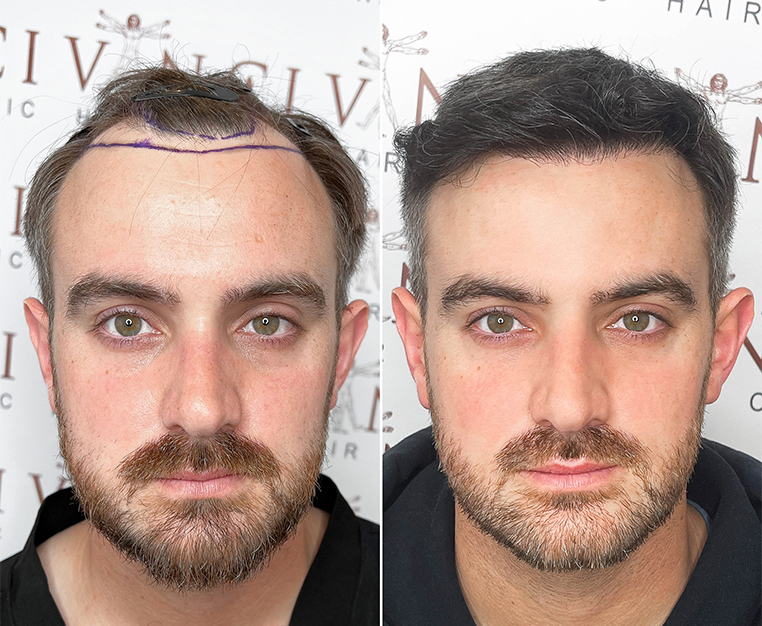
A hair transplant relocates DHT-resistant follicles from the back and sides to thinning areas. Modern techniques such as FUE produce natural-looking, permanent results when well planned. Suitability depends on donor supply and the degree of loss, which is why a consultation is essential before deciding.
When should you see a specialist about hair loss?
You should consider a professional assessment if your hairline is visibly changing, if thinning is progressing month on month, or if hair loss is affecting your confidence. Earlier intervention generally gives more options, because preserving hair is easier than replacing it.
A specialist can confirm whether you are experiencing androgenetic alopecia or another cause, assess your Norwood stage, evaluate donor supply and outline a realistic plan. Do seek advice early; don’t wait until loss is advanced before exploring options. Self-diagnosis from internet photos is no substitute for a clinical examination.
Which myths about male pattern hair loss should you ignore?
Hair loss attracts more misinformation than almost any other common condition. Separating fact from fiction helps you avoid wasting money on remedies that cannot work and recognise treatments that genuinely help.
- Myth: hats and helmets cause baldness. Wearing headgear does not strangle follicles or trigger pattern loss; the cause is genetic and hormonal.
- Myth: frequent washing makes hair fall out. The hairs lost in the shower were already in the natural shedding phase. Washing does not accelerate androgenetic alopecia.
- Myth: cutting hair makes it grow back thicker. Trimming affects only the visible shaft, not the follicle, so it changes neither growth rate nor density.
- Myth: it only comes from your mother’s side. Inheritance is from both parents and is genetically complex.
- Myth: it’s caused by high testosterone. It is follicle sensitivity to DHT, not raw testosterone levels, that drives the pattern.
Do treat dramatic “miracle cure” claims with caution; don’t delay proven options while testing unproven ones. The treatments with genuine clinical backing are the medical, non-surgical and surgical approaches outlined above, all of which are best discussed with a specialist.
How is male pattern hair loss diagnosed?
Diagnosis is usually straightforward for an experienced clinician, but it is more than a glance in the mirror. A proper assessment confirms the cause, rules out other conditions and establishes a baseline to measure future change against.
Visual examination and history
A specialist examines the pattern of thinning, checks the density of the donor area and asks about family history and how quickly the loss has developed. The classic recession-and-crown pattern is highly characteristic of androgenetic alopecia.
Scalp analysis
Magnified scalp analysis can reveal miniaturisation — the shrinking of follicles — before it is obvious to the naked eye. This helps catch pattern loss early, when intervention is most effective.
Ruling out other causes
Diffuse shedding, patchy loss or sudden onset can point to causes other than pattern baldness, such as thyroid issues, nutritional deficiency, stress-related shedding or alopecia areata. Identifying these matters, because some are reversible and require quite different treatment. This is precisely why self-diagnosis is unreliable and a professional opinion is worth seeking.
Does the male hair loss pattern differ between individuals?
Yes — while the broad pattern is consistent, the pace and final extent vary considerably between men. Some experience slow recession over decades; others progress more quickly in their twenties. Genetics largely dictate the eventual pattern, but lifestyle factors such as smoking, chronic stress and poor nutrition may influence how the condition presents.
This variation is exactly why generic predictions are unreliable. Two men of the same age and Norwood stage can have very different donor supplies and goals, meaning their ideal treatment paths differ. A tailored assessment, rather than a one-size-fits-all rule, is the only dependable way to understand your own outlook.
Frequently Asked Questions
At what age does male pattern baldness usually start?
Male pattern baldness can begin any time after puberty, but many men first notice it in their twenties or thirties. Prevalence rises with age, with around half of men showing some degree of loss by 50. Earlier onset can indicate a more advanced eventual pattern.
Is male pattern hair loss reversible?
Once a follicle has fully miniaturised, it does not naturally regrow. However, treatments can slow progression and improve density in hair that is thinning but still active. This is why early intervention tends to give the best outcomes.
Does male pattern baldness come from the mother’s side?
No — this is a common myth. Hair loss is inherited from both sides of the family, and the genetics are complex. A father or relatives on either side experiencing baldness can raise your likelihood, but it is not guaranteed.
Can stress cause the male hair loss pattern?
Stress can trigger temporary shedding, usually in a diffuse rather than patterned way, and this often recovers. Genuine androgenetic alopecia, however, is driven by genetics and DHT rather than stress, though stress may make existing thinning more noticeable.
What is the most effective treatment for male pattern hair loss?
There is no single best treatment for everyone. Medication can slow loss, non-surgical therapies support density, and a hair transplant offers a permanent surgical solution. The right approach depends on your stage, donor supply and goals, which a consultation can clarify.
Understanding your male hair loss pattern is the first step towards doing something about it. To find out your Norwood stage, assess your donor supply and explore the treatment options best suited to you, book a free, no-obligation consultation with Vinci Hair Clinic and get clear, expert guidance tailored to your hair.


 UK Store