

Treatment Hub · Beard Transplant
Beard Transplant UK: Cost, Results and Recovery
Everything about a beard transplant in one place: what it is, what it costs in the UK, which areas can be filled, real before and after results, recovery week by week, and when a trim or minoxidil makes more sense than surgery.
The short answer
A beard transplant moves your own hair follicles, usually from the back of the scalp, into the beard area to fill patches, rebuild missing areas or create a full beard. At Vinci it is carried out with the FUE technique under local anaesthetic: each follicle is removed individually and placed one by one, following the angle and direction of natural facial hair. Once established, the transplanted hair is expected to be long lasting and can be trimmed, styled or shaved like the rest of your beard.
A beard transplant is a surgical way to add beard hair where it does not grow, using your own hair, with no sutures and a return to day to day life after around 24 hours for most patients.
It suits men with patchy or sparse growth, a beard that never connected, missing areas such as the moustache or cheeks, or scars in the beard area, who have a healthy donor area at the back of the scalp.
It is not a treatment for beard loss that is still active, such as alopecia areata in the beard, and it is not instant: the final result takes around 9 to 12 months.
How much does a beard transplant cost in the UK?
The price of a beard transplant depends on how many areas are treated and how many grafts they need. A moustache or a single scar needs far fewer grafts than a full beard built from scratch, so it costs less. Your price is confirmed at a free consultation, after a surgeon has assessed your beard and donor area.
Your price depends on the areas treated and the grafts they need.
Free consultation, face to face or online.
- Assessment of your beard and donor area
- Design of the beard shape with you
- Your graft plan and confirmed price
For scalp hair transplants, Vinci uses fixed price tiers that are the same at every UK clinic, and the UK hair transplant cost breakdown explains them in full. Beard work is quoted separately, so check your beard price at consultation. Finance details are in our finance disclosure.
Which areas can be treated?
Most men do not need a full beard transplant. These are the areas Vinci can treat, and what is involved in each.
Moustache
Fills a thin or gapped moustache, or the area under the nose where many men grow little hair. Hairs are placed at a low angle, pointing down and out, so the moustache sits naturally over the lip.
Goatee and chin
Builds density on the chin and links the moustache to the chin, one of the most common gaps. A strong, connected goatee changes the look of the lower face.
Cheeks
Fills sparse or patchy cheeks and can define a cleaner cheek line. Cheek hair lies very flat, so grafts are placed at shallow angles to match it.
Sideburns
Thickens thin sideburns or connects them to the beard, so the beard flows up into the hairline without a gap.
Scar infill
Places hair into scars from injury, surgery or acne in the beard area so they are less visible. The scar tissue is assessed at consultation, as blood supply affects how well grafts grow.
Full beard
Creates a complete beard where little or none grows, covering moustache, chin, cheeks and sideburns. It is the largest beard procedure and uses the most donor hair, so the plan is made with your future scalp needs in mind.
Beard transplant before and after
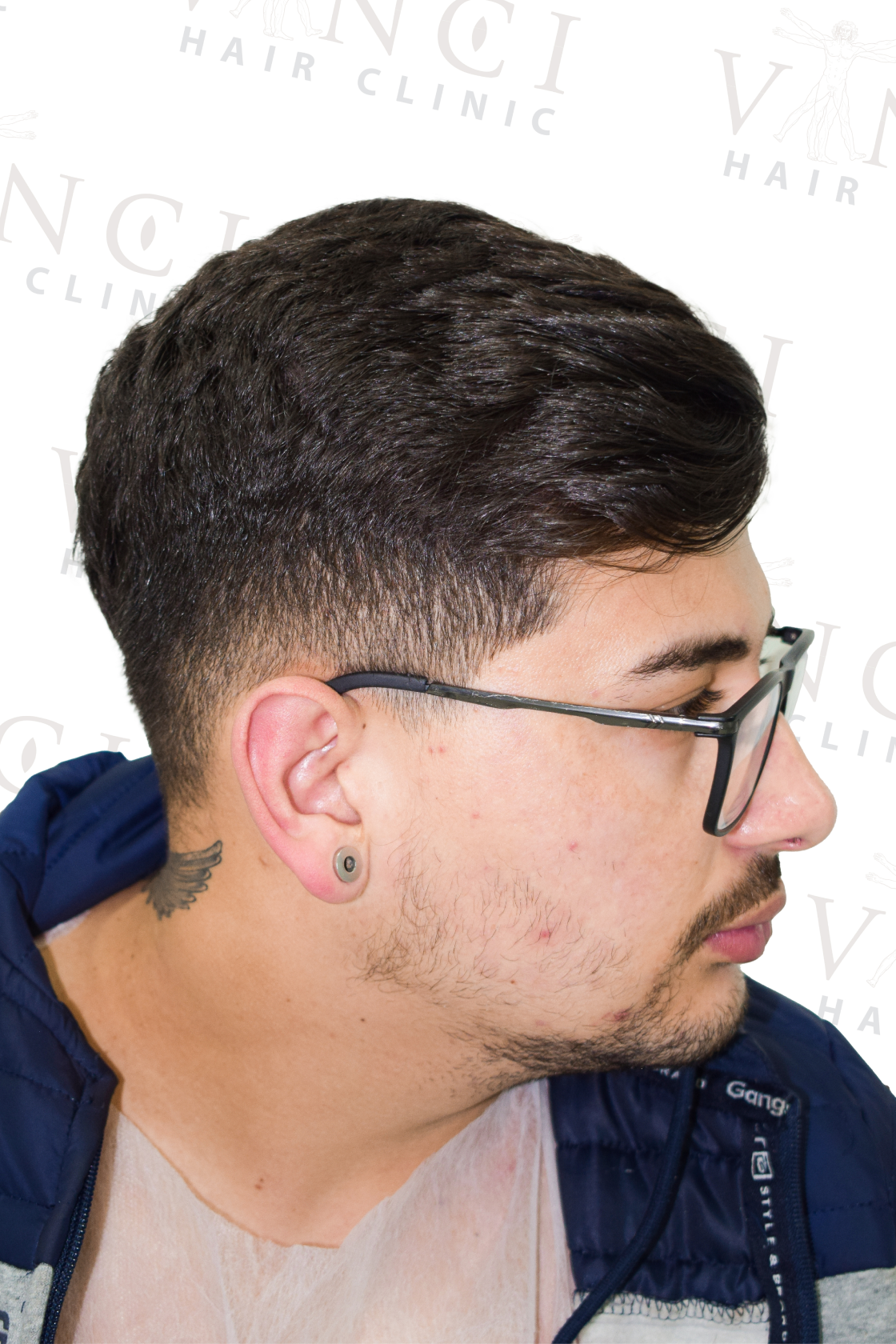
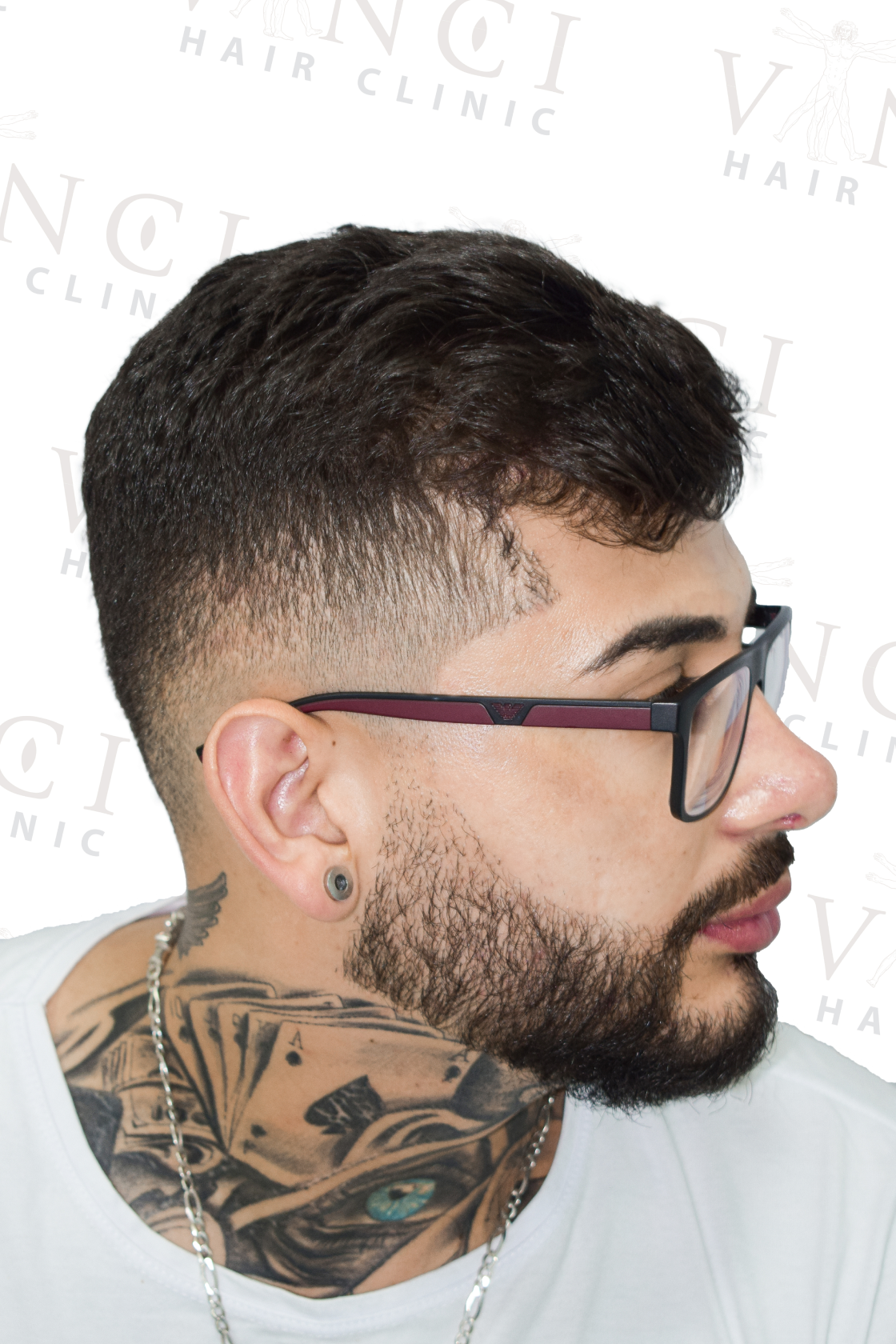
Results are easiest to judge on real patients at the same stage of growth. These cases come from Vinci’s beard transplant gallery, which shows more patients, most at around 6 months after surgery, with some at 9 to 13 months. Individual results vary.
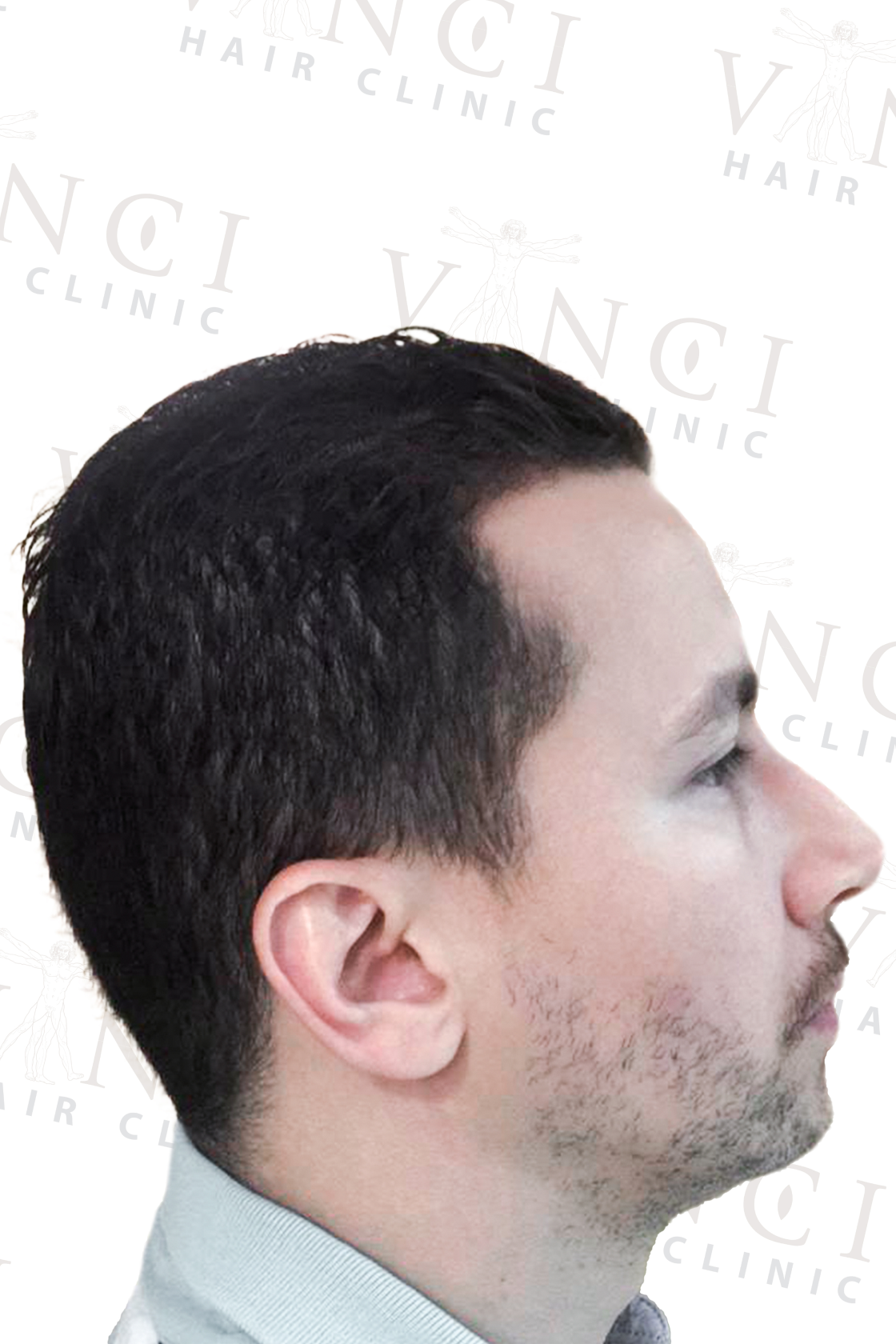
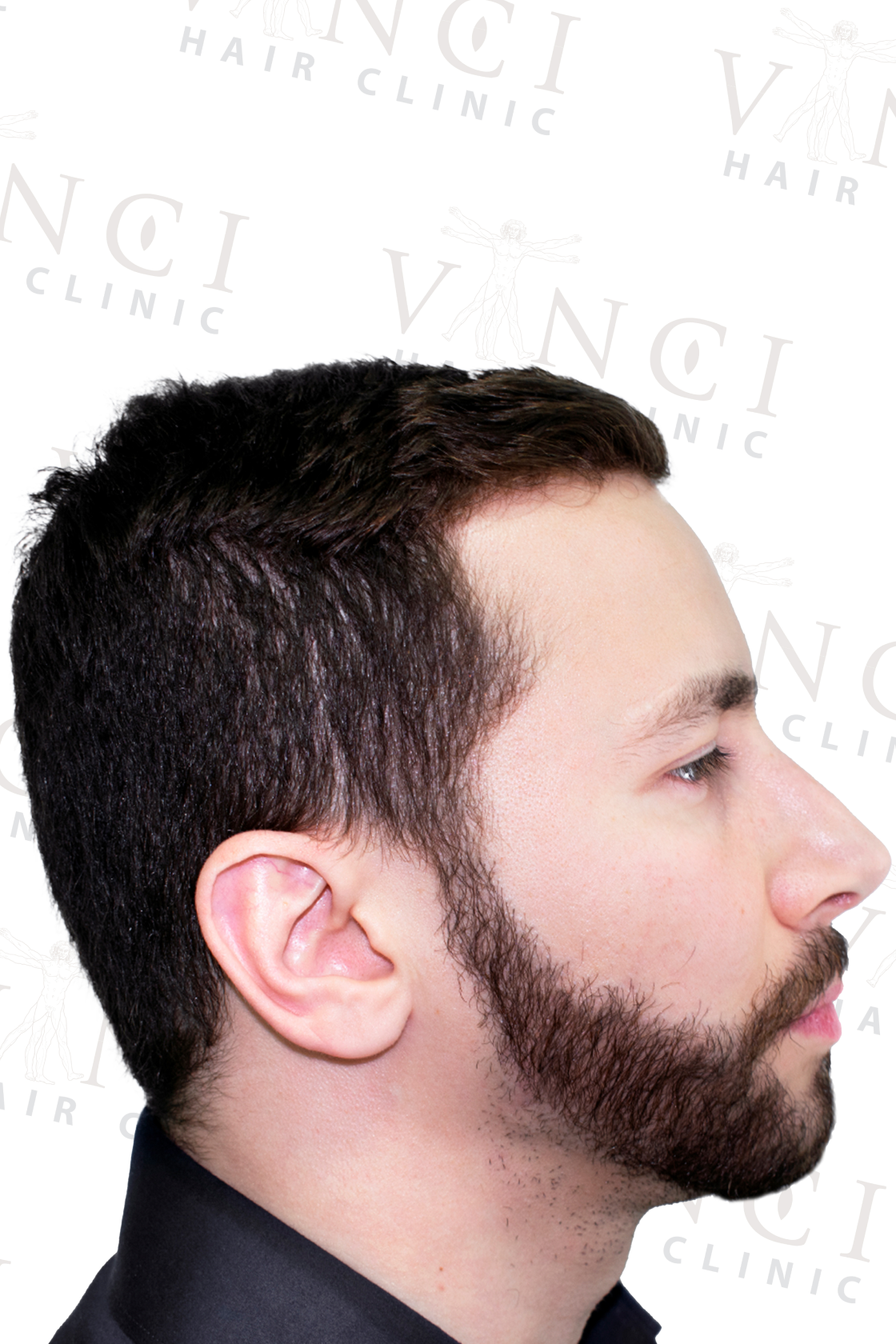
Augusto
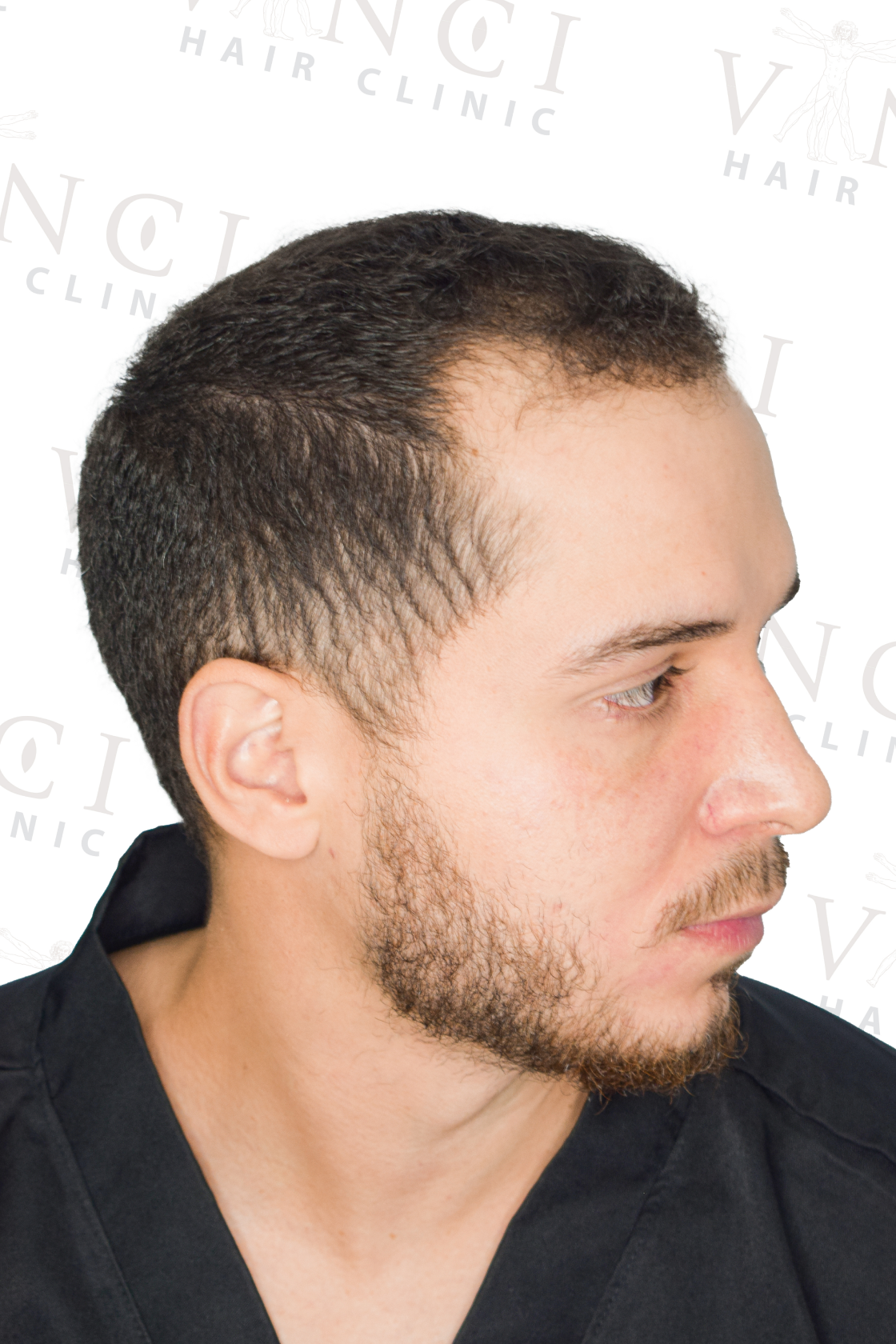
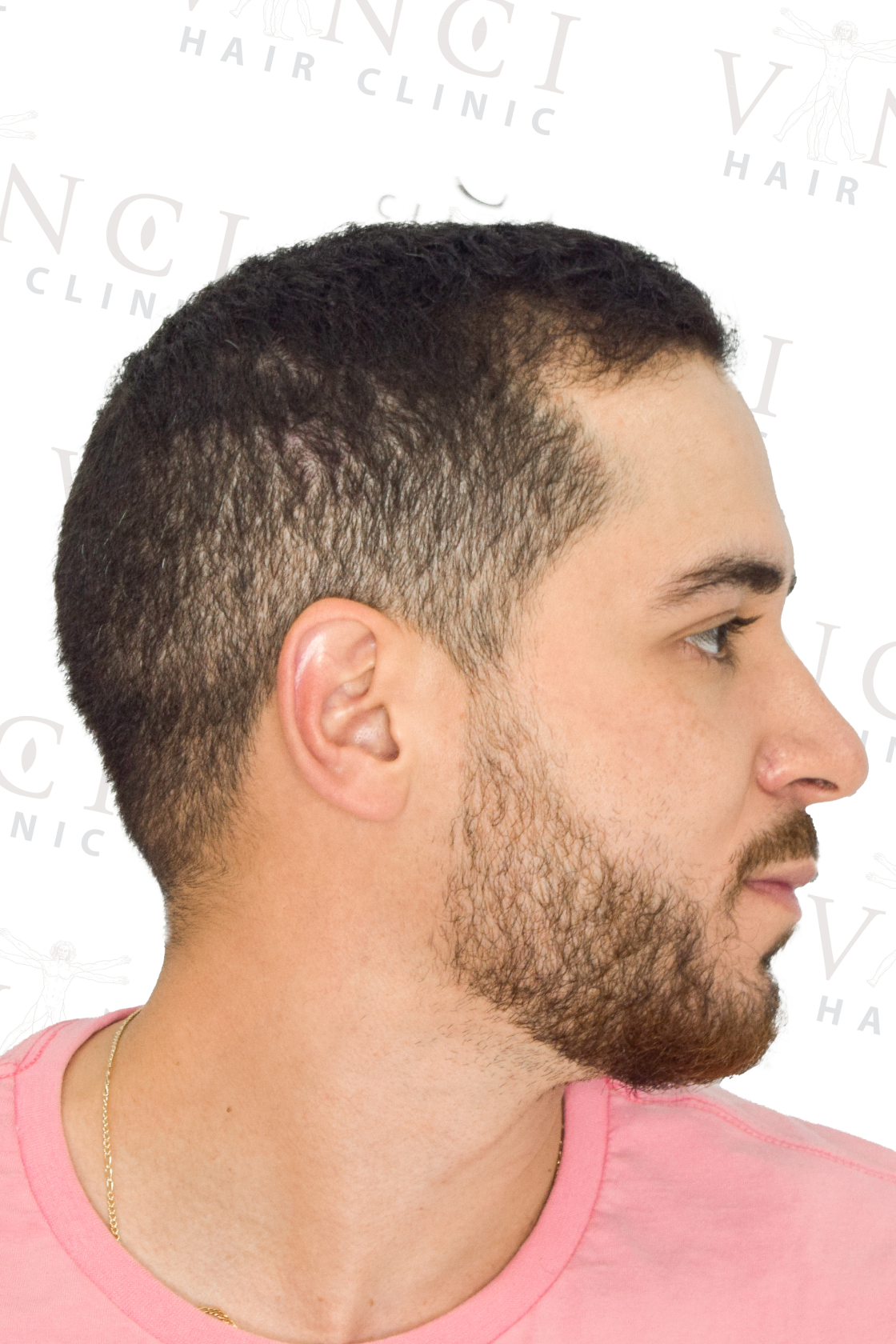
Gleison
Claudionor
Patchy beard: trim, minoxidil or transplant?
A patchy beard is very common and not always a reason for surgery. The right option depends on your age, how much hair is there already and whether you want a permanent change.
| Option | Suits | Permanent? | Things to know |
|---|---|---|---|
| Trim and style | Mild patchiness; a shorter, shaped beard often hides gaps | No, but nothing to lose | No cost, and nothing to lose. Worth trying first |
| Give it time | Men in their late teens or early twenties | Not applicable | Beard growth often keeps filling in through the twenties |
| Topical minoxidil | Some fine hair already present | Usually not; gains tend to depend on continued use | Use on the beard is off label. Medication only after a consultation with a doctor, if suitable |
| Beard transplant | Areas with little or no growth, uneven lines, scars | Intended to be, as transplanted hair should keep growing | Surgical, with a recovery period and a final result at around 9 to 12 months |
Sudden round bald patches in a beard that was previously full are different from a beard that never grew in. They can be a sign of alopecia areata, which should be assessed by a doctor first. See our guide to alopecia areata and the live blog on how to deal with beard hair loss.
Beard transplant recovery timeline
| When | What to expect |
|---|---|
| Day of surgery | Procedure under local anaesthetic, no stitches. Mild redness and swelling in the beard area. Most people return to day to day life after around 24 hours |
| Days 1 to 7 | Small crusts form around each graft. Avoid touching the area and follow the washing instructions you are given |
| 1 to 2 weeks | Crusts clear and most patients are healed. The donor area at the back of the scalp settles |
| 14 to 21 days | First shave or trim, once the area is fully healed and your surgeon agrees |
| Weeks 2 to 3 | Shedding begins: the transplanted hairs fall out. This is normal, and the follicles stay in place |
| Months 3 to 4 | New growth starts, with thin, light hairs at first |
| Months 6 to 9 | Thicker, more natural growth becomes visible |
| Months 9 to 12 | Final result is typically reached. Timings vary from person to person |
The full stage by stage guide for FUE healing is in our FUE hair transplant guide.
Is a beard transplant right for me?
A beard transplant is usually right if you have patchy, sparse or absent beard growth that has been stable for some time, scars from injury, surgery or burns in the beard area, and a healthy donor area at the back of the scalp. You want a permanent result and accept a recovery period of several months.
It is usually not right if your beard loss is still active, for example alopecia areata in the beard, if your beard is still developing in your late teens, or if the donor area is weak or already needed for scalp hair loss. Every graft used for the beard comes from the same donor supply as any future scalp transplant, so we plan across your lifetime. If a transplant is not right for you, your Vinci specialist will tell you honestly at consultation.
Related pages
Frequently asked questions
How much does a beard transplant cost in the UK?
The cost depends on the areas treated and the number of grafts needed, so a moustache or scar infill costs less than a full beard. Vinci confirms your price at a free consultation, and finance options are available.
Is a beard transplant painful?
The procedure is done under local anaesthetic, so you are awake but should feel little or no pain. Mild discomfort, redness and swelling in the beard or donor area can last a few days afterwards.
Does a beard transplant look natural?
It should. Each graft is placed to follow the angle and direction of natural facial hair, and donor hair is chosen from a zone of the scalp that most closely matches your beard. The aim is for transplanted hair to blend with your existing growth.
Do beard transplants last?
Beard transplants are intended to be long lasting. Once the transplanted hair has healed and started growing, it should continue to grow for life, because it comes from an area of the scalp that is resistant to hair loss.
When can I shave after a beard transplant?
Your first shave can usually take place from 14 to 21 days after surgery, provided the area is fully healed. After that you can trim, shave and style the transplanted hair like the rest of your beard.
Does a beard transplant leave scars?
FUE leaves tiny dot marks in the donor area at the back of the scalp, which are usually hidden by surrounding hair. There are no sutures, and the small openings in the beard area heal within one to two weeks for most patients.
How many grafts does a beard transplant need?
It depends on the areas being treated, how much hair you already have and the density you want. A moustache or a small scar needs far fewer grafts than a full beard. You receive a graft plan at your consultation.
How much time off work do I need after a beard transplant?
Most people return to day to day life after around 24 hours. Redness and small crusts are visible on the face for about a week, so many patients plan a few days to a week away from face to face work.
Find out what your beard could look like
Book a free consultation. A Vinci specialist will assess your beard and donor area, design the shape with you and confirm your price before you decide.
 UK Store