


A reputable hair clinic should tell you if you are not a good candidate for treatment, and will do so clearly, with explanation. At Vinci Hair Clinic, turning a patient away from a procedure they are not ready for is not a failure; it is part of the clinical standard we have built over nearly two decades of practice. An honest assessment, even when that assessment means recommending waiting or an alternative approach, is the most important service we can offer.
Why Candidacy Matters More Than Most Patients Expect
Hair loss is rarely a single, static condition. It progresses. It responds to hormones, health, stress, nutrition, and age in ways that are not always predictable from the outside. A patient who presents at 23 with a receding hairline is in a fundamentally different clinical position from a 45-year-old whose pattern has been stable for a decade. Treating both identically would be poor medicine.
This matters because a hair transplant, for example, is a permanent redistribution of a finite resource. The donor follicles harvested from the back of the scalp do not regenerate. If a surgeon transplants those follicles too early, before the patient’s loss pattern has established itself, the result can look dramatically out of place within a few years as surrounding native hair continues to thin. The surgery itself may have been technically flawless, and the outcome can still be a clinical disappointment.
The same principle applies, in different ways, to treatments such as PRP therapy and Micro Scalp Pigmentation. Scalp condition, degree of miniaturisation, underlying health factors, and realistic expectations all feed into whether a patient will benefit from a given treatment at a given time. A clinic that recommends every patient for every treatment is not optimising for outcomes. It is optimising for revenue.
Understanding this distinction is one of the most important things a prospective patient can do before sitting down with any clinic.
How Vinci Hair Clinic Approaches the Assessment
Vinci Hair Clinic was founded in 2006 and has since grown to more than 30 clinics worldwide, treating over 100,000 patients. That scale of experience has made one thing clear: the consultation is not a formality before the booking; it is the most clinically important part of the process.
Every patient who comes to Vinci for an initial assessment is seen by a specialist team that includes trichologists, dermatologists, and hair transplant surgeons. This is not a sales conversation. It is a clinical one. The team examines the scalp with diagnostic tools, takes a detailed history, considers systemic factors that may be driving the loss, and then gives the patient an honest picture of where they are and what is realistic.
When the answer is not yet, the clinical team explains why. It might be that the patient is too young and their pattern has not stabilised. It might be that an underlying condition such as iron deficiency, thyroid dysfunction, or chronic telogen effluvium is the primary driver, and addressing that condition should come first. It might be that their expectations, while entirely understandable, do not match what surgery or any other treatment can achieve for their particular degree of loss.
Vinci was among the global pioneers of techniques including Micro Scalp Pigmentation and Long Hair FUE, and that legacy of innovation is grounded in the same principle: doing things properly, for the right patients, at the right time. The Vinci Medical Academy reflects this commitment to clinical education, both for our own practitioners and for the wider field. When you sit with one of our specialists, you are sitting with someone trained to that standard.
Where treatment is recommended, the full range of options is considered. Surgical routes such as FUE Hair Transplant, No-Shave FUE, and Long Hair FUE are weighed alongside non-surgical alternatives including Vinci PRP Protocol, Alomesa Mesotherapy, Vinci Laser Cap, and Maxogaine, depending on what the clinical picture supports. For patients receiving Micro Scalp Pigmentation, Vinci’s 5-Year Warranty reflects the confidence we place in the procedure and the care taken in patient selection.
What the Evidence Shows About Patient Selection and Outcomes
The relationship between careful patient selection and treatment outcomes is well-established in the clinical literature, and Vinci’s own patient data across more than 100,000 cases reinforces what research indicates: candidacy assessment is the single strongest predictor of patient satisfaction.
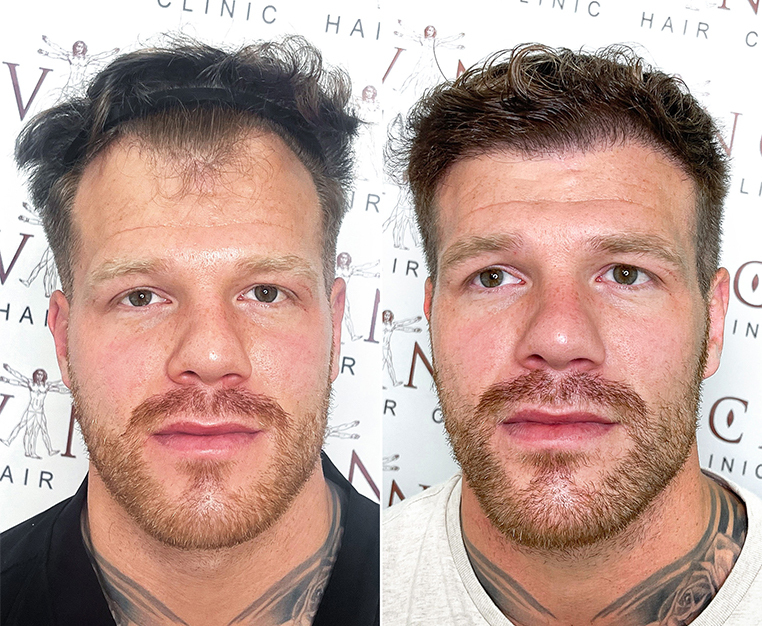
Hair transplant surgery in candidates with active, unpredictable loss patterns carries a measurably higher rate of secondary procedures and aesthetic dissatisfaction. Patients who were counselled to wait, stabilise medically, and return at the appropriate time show markedly better long-term results when they do undergo surgery. This is not a controversial finding. It is simply good medicine applied consistently.
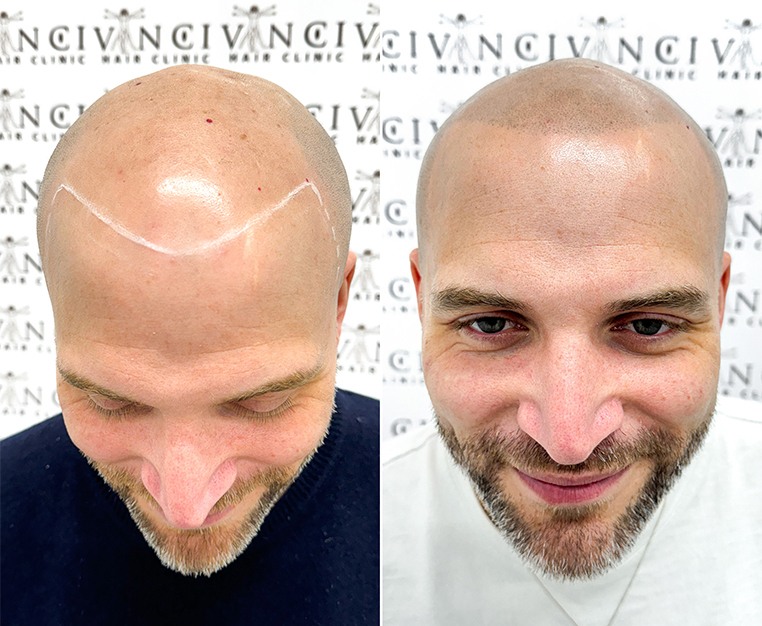
The same holds for scalp micropigmentation. Vinci’s MSP team assesses skin type, scalp condition, and degree of existing hair density before recommending the procedure. In patients where the scalp condition or health picture warrants attention first, a preparation protocol is recommended before MSP is performed. [MSP treatment page] This is precisely why Vinci’s 5-Year Warranty on MSP procedures can exist: because the procedures are performed on appropriate candidates, with the right preparation, by trained practitioners.
Non-surgical treatments such as PRP, mesotherapy, and laser therapy are similarly outcome-dependent on correct selection. A patient in the early stages of androgenetic alopecia with good follicular activity remaining responds very differently to PRP than one whose follicles have been dormant for years. Recommending the right treatment to the right patient at the right stage is not a minor consideration. Over nearly 20 years and across more than 30 clinics, it is the foundation of the reputation Vinci has built.
Vitruvian Hair Supplements and the Vinci Post-Op Kit are examples of how Vinci supports patients throughout their journey, whether they are optimising before a procedure, recovering after one, or managing their hair health between clinical visits.
Frequently Asked Questions
Q: Will a hair clinic actually tell me if I am not a good candidate, or will they just take my money?
A: A clinic with genuine clinical standards will tell you. At Vinci Hair Clinic, this is a formal part of the assessment process. Our trichologists and surgeons are there to give you an accurate picture of your options, and that picture sometimes includes a recommendation to wait, to address an underlying cause first, or to consider a non-surgical route rather than surgery. No reputable hair restoration clinic benefits from performing procedures on unsuitable candidates. Poor outcomes harm patients and damage the clinic’s long-term reputation.
Q: What makes someone a bad candidate for a hair transplant?
A: Several factors can make surgery inadvisable at a given point in time. These include being too young with an unstabilised loss pattern, having an insufficient donor area to achieve the desired result, suffering from an active scalp condition or systemic illness driving the hair loss, and holding expectations that do not align with what surgery can realistically deliver for the degree of loss present. None of these necessarily means never; many simply mean not yet.
Q: Can I be told I am not ready and still come back later?
A: Yes, and this is genuinely common. Many of Vinci’s surgical patients first came to us at a point when surgery was not appropriate. They were counselled, offered non-surgical support through treatments such as PRP or Vinci Laser Cap, and returned when the timing was clinically right. The consultation is the beginning of a clinical relationship, not a single transaction.
Q: What if my hair loss is caused by something medical rather than genetics?
A: This is one of the most important things a thorough assessment identifies. Conditions including thyroid dysfunction, iron deficiency anaemia, and chronic stress-related telogen effluvium can cause significant hair shedding that mimics androgenetic alopecia but responds to entirely different interventions. A hair transplant would not address the underlying cause and may not produce lasting results. Vinci’s trichology team is trained to identify these patterns and refer for appropriate investigation before any aesthetic treatment is recommended.
Q: How do I know if the assessment I am getting is genuinely clinical or just a sales pitch?
A: Ask the clinician directly what reasons there might be for you not to proceed. A clinically focused assessment will engage with that question honestly. You should also expect the practitioner to ask about your general health, medications, family history, and how long your hair loss has been progressing. If the conversation moves immediately to treatment options and pricing without those questions, that is worth noting.
Taking the Next Step
If you are considering treatment for hair loss and want an assessment you can trust, Vinci Hair Clinic offers consultations at our clinics worldwide, including our Harley Street headquarters in London. Our specialist team will give you a clear, honest picture of your current situation and what your options are, including whether now is the right time to proceed. To arrange a consultation, visit our website or contact your nearest clinic.
 UK Store