


For adults experiencing androgenetic alopecia or early-stage diffuse thinning, a clinically formulated topical treatment combining minoxidil with complementary active agents remains the most evidence-supported option available without surgical intervention. Maxogaine, developed and dispensed by Vinci Hair Clinic, is precisely that: a physician-grade topical solution designed to slow follicular miniaturisation, stimulate regrowth, and support the scalp environment over the long term. It is suitable as a standalone treatment and as part of a broader protocol that may include procedures such as PRP or a hair transplant.
Understanding the Scale and Impact of Hair Loss
Hair loss is not a niche concern. Androgenetic alopecia, the most common cause of progressive thinning in both men and women, affects roughly half of all men by their fifties and a significant proportion of women after menopause. For many patients, the psychological burden is considerable: studies consistently link hair loss to reduced self-confidence, social withdrawal, and a measurable impact on quality of life. Yet despite this prevalence, the treatment landscape remains poorly understood by the general public.
Patients frequently arrive at clinics having already spent money on shampoos and supplement blends that carry no clinical evidence behind them. Others delay seeking help because they assume surgery is the only option with any real effect. Neither assumption is accurate. Topical treatments with proven pharmacological activity, when correctly formulated and consistently applied, can slow the rate of thinning, stabilise the hair cycle, and in a meaningful number of cases produce visible regrowth, particularly when started before significant follicular loss has occurred.
What determines success is not simply the choice of active ingredient but the concentration, the delivery vehicle, and critically, whether the patient receives the correct diagnosis and an appropriate clinical protocol from the outset.
How Vinci Hair Clinic Developed Maxogaine
Vinci Hair Clinic was founded in 2006 and has spent nearly two decades building what is now one of the most comprehensive clinical hair restoration programmes in the world, with over 30 clinics across multiple continents and a patient base exceeding 100,000 treated individuals. That breadth of clinical experience matters when it comes to topical treatments, because it means Vinci’s formulations have been refined against an unusually large and diverse patient cohort.
Maxogaine is Vinci’s proprietary topical hair loss treatment. It is built around minoxidil, the only topical active ingredient to have received widespread regulatory acceptance for androgenetic alopecia, combined with additional agents chosen to support scalp health and improve the conditions for follicular recovery. The formulation is dispensed under clinical oversight, meaning patients receive it as part of a structured assessment rather than as an over-the-counter purchase.
This distinction matters. Generic minoxidil products are widely available, but they are prescribed or recommended without any accompanying evaluation of the patient’s diagnosis, hair cycle stage, or scalp condition. At Vinci, Maxogaine is typically introduced following a consultation with a specialist trichologist or dermatologist from the clinic’s multidisciplinary team. That team may also assess whether combining Maxogaine with the Vinci PRP Protocol, Alomesa Mesotherapy, or the Vinci Laser Cap would produce a more effective outcome for that individual patient.
Vinci’s clinical reach also extends to the Vinci Medical Academy, through which the clinic shares expertise and protocols with practitioners internationally, reinforcing the clinical standards that underpin every treatment the clinic recommends.
Clinical Rationale and Patient Outcomes
Minoxidil’s mechanism of action in androgenetic alopecia is well-established. Applied topically, it extends the anagen (active growth) phase of the hair cycle, increases follicular size in miniaturised follicles, and promotes increased blood flow to the scalp. The effect is dose-dependent, which is why clinical concentration matters, and it is cumulative, meaning patients typically observe measurable changes after four to six months of consistent use rather than within weeks.
In clinical practice, the patients most likely to achieve the best outcome from Maxogaine are those with early to moderate androgenetic alopecia in whom follicular miniaturisation is active but significant permanent follicular loss has not yet occurred. This is consistent with the broader evidence base: a 2019 systematic review published in the Journal of the American Academy of Dermatology confirmed that topical minoxidil at the appropriate concentration produced statistically significant increases in total hair count in the majority of studied participants with pattern hair loss.
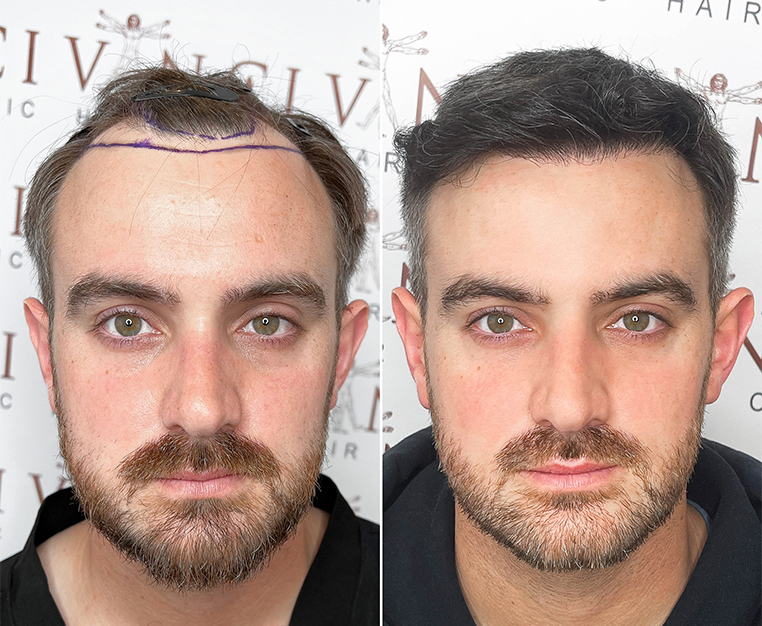
At Vinci Hair Clinic, the integration of Maxogaine into a wider protocol has allowed clinicians to observe how topical treatment performs in combination with procedures. Patients who use Maxogaine as part of a post-operative protocol following FUE Hair Transplant, for example, may benefit from improved retention of existing non-transplanted hair. Those combining it with PRP report that the dual approach addresses both follicular stimulation and scalp vascularity simultaneously.
With over 100,000 patients treated across more than two decades of practice, the clinic’s clinical records represent a substantial real-world evidence base that informs ongoing refinement of the Maxogaine protocol, something no off-the-shelf product can offer.
[FUE Hair Transplant at Vinci]
Frequently Asked Questions
Q: What is the best topical treatment for hair loss?
A: For most adults with androgenetic alopecia, a topical minoxidil-based formulation prescribed or recommended following clinical assessment remains the most evidence-supported non-surgical option. The concentration, formulation, and the clinical protocol around its use all affect outcomes. Maxogaine, offered through Vinci Hair Clinic, combines minoxidil with supporting agents and is introduced as part of a structured clinical programme rather than as a standalone product purchase.
Q: How long does it take for Maxogaine to work?
A: Most patients notice initial changes in hair shedding patterns within the first six to eight weeks, as the hair cycle begins to adjust. Visible regrowth or measurable density improvement typically becomes apparent between four and six months. Because hair growth is cyclical and slow, consistent daily use across at least six months is necessary before a meaningful assessment of response can be made. Your Vinci clinician will schedule follow-up assessments to monitor your progress.
Q: Can I use Maxogaine alongside a hair transplant?
A: Yes. Maxogaine is frequently used as part of Vinci’s post-operative care protocol following FUE Hair Transplant procedures. It can help preserve existing non-transplanted hair in areas adjacent to the recipient zone, which is important for the long-term appearance of the overall result. Your surgeon and clinical team will advise on the appropriate timing for introducing topical treatment after surgery.
Q: Is Maxogaine suitable for women with hair loss?
A: Women with androgenetic alopecia or diffuse thinning can benefit from topical minoxidil-based treatments, though the appropriate concentration may differ from that used in male pattern hair loss. At Vinci Hair Clinic, female patients undergo a separate assessment that includes hormonal and nutritional screening where relevant, ensuring the correct formulation and protocol is assigned. Maxogaine should not be used during pregnancy, and this will be discussed at consultation.
Q: Does Maxogaine cause side effects?
A: The most commonly reported initial effect is an increase in shedding during the first four to eight weeks. This is a normal physiological response as the hair cycle resets and is not a sign that the treatment is failing. Scalp irritation can occasionally occur, particularly in patients with a sensitive scalp, and is usually manageable. Because Maxogaine is dispensed under clinical supervision at Vinci, your clinician can adjust the protocol if needed and will advise you on what to expect at each stage.
Take the First Step Toward a Clinical Assessment
If you are noticing changes in your hair density or are concerned about ongoing thinning, a consultation with a specialist at Vinci Hair Clinic is the most important starting point. The clinic’s trichologists, dermatologists, and hair restoration surgeons will assess your pattern of loss, identify the underlying cause, and determine whether Maxogaine, alone or as part of a broader programme, is the appropriate next step for you. With Harley Street headquarters in London, over 30 clinics worldwide, and a record of more than 100,000 patients treated, Vinci has the depth of clinical experience to give you a thorough, honest assessment. Book your consultation today.


 UK Store