


The best hair loss treatment UK patients can access depends on the cause and stage of their hair loss, but the most clinically proven options are minoxidil, finasteride, platelet-rich plasma (PRP) therapy, micro-scalp pigmentation (MSP), and hair transplant surgery. Medication slows loss and supports regrowth in early cases, while a hair transplant offers a permanent solution for more advanced thinning. A professional assessment is the surest way to identify the right approach.
What causes hair loss and why does it matter for treatment?
Choosing an effective treatment starts with understanding the cause, because not all hair loss responds to the same approach. The most common cause is androgenetic alopecia — hereditary male or female pattern baldness — which is driven by genetics and the hormone DHT. This type is progressive and responds well to medication and surgery.
Other causes include telogen effluvium (temporary shedding triggered by stress, illness, or childbirth), alopecia areata (an autoimmune condition causing patchy loss), nutritional deficiencies, and thyroid problems. Some of these resolve once the underlying trigger is addressed, while others need ongoing management. This is why an accurate diagnosis matters: a treatment that works brilliantly for pattern hair loss may do nothing for loss caused by a deficiency. A consultation with a specialist is the only reliable way to confirm what is driving your hair loss before you spend money on treatment.
The stage of loss is equally important. Hair loss specialists often use scales such as the Norwood scale (for men) and the Ludwig scale (for women) to grade how advanced the loss is. Early-stage thinning, where follicles are miniaturising but still present, usually responds well to medication and PRP. More advanced loss, where follicles have been lost entirely, generally needs surgical restoration because no medication can revive a follicle that no longer exists. Knowing your stage helps set realistic expectations and avoids spending money on treatments that cannot deliver in your situation.
What are the best non-surgical hair loss treatments?
For early to moderate hair loss, non-surgical treatments are often the first line of defence. They aim to slow or halt loss and, in many cases, stimulate visible regrowth. The leading evidence-based options are:
Minoxidil
A topical solution or foam (commonly 5% strength) applied to the scalp once or twice daily. It improves blood flow to follicles and prolongs the growth phase. Minoxidil is available over the counter in the UK and works for both men and women, though results require consistent, ongoing use.
Finasteride
A daily oral tablet (prescription only) that blocks the conversion of testosterone to DHT, the hormone responsible for pattern hair loss in men. It is one of the most effective medical treatments for slowing male hair loss and is often combined with minoxidil for a stronger effect.
PRP therapy
Platelet-rich plasma therapy uses a concentrate of your own blood platelets, injected into the scalp to stimulate dormant follicles and improve hair density. It is a popular drug-free option and is often used alongside other treatments. Our guide to the Vinci PRP protocol and how platelet-rich plasma supports regrowth explains the process in detail.
For a broader picture of what is available without surgery, our full clinical overview of non-surgical hair loss treatments at Vinci compares each option side by side.
What is micro-scalp pigmentation and who is it for?
Micro-scalp pigmentation (MSP), also known as scalp micropigmentation, is a non-surgical cosmetic treatment that uses tiny pigment deposits to replicate the appearance of closely shaved hair follicles. It does not regrow hair, but it creates the convincing illusion of density and a defined hairline.
MSP suits people who want the look of a buzz cut, those with advanced baldness who are not candidates for a transplant, and anyone wanting to camouflage scarring or add the appearance of density to thinning areas. It is also used to complement a hair transplant. Because Vinci pioneered the technique, our definitive guide to MSP from Vinci’s founding clinic covers exactly how it works and who benefits most. If you are unsure whether MSP or a transplant is right for you, our comparison of MSP versus a hair transplant can help you decide.
When is a hair transplant the best option?
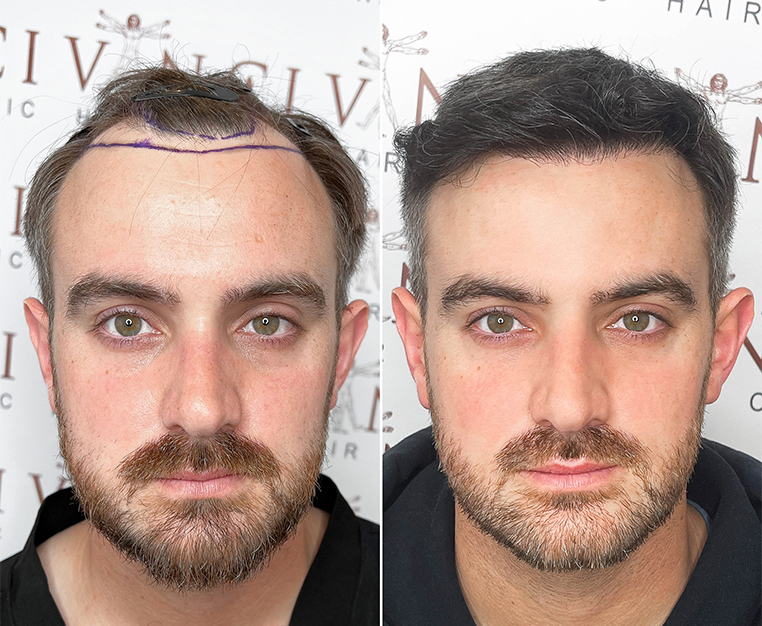
A hair transplant is typically the best option when hair loss is more advanced, when medication alone is not enough, or when you want a permanent, natural-looking result. It is the only treatment that physically restores hair to bald or thinning areas by relocating your own follicles from a donor site — usually the back and sides of the head — to where they are needed.
The two main techniques are FUE (Follicular Unit Extraction), which harvests individual follicles and leaves no linear scar, and FUT (Follicular Unit Transplantation), which removes a strip of donor skin. Transplanted hair is permanent because the relocated follicles retain their resistance to DHT. The key requirement is a healthy donor area with enough follicles to achieve the desired coverage, which is why an individual assessment is essential. Vinci’s surgical work follows defined clinical standards, set out in our overview of Vinci’s exclusive hair transplant protocols.
How do the main hair loss treatments compare?
Each treatment has different strengths depending on your stage of loss, budget, and goals. The table below gives a realistic comparison of the main options available in the UK.
| Treatment | Best for | Result type | Approximate UK cost |
|---|---|---|---|
| Minoxidil | Early thinning, crown loss | Slows loss, some regrowth (ongoing use) | £10–£30 per month |
| Finasteride | Male pattern loss | Slows loss, some regrowth (ongoing use) | £10–£40 per month |
| PRP therapy | Thinning, follicle support | Improved density (top-up sessions) | £400–£1,000 per session |
| Micro-scalp pigmentation | Shaved look, camouflage | Cosmetic, long-lasting | £1,000–£3,000 total |
| Hair transplant (FUE/FUT) | Advanced loss, permanent restoration | Permanent regrowth | £3,000–£15,000 total |
These figures are approximate UK market ranges and vary by clinic, the extent of treatment, and the number of grafts or sessions required. Medications are the cheapest entry point but need indefinite use; a transplant is a larger one-off investment that delivers permanent results.
Which hair loss treatment is right for you?
The right treatment is rarely a single product — it is the combination best matched to your diagnosis, stage of loss, and goals. As a general guide:
- Early thinning: minoxidil, finasteride, and PRP can slow loss and support regrowth.
- Moderate loss: a combination of medication and PRP, with a transplant considered if loss progresses.
- Advanced loss: a hair transplant for permanent restoration, or MSP for a shaved look or camouflage.
- Patchy or sudden loss: medical investigation first, as this may not be pattern hair loss.
It is important to be realistic: no treatment guarantees a specific outcome, and results vary from person to person. Treatments also work best when started early, before follicles are permanently lost. The most reliable way to find your best option is a professional consultation, where a specialist can examine your scalp, confirm the cause, and recommend a tailored plan.
What should you look for in a UK hair loss clinic?
Choosing the right clinic matters as much as choosing the right treatment, particularly for surgery. Look for:
- Experienced, qualified specialists and surgeons with a track record in hair restoration.
- Transparent, all-inclusive pricing with no hidden fees.
- A thorough in-person or video consultation before any treatment is recommended.
- Realistic expectations — beware any clinic guaranteeing dramatic results.
- Local aftercare and follow-up, so support is on hand if you need it.
Be cautious of clinics that push surgery before exploring less invasive options, or that offer prices far below the market — these can reflect rushed procedures or excluded essentials. A reputable clinic will always prioritise the treatment most likely to work for you, not the most expensive.
It is also worth thinking about the long-term relationship rather than a single appointment. Hair restoration is rarely a one-off event: medication needs reviewing, PRP may need top-ups, and a transplant benefits from ongoing maintenance of your native hair. A good clinic acts as a partner over years, adjusting your plan as your hair changes. Reading independent reviews, viewing genuine before-and-after results, and asking direct questions in your consultation will all help you judge whether a clinic is the right fit.
How can you protect your results over the long term?
Whichever treatment you choose, protecting your investment means caring for the hair you keep. Pattern hair loss is progressive, so even after a successful transplant or a strong response to medication, untreated native hair can continue to thin. The do’s and don’ts below help maintain results:
- Do stay consistent with any prescribed medication — stopping usually reverses the gains.
- Do attend follow-up appointments so your plan can be adjusted over time.
- Do support general hair health with a balanced diet, good sleep, and stress management.
- Don’t expect any single treatment to halt all future loss permanently.
- Don’t chase unproven supplements or devices in place of evidence-based care.
Combining treatments thoughtfully — for example, a transplant to restore lost areas alongside medication to preserve existing hair — often delivers the most durable, natural-looking outcome. A specialist can help you build a long-term plan rather than a short-term fix.
Frequently Asked Questions
What is the most effective hair loss treatment?
There is no single best treatment for everyone — effectiveness depends on the cause and stage of your loss. For early pattern hair loss, minoxidil and finasteride are the most proven medications. For advanced loss, a hair transplant offers the only permanent restoration. Many people achieve the best results by combining treatments under specialist guidance.
Can hair loss be reversed without surgery?
In many early and moderate cases, yes. Treatments such as minoxidil, finasteride, and PRP can slow loss and stimulate regrowth, particularly when started early. However, follicles that have been lost entirely cannot be revived without a transplant. A consultation can confirm whether non-surgical treatment is realistic for your situation.
How much do hair loss treatments cost in the UK?
Costs vary widely. Medications such as minoxidil and finasteride cost roughly £10–£40 per month. PRP sessions typically range from £400 to £1,000 each. Micro-scalp pigmentation usually costs £1,000–£3,000, and a hair transplant typically ranges from £3,000 to £15,000 depending on the number of grafts.
Is finasteride or minoxidil better?
They work differently and are often most effective together. Finasteride blocks the hormone DHT that drives male pattern loss, while minoxidil stimulates follicles directly. Finasteride is prescription-only and used mainly by men, whereas minoxidil is available over the counter for both men and women. A specialist can advise which suits you.
Do hair loss treatments work for women?
Yes. Minoxidil, PRP, micro-scalp pigmentation, and hair transplants can all be appropriate for women, depending on the cause and pattern of loss. Finasteride is generally not recommended for women, particularly those who may become pregnant. Female hair loss often has different causes, so an individual assessment is especially important.
With so many hair loss treatment UK options available, the most valuable first step is an expert assessment of your individual case. Book a free, no-obligation consultation with Vinci Hair Clinic and our specialists will diagnose the cause of your hair loss, talk you through every suitable option, and build a tailored plan designed around your goals and budget.


 UK Store