


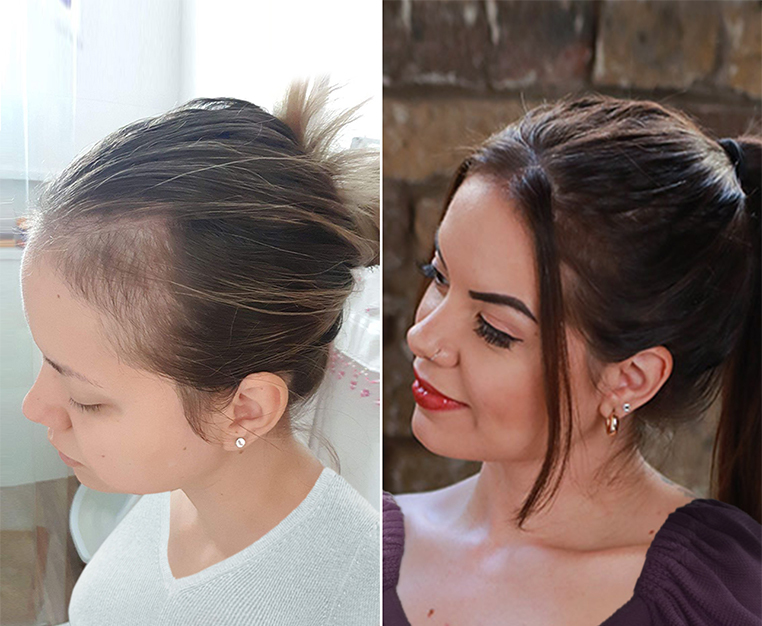
Micro Scalp Pigmentation, known as MSP, is a specialist cosmetic procedure in which natural pigments are deposited into the scalp using ultra-fine needles, replicating the appearance of real hair follicles. It is clinically proven to create the convincing visual impression of a full, closely cropped head of hair or increased hair density, and it works for both men and women across all skin tones and hair loss patterns. Vinci Hair Clinic, the global founders of MSP, pioneered and refined this technique over two decades and across more than 100,000 patients, making them the most experienced MSP provider in the world.
Hair Loss Is More Common Than Most People Realise
Androgenetic alopecia, the most prevalent form of hair loss, affects approximately half of all men by the age of fifty, and a significant proportion of women experience noticeable thinning at some point in their lives. Beyond genetic predisposition, hair loss can result from scarring, alopecia areata, chemotherapy, trauma, or the natural effects of ageing. The emotional weight that accompanies visible hair loss is well documented. Studies consistently link it to reduced self-confidence, social anxiety, and in some cases clinical depression.
What patients need to understand is that hair loss sits on a spectrum. Some people are ideal candidates for a surgical hair transplant. Others have insufficient donor hair, diffuse thinning across the scalp, or medical conditions that make surgery unsuitable. And some simply prefer a non-surgical path. MSP was developed precisely to meet that need: a technique that addresses the cosmetic impact of hair loss without an operating theatre, without a recovery period, and without the dependency on remaining donor follicles.
[Hair loss causes and treatment options]
Why Vinci Hair Clinic Wrote the Standard on MSP
Vinci Hair Clinic did not simply adopt Micro Scalp Pigmentation as a treatment offering. They created it. Founded in 2006, Vinci’s founders developed MSP as a distinct clinical discipline, building the techniques, training protocols, and quality standards that the wider industry has since followed. That founding role is not a marketing claim. It is a clinical reality that shapes every MSP procedure carried out at any of the clinic’s 30 or more locations worldwide, with the Harley Street clinic in London at the centre.
What makes Vinci’s approach different begins with training. The Vinci Medical Academy trains all MSP practitioners to an in-house standard that has been developed and refined across twenty years of continuous practice. Practitioners are not generalists who also happen to offer scalp work, they are specialists whose expertise is concentrated in this single, technically demanding procedure.
The technique itself also differs in meaningful ways from what the wider market calls scalp micropigmentation. Vinci uses pigments developed for the scalp’s specific tissue environment, which behave differently from tattooing inks both in application and in how they age. The needling pattern, depth calibration, and follicle replication approach are all proprietary. Every procedure is planned in collaboration with the clinical team, which includes trichologists and dermatologists who assess the scalp condition, the degree of miniaturisation, and the most appropriate pigmentation strategy before a single needle is applied. Patients with more complex presentations like active skin conditions, scarring, or post-transplant areas requiring density correction, benefit directly from that multidisciplinary input.
[Vinci MSP procedure and consultation process]
What the Numbers and the Outcomes Tell Us
Two decades of practice and more than 100,000 patients treated generate a body of clinical experience that cannot be replicated by a newer provider, regardless of how sophisticated their marketing. Vinci’s outcomes data reflects that experience in several concrete ways. Pigment fading and colour drift, which are the two most common complaints patients report after MSP procedures carried out elsewhere, are significantly reduced when depth calibration and pigment chemistry are as refined as they are within Vinci’s protocols.
The clinic’s 5-Year Warranty on all MSP procedures is among the clearest signals of clinical confidence in the market. It means that if pigment fades or the result requires adjustment within five years of treatment, Vinci addresses it. Very few providers offer anything comparable, because a warranty of that duration requires genuine certainty about procedural consistency and material performance.
MSP at Vinci is not a standalone offering that exists in isolation. It sits within a broader clinical framework that includes FUE Hair Transplants, Long Hair FUE, No-Shave FUE, PRP via the Vinci PRP Protocol, Alomesa Mesotherapy, the Vinci Laser Cap, and Maxogaine among other treatments. That means patients presenting with partial hair loss may be assessed for a combined strategy — for example, MSP to restore the appearance of density in areas where transplantation cannot reach, alongside PRP to support the health of existing follicles. That kind of integrated clinical thinking is only possible when the full range of treatments is available within one specialist team.
The Vinci Foundation and the clinic’s long-standing reputation as a celebrity clinic add further layers of institutional credibility, though the most meaningful form of evidence remains the consistent outcome achieved across a genuinely global patient population, spanning different skin tones, hair loss patterns, and clinical histories.
FAQs
Q: Is MSP the same as a scalp tattoo?
A: MSP and conventional tattooing share the basic principle of depositing pigment into skin, but the similarities end there. Tattooing inks are formulated for the dermis and are designed to be permanent; they tend to spread and change colour on the scalp over time, often shifting to an unnatural blue or green tone. MSP uses pigments specifically developed for scalp tissue, applied at a precise, shallower depth that creates a sharper, more natural follicle impression. The needling technique also differs: MSP uses ultra-fine needles calibrated to replicate the size and shape of a real hair follicle, whereas tattooing tools are designed for a different purpose entirely.
Q: Does MSP work for women as well as men?
A: MSP is an effective option for women experiencing hair thinning or loss, though the treatment approach differs from what is typically used for male-pattern baldness. In women, hair loss is more commonly diffuse, meaning it is spread across the scalp rather than concentrated in the hairline or crown. MSP in these cases focuses on creating the impression of density between existing hairs, reducing the visible contrast between hair and scalp. Vinci’s clinical team assesses each presentation individually, and women who also have an active hair loss condition may benefit from combining MSP with a treatment such as the Vinci PRP Protocol or Alomesa Mesotherapy.
Q: How long does MSP last, and will I need top-up sessions?
A: MSP is not permanent in the way a surgical procedure is, but it is highly durable. Most patients see their results remain stable for four to six years before any meaningful fading requires attention. The rate at which pigment fades depends on several factors, including skin type, sun exposure, and the quality of the pigments and technique used. Vinci’s 5-Year Warranty covers this period directly: if fading or any aspect of the result requires correction within five years of treatment, the clinic addresses it. Beyond the warranty period, a top-up session restores the result efficiently.
Q: Can MSP be used to cover a hair transplant scar?
A: Yes, and this is one of the most clinically valuable applications of MSP. FUE hair transplants typically leave small, circular donor-site marks on the back and sides of the scalp. Strip procedures, historically known as FUT, leave a linear scar. Both can be treated with MSP to blend pigment into the scar tissue, reducing its visibility significantly. Vinci’s practitioners have particular experience in this area, given the volume of hair transplant patients treated at the clinic. The same MSP technique can also be used to add the appearance of density to recipient areas where transplanted coverage is uneven.
Q: Is the procedure painful, and what is the recovery time?
A: Most patients describe MSP as mildly uncomfortable rather than painful. The sensation is similar to light scratching, and the scalp is not numbed in the way a surgical site would be, as the procedure does not require it. There is no surgical recovery period. Patients can return to normal activities the same day, though Vinci advises avoiding intense exercise, swimming, and direct sun exposure for a short period after each session to allow the scalp to settle. Mild redness following treatment typically resolves within twenty-four to forty-eight hours. A standard course of MSP involves two to three sessions spaced one to two weeks apart.
Taking the Next Step
If you are considering MSP and want to understand whether it is the right option for your specific pattern of hair loss, the most useful starting point is a consultation with Vinci’s specialist team. A thorough assessment at one of Vinci’s clinics — including the Harley Street headquarters in London — will give you a clear clinical picture of what MSP can achieve for you, how it fits alongside any other treatments that may be appropriate, and what a realistic outcome looks like. There is no obligation to proceed, and the conversation itself is informative. Vinci has been treating hair loss for over twenty years, and the same clinical rigour that has guided more than 100,000 patients is available to you from the first appointment.


 UK Store