


Why 20 Years of Experience Matters for Your Hair Transplant
Choosing an experienced hair transplant clinic is one of the most important decisions you’ll make in your hair restoration journey. At Vinci Hair Clinic, 20 years and over 100,000 patients have taught us that experience isn’t just about time served — it’s about refined technique, better outcomes, and the kind of patient understanding that only comes from doing this work day after day, year after year.
Contents
- Why Does Clinic Experience Matter for Hair Transplants?
- How Does Surgical Repetition Improve Hair Transplant Results?
- What Should You Expect From an Experienced Consultation?
- How Do Experienced and Newer Clinics Compare?
- Why Does Long-Term Stability Matter in a Hair Transplant Clinic?
- Vinci Hair Clinic: 20 Years of Milestones
- Frequently Asked Questions
Why Does Clinic Experience Matter for Hair Transplants?
Hair loss doesn’t follow a single pattern. Over two decades and more than 100,000 patients, the surgical team at Vinci has encountered virtually every combination of hair type, loss pattern, and progression speed. That breadth of exposure changes how we approach every new patient who walks through our doors.
Experience is the difference between a technically correct transplant and one that looks natural decades later. It is not just a marketing claim — it’s a measurable factor backed by peer-reviewed research.
According to the International Society of Hair Restoration Surgery (ISHRS) 2025 Practice Census, the average ISHRS member performed 178 hair restoration procedures in 2024. Vinci’s surgical team operates at volumes well above this benchmark, which translates directly into pattern recognition and technical proficiency.
When you’ve treated thousands of patients with FUE hair transplants, you start recognising patterns that less experienced surgeons simply haven’t had the chance to see yet. We can often predict how a patient’s hair loss will progress over the next decade, allowing us to design a hairline and density plan that ages naturally — not one that looks great today but odd at 50.
This kind of forward planning is something our specialists discuss in every free consultation. It’s one of the first things that sets an established clinic apart.
How Does Surgical Repetition Improve Hair Transplant Results?
Hair transplantation sits at the intersection of microsurgery and aesthetics. Each follicular unit must be extracted without damage, stored correctly, and placed at the right angle, depth, and direction. There’s a reason surgeons talk openly about the learning curve involved.
According to a study published in the Journal of Cutaneous and Aesthetic Surgery, the FUE technique has a “steep and long” learning curve, with surgeons new to the method often harvesting fewer than 100 grafts per hour. Consistent, high-quality results can take up to two years of dedicated practice to achieve.
According to research in the Indian Journal of Dermatology, graft survival depends heavily on handling technique, minimising out-of-body time, and maintaining a favourable scalp environment. High-volume, experienced surgeons achieve graft survival rates of 95-97%, while less experienced practitioners see significantly lower rates.
At Vinci, our surgeons have each performed thousands of hair transplant procedures. That level of repetition builds the muscle memory and spatial awareness needed to place grafts with precision — even in challenging cases involving scarring, previous failed transplants, or unusual donor characteristics.
| Factor | Experienced Clinic (10,000+ procedures) | Newer Clinic (under 1,000 procedures) |
|---|---|---|
| Graft survival rate | 95-97% | Variable — often significantly lower |
| Extraction speed (FUE) | 500-800+ grafts per hour | Under 100 grafts per hour initially |
| Hairline design | Accounts for future hair loss and ageing | May focus only on current appearance |
| Handling complications | Established protocols from thousands of cases | Limited real-world complication experience |
| Repair case capability | Routinely corrects previous poor work | May lack skills for complex revisions |
| Long-term follow-up data | Decades of patient outcomes to reference | Limited outcome data available |
According to the ISHRS 2025 census data, 6.9% of all hair transplants performed in 2024 were repair procedures — up from 5.4% in 2021. That rise underscores why getting it right the first time, with an experienced team, matters more than ever.
What Should You Expect From an Experienced Consultation?
Early in a clinic’s history, consultations tend to lean heavily on the technical: graft counts, donor density measurements, procedure options. Those details matter, of course. But they’re not the whole picture.
After 20 years, we’ve learned that patients aren’t simply looking for more hair. They’re looking for confidence. They want to feel like themselves again. They have a specific vision of how they want to look — and that vision is deeply personal.
Experience is what allows a surgeon to hear what a patient actually wants, not just what they say. It is not something you can shortcut with technology alone.
Understanding that emotional dimension changes how we run consultations at Vinci. We ask different questions. We listen for what’s behind the words. And we use our experience to manage expectations honestly — because the worst outcome isn’t a technically imperfect transplant, it’s a technically perfect one that leaves the patient feeling it wasn’t what they had in mind.
This approach applies across all our treatments, whether you’re considering a hair transplant, micro scalp pigmentation, or a combination approach. The point isn’t to push a particular procedure — it’s to understand the person sitting across from us and recommend what’s genuinely right for them.
How Do Experienced and Newer Clinics Compare?
Not all clinics advertising hair transplants have the same depth of expertise. The hair restoration market has grown rapidly — the ISHRS reports that patient numbers continue to rise year on year, with a 16.5% increase in female patients between 2021 and 2024 alone. That growth has attracted new entrants to the field, some with far less surgical track record.
Here’s how a well-established clinic typically differs from a newer operation:
| Consideration | Established Clinic (e.g., Vinci — 20 years) | Newer Clinic (under 5 years) |
|---|---|---|
| Verifiable patient reviews | Thousands of documented reviews spanning years | Limited review history |
| Before-and-after gallery | Extensive, showing varied cases and long-term results | Smaller gallery, may lack long-term follow-ups |
| Surgeon procedure volume | Thousands of completed transplants per surgeon | Hundreds or fewer |
| Range of techniques offered | FUE, MSP, PRP, combination protocols | May specialise in one method only |
| Aftercare and follow-up | Structured programmes with long-term check-ins | May lack established aftercare processes |
| Handling complex cases | Extensive experience with revisions, scarring, female hair loss | May refer complex cases elsewhere |
| Clinic stability | Proven track record — will be there for years to come | Longevity uncertain |
Reputation in this industry is earned one patient at a time. Twenty years of referrals, returning patients, and word-of-mouth recommendations can’t be bought or manufactured overnight. When patients send their friends and family to the same clinic, that tells you something no advertisement can.
Why Does Long-Term Stability Matter in a Hair Transplant Clinic?
A hair transplant isn’t a one-day event. The full results take 12 to 18 months to develop, and the relationship with your clinic should extend well beyond that. You need follow-up appointments. You might have questions three months in when the transplanted hair goes through its normal shedding phase. You may want a top-up procedure years later.
A clinic that’s been operating for two decades offers a kind of stability that newer operations simply can’t guarantee. At Vinci, we’ve been here for 20 years and we’re not going anywhere. When you choose us, you’re choosing a long-term partner — not a clinic that might rebrand or close before your final results have even grown in.
That stability extends to our clinical protocols too. Over 20 years, we’ve refined our aftercare process based on what actually works for patients long-term. We’ve seen what happens at 1 year, 5 years, and 10 years post-procedure. That data informs every recommendation we make, from the initial treatment plan through to ongoing hair maintenance strategies.
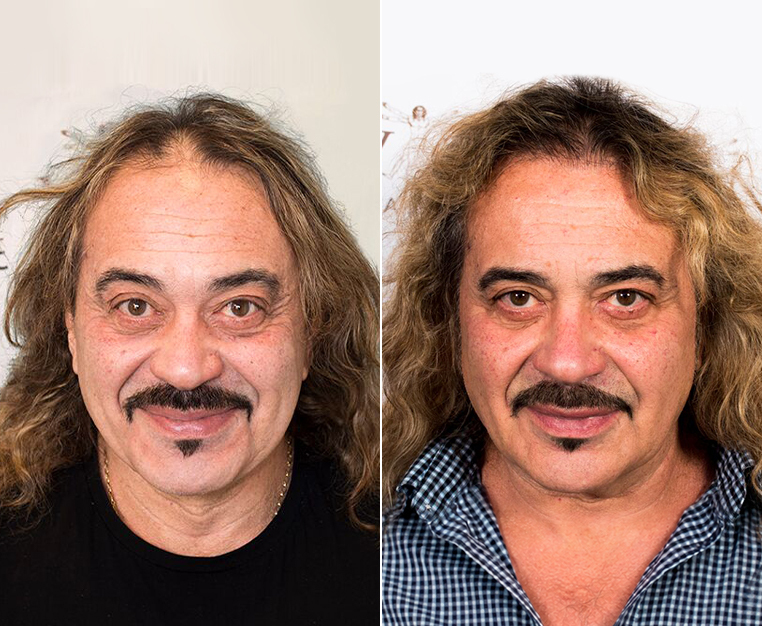
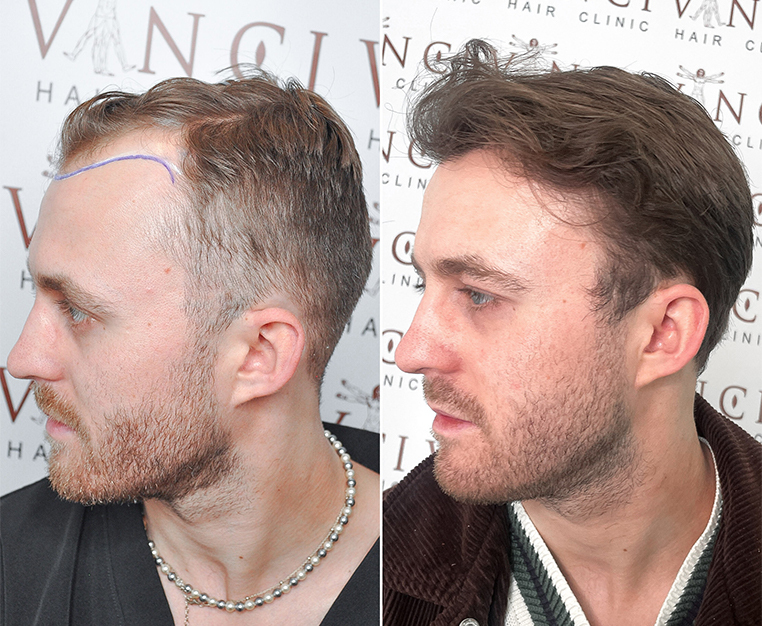
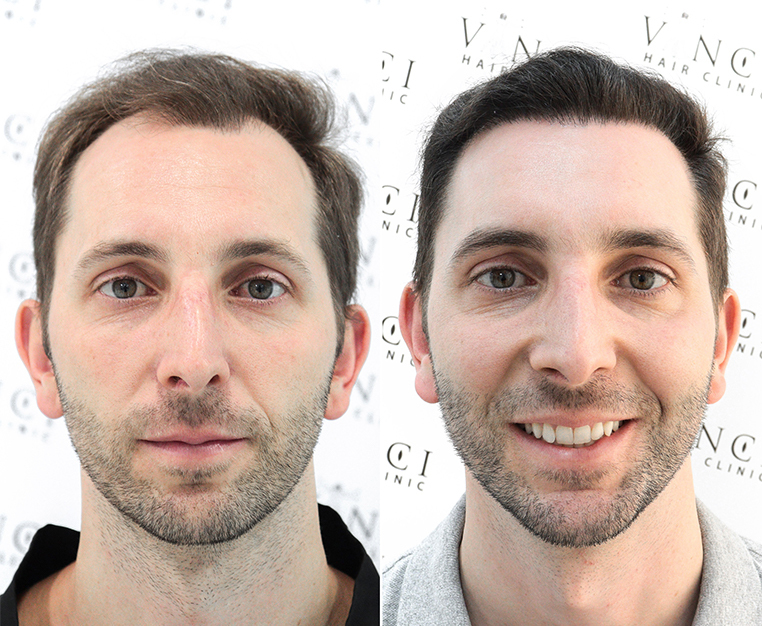
If you want to see what 20 years of experience looks like in practice, browse our patient results gallery or read about the team behind the results.
Vinci Hair Clinic: 20 Years of Milestones
| Milestone | Details |
|---|---|
| Founded | Established 2006 with a commitment to evidence-based hair restoration |
| 100,000+ patients treated | Across hair transplants, MSP, and non-surgical treatments worldwide |
| Global clinic network | Locations across the UK, Europe, Africa, Middle East, South America, and the USA |
| FUE and MSP specialisation | Pioneered combination treatment protocols pairing transplant with scalp pigmentation |
| Free consultation programme | Every patient receives a personalised, no-obligation assessment before any treatment |
| Ongoing research and training | Continuous investment in surgical education and technique refinement |
Ready to See the Difference Experience Makes?
If you’re considering hair restoration, the experience of your clinic and surgeon will shape your results for the rest of your life. At Vinci Hair Clinic, 20 years and 100,000+ patients have given us the knowledge, skill, and patient understanding that newer clinics are still building.
Book your free consultation today and find out what an experienced hair transplant clinic can do for you.
Frequently Asked Questions
How many hair transplant procedures has Vinci Hair Clinic performed?
Vinci Hair Clinic has treated more than 100,000 patients over the past 20 years. This includes FUE hair transplants, micro scalp pigmentation, and a range of non-surgical treatments delivered across our worldwide clinic network.
Why does surgeon experience affect hair transplant results?
Experience directly affects graft survival rates, hairline design, and long-term aesthetics. Research published in the Journal of Cutaneous and Aesthetic Surgery confirms that FUE has a steep learning curve, and high-volume surgeons consistently achieve graft survival rates of 95-97%. Less experienced practitioners tend to see significantly lower survival rates, which means fewer transplanted hairs growing successfully.
What’s the difference between an experienced and newer hair transplant clinic?
Experienced clinics have refined their surgical techniques across thousands of procedures, developed reliable protocols for complex cases, and accumulated years of long-term outcome data. They’ve also built patient relationships that span decades — essential for ongoing aftercare. Newer clinics may still be developing their approach, which can lead to less predictable outcomes and limited follow-up track records.
Does Vinci Hair Clinic offer non-surgical hair restoration?
Yes. Alongside FUE hair transplants, Vinci offers micro scalp pigmentation, platelet-rich plasma therapy, low-level laser therapy, and pharmaceutical treatments. Our 20 years of experience means we can recommend the right combination for each patient’s specific hair loss pattern and goals — rather than defaulting to a one-size-fits-all approach.
How do I book a consultation at Vinci Hair Clinic?
You can book a free, no-obligation consultation at any Vinci Hair Clinic location worldwide. During the consultation, a specialist will assess your hair loss pattern, discuss your goals, and recommend a personalised treatment plan. There’s no pressure and no cost — just an honest conversation about your options.
 UK Store