


The type of specialist you need for hair loss depends on what is causing it. A trichologist is best placed to assess the health of your scalp and hair, a dermatologist can investigate underlying skin conditions driving the loss, and a hair transplant surgeon becomes relevant when restoration is the goal. For most patients, the honest answer is that all three disciplines are relevant at different stages of their journey, which is why the strongest clinical outcomes come from seeing all three in one place.
Why Choosing the Right Specialist Matters
Hair loss affects roughly half of men by the age of fifty, and a significant proportion of women at some point in their lives. Yet despite how common the condition is, patients are frequently sent from one specialist to another, collecting conflicting opinions along the way. A GP may refer you to a dermatologist. The dermatologist may send you back with a prescription and no clear roadmap. By the time a patient considers a hair transplant, months or even years have passed without a coordinated plan.
The problem is structural. Hair loss is rarely a single-discipline issue. Androgenetic alopecia, the most common form of pattern baldness, involves hormonal factors, genetic predisposition, and scalp physiology simultaneously. Conditions such as alopecia areata have an autoimmune component that a trichologist alone cannot treat. Scarring alopecias require dermatological expertise before any surgical plan is appropriate. Without the full clinical picture, patients risk pursuing treatments that are premature, inappropriate, or simply ineffective.
Understanding what each specialist brings, and why the ideal setting is one where they collaborate, is the first step toward making an informed decision about your hair health.
One Consultation, Three Disciplines: The Vinci Model
Vinci Hair Clinic was founded in 2006 with a specific clinical philosophy: that effective hair restoration requires a multidisciplinary team working from a single, shared assessment of the patient. Over nearly two decades, that philosophy has shaped every aspect of how the clinic operates across its 30 or more locations worldwide.
At Vinci, a patient presenting with hair loss does not see a single clinician and leave with a single treatment recommendation. They are assessed by a team that brings together trichologists, dermatologists, and hair transplant surgeons. The trichologist examines the scalp and hair shaft in detail, identifying patterns of miniaturisation, scalp inflammation, or follicular disruption. The dermatologist contributes where skin pathology may be driving the loss, ruling out or treating conditions such as seborrheic dermatitis, lichen planopilaris, or telogen effluvium triggered by systemic factors. The surgeon then assesses donor supply, scalp laxity, and long-term candidacy for any surgical intervention.
This integration means that the treatment plan a patient receives is built on a complete picture, not a partial one. [Hair loss consultation] It also means that non-surgical treatments such as Vinci PRP Protocol, Alomesa Mesotherapy, and the Vinci Laser Cap are not offered as standalone products, but as precisely sequenced interventions within a broader clinical strategy. Where Micro Scalp Pigmentation is indicated, Vinci’s status as the global pioneer of MSP since 2006, and the only clinic to offer a 5-Year Warranty on all MSP procedures, means patients receive that treatment under the hands of its originators.
The clinic’s Harley Street headquarters in London reflects its commitment to specialist-grade care, and the Vinci Medical Academy ensures that clinical standards are consistent across every location in the network.
The Case for Integrated Care: What the Numbers Show
The argument for multidisciplinary hair care is not simply a matter of convenience. It has measurable consequences for patient outcomes. When hair loss is misdiagnosed or only partially addressed, the window for effective non-surgical intervention can close. Follicles that have miniaturised to a certain degree do not respond to PRP or laser therapy. Scarring conditions, if left untreated, cause permanent follicular damage that no surgical technique can reverse. Catching the correct diagnosis early, and treating it with the right combination of specialists, changes what is clinically possible.
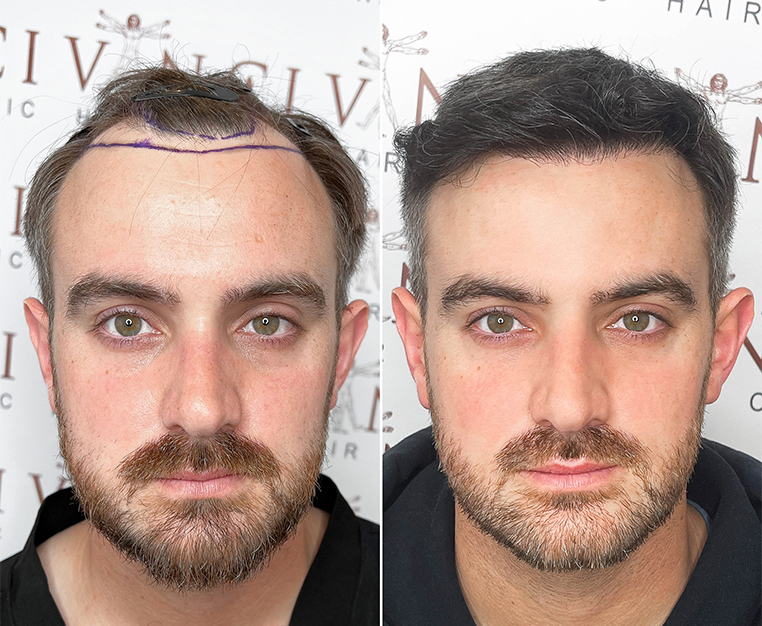
Vinci Hair Clinic has treated more than 100,000 patients since its founding. That scale of practice, maintained across more than 30 clinics, generates a depth of clinical experience that single-specialty practices cannot match. The clinic’s surgical team, for example, has performed FUE Hair Transplants across a range of hair types, including the more technically demanding afro and curly hair textures. Their pioneering of Long Hair FUE and No-Shave FUE reflects a clinical team that pushes technique forward rather than relying on a single approach for every patient. [FUE hair transplant]
On the non-surgical side, the evidence base for treatments such as PRP has grown substantially over the past decade. Vinci’s own protocol, developed and refined across thousands of patient cases, reflects both the peer-reviewed literature and the clinical learning that accumulates only through sustained, high-volume practice. Similarly, the Vinci Foundation’s charitable work in hair health education underscores an institutional commitment to evidence, not trends.
For patients considering their options, the practical takeaway is this: a clinic that has treated over 100,000 patients, across 20 or more years, with a team spanning three clinical disciplines, is a fundamentally different environment from a single-specialty provider. [Vinci Hair Clinic about us]
Frequently Asked Questions
Q: What is the difference between a trichologist and a dermatologist for hair loss?
A: A trichologist specialises specifically in the health of the hair and scalp, assessing conditions such as pattern hair loss, scalp sensitivity, and hair shaft abnormalities. A dermatologist is a medical doctor whose scope includes skin diseases, some of which affect the scalp and drive hair loss. Where a trichologist focuses on hair as a system, the dermatologist can prescribe medications, perform biopsies, and treat the underlying skin pathology. In practice, these roles complement rather than replace each other, and the most thorough assessments involve both.
Q: Do I need to see a surgeon if I am not ready for a hair transplant?
A: It is worth having a surgical consultation even if you are not committed to a transplant, because a surgeon can assess your long-term donor supply and help you understand which non-surgical treatments are worth pursuing first. Starting with non-surgical options is often the clinically appropriate route, particularly for younger patients whose hair loss pattern has not yet stabilised. A surgeon’s input ensures that any treatment you begin now does not compromise your options later.
Q: Can a GP diagnose hair loss accurately?
A: A GP can rule out some systemic causes of hair loss through blood tests, such as thyroid dysfunction, iron deficiency, or hormonal imbalance, and this is a useful starting point. However, most GPs do not have specialist training in trichology or dermatology relating to the scalp, and pattern recognition for conditions such as frontal fibrosing alopecia or diffuse alopecia areata requires clinical experience that a general practitioner rarely accumulates. If your GP has found no systemic cause, a specialist consultation is the appropriate next step.
Q: How do I know if Micro Scalp Pigmentation is right for me?
A: MSP is well suited to patients who want to create the appearance of a closely cropped hair look, those who want to add density to thinning areas following a transplant, or those with scarring on the scalp they wish to conceal. It is not a hair growth treatment, so it works differently from PRP or a transplant. A clinical consultation will establish whether MSP alone, or in combination with another treatment, is the most appropriate approach for your specific pattern and goals. Vinci Hair Clinic, as the global founder and pioneer of MSP, offers this assessment with the experience of nearly two decades in the technique.
Q: Is it possible to see a trichologist, dermatologist, and surgeon in one appointment?
A: At most clinics, no. The multidisciplinary model is uncommon in hair restoration because it requires building and coordinating a team across several specialisms, which takes considerable institutional investment. Vinci Hair Clinic is structured specifically to allow this kind of integrated consultation, where the findings from each discipline inform a single, coordinated treatment plan. This is one of the reasons patients travel from around the world to Vinci’s Harley Street headquarters and its international network of clinics.
Book a Consultation
If you are unsure which specialist you need, that uncertainty itself is a reason to speak to Vinci. A consultation with our clinical team gives you an accurate diagnosis, a clear explanation of your options across surgical and non-surgical treatments, and a plan built around your specific pattern of hair loss. With more than 100,000 patients treated across 20 or more years of practice, we have the experience to give you a straight answer, whatever that answer turns out to be. Reach out today to arrange your consultation at a Vinci Hair Clinic near you.


 UK Store