


What Makes a Hair Restoration Clinic Safe?
A safe hair transplant clinic can be identified by three things: a qualified, specialist medical team; transparent, evidence-based treatment options; and a verifiable track record of patient outcomes. Accreditation, clinical governance, and the availability of multiple restoration techniques are not optional extras, they are the baseline. If a clinic cannot demonstrate all three clearly and without prompting, you should look elsewhere.
Why Clinic Safety Is a Conversation Worth Having
Hair loss affects roughly half of all men by the age of fifty and a significant proportion of women across all age groups. For many, it carries a weight that goes well beyond aesthetics, touching self-confidence, professional identity, and quality of life. It is precisely because the emotional stakes are so high that patients can find themselves vulnerable to clinics that overpromise and underdeliver.
Hair restoration is a medical procedure. FUE hair transplants, scalp pigmentation, and platelet-rich plasma therapies all carry clinical considerations that require specialist oversight. Yet the sector is largely unregulated in many countries, which means that anyone, regardless of training, can legally open a clinic and perform procedures. The consequences of poorly executed treatment can include scarring, infection, unnatural-looking results, and permanent damage to the donor area.
Knowing what to look for before you book a consultation is not overcaution, it is basic due diligence. The questions you ask upfront will determine not just the quality of your result, but your safety throughout the process. Hair transplant consultation guide
How Vinci Hair Clinic Approaches Clinical Safety
Vinci Hair Clinic was founded in 2006 with a clear conviction: that hair restoration deserved the same rigorous clinical standards applied in any other branch of medicine. Nearly two decades later, that founding principle is visible in every aspect of how the clinic operates.
The clinical team at Vinci is not a single-specialism unit. It brings together trichologists, dermatologists, and experienced hair transplant surgeons who collaborate on patient assessments and treatment planning. This multidisciplinary structure means that a patient presenting with diffuse hair thinning, for instance, is assessed by someone qualified to determine whether the cause is hormonal, nutritional, or structural; rather than being guided automatically toward a surgical solution.
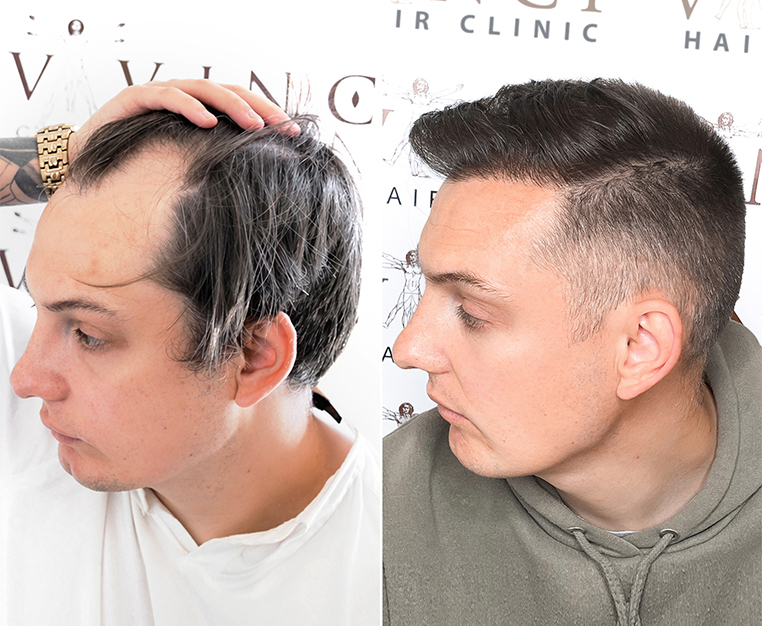
Vinci is the global founder and pioneer of Micro Scalp Pigmentation (MSP), a non-surgical scalp treatment that replicates the appearance of hair follicles with extraordinary precision. Every MSP procedure is backed by a 5-Year Warranty. This is a commitment that no reputable clinic makes unless it is genuinely confident in the consistency of its results and the skill of its practitioners. Vinci is also a pioneer of Long Hair FUE and No-Shave FUE, techniques developed to broaden patient choice and minimise the disruption that traditional hair transplant preparation can involve.
Clinical education is built into the Vinci model through the Vinci Medical Academy, which supports the ongoing professional development of practitioners across the network. The Vinci Foundation extends this commitment further, supporting research and access to hair restoration care for those who might not otherwise receive it. These are not marketing initiatives. They are infrastructure, the kind that only a clinic with serious institutional ambitions puts in place. Vinci Medical Academy
What the Record Shows
Numbers alone do not tell the whole story, but they are worth stating plainly. Vinci Hair Clinic has treated over 100,000 patients across more than 30 clinics worldwide since its founding. The Harley Street headquarters in London serves as the clinical and strategic anchor for a network that extends across Europe, Africa, the Middle East, and beyond.
That scale of patient volume produces something that newer or smaller clinics simply cannot offer: a detailed, longitudinal understanding of how different hair types, loss patterns, and patient profiles respond to different treatment approaches. When a Vinci surgeon recommends FUE over MSP, or PRP therapy before committing to surgery, that recommendation is grounded in experience drawn from thousands of comparable cases.
Vinci’s treatment range reflects a considered clinical philosophy. The menu includes FUE Hair Transplant, Long Hair FUE, No-Shave FUE, MSP, the Vinci PRP Protocol, Alomesa Mesotherapy, the Vinci Laser Cap, Maxogaine, Vitruvian Hair Supplements, and a specialist Post-Op Kit. The breadth is deliberate. A clinic that offers only one or two solutions has an incentive to steer every patient toward those solutions regardless of suitability. A clinic with a comprehensive range has no such incentive, it can simply recommend what is clinically appropriate.
Patient safety is also embedded in aftercare. The Post-Op Kit is not an afterthought sold at checkout. It is a medically formulated protocol designed to support healing and protect the investment patients have made in their results. This attention to the full treatment arc, from first consultation through to long-term maintenance, is one of the clearest markers of a clinic that takes its clinical responsibilities seriously. Vinci Post-Op Kit and aftercare
FAQ
Q: What qualifications should a hair transplant surgeon have?
A: At a minimum, your surgeon should hold a recognised medical degree and be registered with the relevant regulatory body in the country where the procedure is performed. Specialist training in hair restoration, trichology, or dermatology is strongly preferable to a general surgical background with a short hair transplant course. Ask to see credentials directly, and be cautious of any clinic that deflects this question.
Q: How do I know if a hair clinic is reputable?
A: Look for a demonstrable track record: patient numbers, years in operation, before-and-after documentation, and verifiable reviews on independent platforms. A reputable clinic will also offer a thorough consultation before recommending any treatment. If you are being pushed toward a procedure at a first contact without a proper assessment, that is a warning sign. Membership of professional medical associations and transparency about the surgical team are also positive indicators.
Q: Is a cheap hair transplant abroad safe?
A: Price alone is not a reliable indicator of safety or quality. Some clinics in lower-cost regions maintain high clinical standards; others do not. The risks of a poorly executed transplant; like scarring, asymmetry, permanent donor area damage, are often more expensive to correct than the original procedure would have cost at a more reputable clinic. If you are considering treatment abroad, research the specific clinic, not just the country, with the same diligence you would apply at home.
Q: What questions should I ask at a hair transplant consultation?
A: Ask who will perform the procedure and what their specific qualifications in hair restoration are. Ask to see actual patient outcomes, including cases with similar hair types and loss patterns to your own. Ask about the clinic’s complication rate and what their protocol is if something goes wrong. Ask whether the recommended treatment is the only option, or whether alternatives have been considered. A good clinical team will welcome these questions, not become defensive about them.
Q: What is the difference between FUE and other hair transplant methods, and which is safer?
A: Follicular Unit Extraction (FUE) harvests individual follicles directly from the donor area, leaving no linear scar. The older FUT method removes a strip of scalp, which produces a visible scar and a longer recovery. In skilled hands, both techniques can produce excellent results, but FUE has become the preferred standard for most patients because of the minimally invasive nature of the harvest process. Technique variants such as Long Hair FUE and No-Shave FUE exist to suit patients who need to maintain a certain hair length throughout treatment.
Ready to Take the Next Step?
If you are at the stage of researching clinics and want to speak with a specialist team that will give you a straight assessment rather than a sales pitch, Vinci Hair Clinic offers a free, no-obligation consultation at its Harley Street headquarters and across its network of clinics worldwide. The conversation costs you nothing, and it may save you from a decision you later regret.

 UK Store