


Undergoing a hair transplant is a significant step towards restoring your hair and confidence. However, the way you care for yourself during recovery plays a vital role in the success of your procedure. One often overlooked but crucial aspect of post-transplant care is how you sleep.
Correct sleeping practices after a hair transplant are essential to protect your new grafts as they heal. The way you rest in the weeks following the procedure can directly impact the survival of the hair grafts and the final outcome of your treatment.
Here’s a detailed guide to help you sleep safely after a hair transplant, with tips, timelines, and aftercare advice endorsed by the experts at Vinci Hair Clinic.
Why Sleeping Position Is Essential Post-Transplant
After undergoing an FUE (Follicular Unit Extraction) or FUT (Follicular Unit Transplantation) procedure, your newly implanted grafts are highly fragile. For the first 7–10 days, they are in the process of embedding into your scalp and need careful protection.
Improper sleeping posture during this period can:
- Dislodge newly implanted grafts.
- Delay or disrupt the healing process.
- Contribute to swelling around the forehead or eyes.
- Increase the risk of infection if your bedding isn’t clean.
Prioritising your sleeping position is critical to safeguard your grafts and achieve the best possible hair restoration results.
Vinci’s Tips for Safe Sleeping After a Hair Transplant
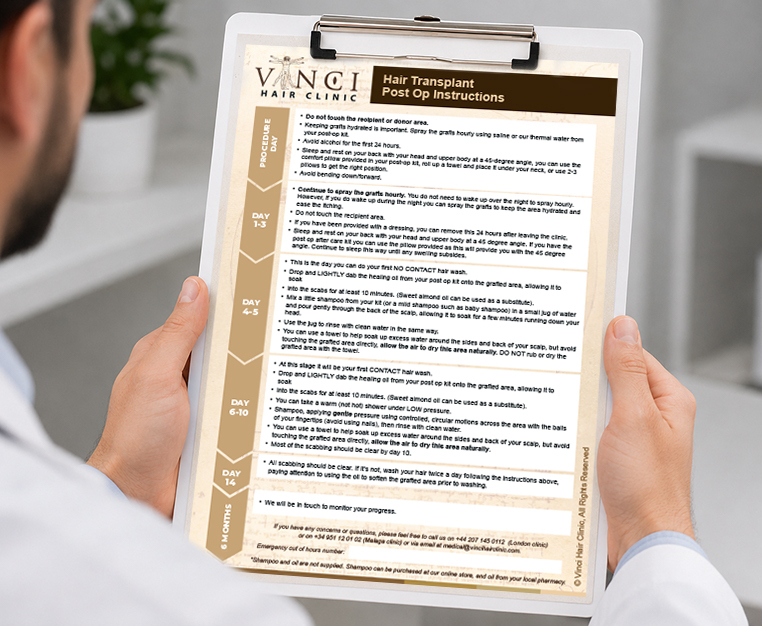
1. Sleep on Your Back with Your Head Elevated
During the first 3–7 days following your procedure, sleep on your back and elevate your head at a 45-degree angle. Using a neck pillow or stacking two pillows can help create this incline.
This sleeping position helps to:
- Reduce swelling in the scalp and surrounding areas.
- Prevent blood pooling in the head, which could disrupt healing.
- Avoid direct contact between the grafts and your bedding.
2. Avoid Sleeping on Your Side or Stomach
Although you may feel tempted to return to your preferred sleeping position, it’s important to avoid sleeping on your side or stomach during the first week. Any pressure or rubbing against the transplant area can loosen or damage the grafts.
3. Use a Clean Pillowcase or Towel
To minimise the risk of infection, use a clean, breathable cotton pillowcase or place a soft, freshly laundered towel on your pillow. Change this daily to maintain a hygienic sleeping environment.
4. Prevent Tossing and Turning
If you tend to move a lot during sleep, consider placing additional pillows around your body to help keep you in position. Some patients also find it helpful to sleep in a recliner chair during the first few days, which naturally restricts movement while keeping the head elevated.
5. Follow Your Surgeon’s Post-Op Instructions
Tailored aftercare is essential. Follow all guidance from your Vinci Hair Clinic specialist regarding sleeping, medication, washing, and other activities. These instructions will take into account the specifics of your procedure and recovery needs.
When Can You Resume Sleeping Normally?
- 7–10 Days Post-Op: By this stage, the grafts are typically secure in the scalp. You could slowly start to ease into your usual sleeping positions, but consult your surgeon first.
- 14 Days Post-Op: The likelihood of grafts becoming dislodged is significantly reduced.
- 3–4 Weeks Post-Op: Most patients can fully return to sleeping on their side or stomach without concern.
It’s always best to confirm with your Vinci Hair Clinic team before changing your sleeping habits.
Additional Aftercare Tips for Successful Recovery
To support your healing and ensure the long-term success of your hair transplant:
- Avoid smoking or consuming alcohol during the recovery phase, as these can hinder graft survival.
- Refrain from scratching or picking at any scabs—allow them to fall off naturally.
- Maintain a clean scalp using the recommended products and instructions.
- Avoid strenuous physical activity and excessive sweating in the first 10–14 days.
The first month is a critical period for ensuring your grafts thrive. By prioritising proper care and sleeping habits, you can achieve the best outcome from your procedure.
Vinci Hair Clinic’s Commitment to Comprehensive Aftercare
At Vinci Hair Clinic, we understand that successful hair restoration isn’t just about the surgery—it’s about how you care for yourself afterward. That’s why we provide detailed aftercare plans and personalised guidance to every client.
Following your procedure, you’ll receive:
- A bespoke aftercare kit.
- Clear instructions on sleeping, scalp care, and physical activity.
- Ongoing access to your Vinci Hair Clinic consultant to address any concerns.
Our aim is to support you every step of the way, ensuring not only a comfortable recovery but exceptional long-term results.
Final Thoughts
Getting quality rest is important after a hair transplant, but the way you sleep is just as critical. With proper sleeping techniques and committed aftercare, you’re giving your grafts the best chance to establish themselves and thrive.
Trust in Vinci Hair Clinic to guide you through every phase of your hair restoration, from procedure to recovery and beyond. Together, we’ll help you achieve natural, lasting results you can feel confident about.


 UK Store